The news tells you what happened. We explain what changed.

Explore all past issues, only on Beehiiv.
All Global Affairs stories, newest first.
Global Affairs
After anti-migrant violence and overwhelmed refugee offices, South Africa withdrew an asylum-processing directive without resolving its…
By Social Storytellers Collective News Desk · October 11, 2026
Global Affairs
Beijing's 19-measure technology framework calls for industrial AI expansion while warning against speculative investment and requiring…
By Social Storytellers Collective News Desk · October 11, 2026
Global Affairs
The Bank of Japan’s regional assessment shows improving activity alongside broader cost pass-through, leaving purchasing power…
By Social Storytellers Collective News Desk · October 10, 2026
Global Affairs
The rapper says she has found creative freedom and community abroad. Her relocation also raises a…
By Leena Alridge · October 10, 2026
Global Affairs
The investment gives Mubadala exposure to one of China’s fastest-growing consumer platforms — and gives Luckin…
By Social Storytellers Collective News Desk · October 10, 2026
Global Affairs
Nineteen months into the trade fight, 51% of Canadians say they avoid U.S.-made goods, up from…
By Social Storytellers Collective News Desk · October 10, 2026
Global Affairs
PhysicsX’s new Asia-Pacific base shows how Singapore is positioning AI inside factories, engineering systems and physical…
By Social Storytellers Collective News Desk · October 9, 2026
Global Affairs
The AI startup moved to Singapore, agreed to sell itself to Meta and was forced back…
By Social Storytellers Collective News Desk · October 9, 2026
Global Affairs
The United Nations is building a more inclusive framework for AI governance, but countries with limited…
By Bryson Davis · October 9, 2026
Global Affairs
Record-low consumption invites a closer look at the social life around beer, without assuming that a…
By Social Storytellers Collective News Desk · October 9, 2026
Global Affairs
Nigeria’s capital-territory strike call shows how administrative conditions can shape a career long after someone qualifies…
By Leena Alridge · October 8, 2026
Global Affairs
The proposed cuts would narrow access for students and humanitarian arrivals while expanding selected work pathways.…
By Social Storytellers Collective News Desk · October 8, 2026
Delhi authorities closed six metro stations and restricted traffic on October 12 as protests over India's voter-roll revisions reached the capital's courts and transit network. Reuters reported the closures as opposition groups challenged the election commission's changes to electoral lists. Hindustan Times reported that police said more than 700 people were detained during Sunday's demonstrations; weekend totals reported by different outlets vary by date and scope. Opposition parties argue that the revisions risk excluding eligible voters, while the election commission and governing party reject allegations of manipulation. The immediate consequence reaches beyond party politics: residents faced interrupted transit, protesters faced detention, and the process for determining who appears on the voter register is under intensifying scrutiny. Associated Press also covered the October 12 court-focused demonstrations.
The IMF's October 2026 World Economic Outlook data project 2.3% growth for Latin America and the Caribbean this year, below the 3.1% global forecast. Reuters reported that the region's outlook was reduced from the IMF's July estimate of 2.4%, while the 2027 projection fell to 2.5% from 2.7%. Energy costs and uneven access to new investment are among the pressures. These are regional aggregates, not a prediction that every Caribbean economy will slow: energy exporters and importers face different conditions, and individual countries may diverge sharply. The latest revision advances SSC's existing reporting on uneven Caribbean growth rather than replacing it. The policy question is how governments protect household purchasing power and finance infrastructure when external shocks are transmitted differently across the region.
India's satellite-internet market is still waiting on regulatory clearances, despite licenses held by three competing operators: Starlink, Reliance Jio's satellite arm and Eutelsat OneWeb. Reuters reported that India's communications ministry rejected claims of discriminatory treatment and said security checks and spectrum allocation remain outstanding. TechCrunch reported that Starlink says it has built more than 20 gateway sites in preparation. Separately, The Economic Times reported a proposed satellite spectrum fee of 5% of adjusted gross revenue, with a one-percentage-point reduction for service in designated hard-to-reach areas. The consequential issue is not the public exchange between technology executives: it is when rural customers will receive a viable additional broadband option, at what price, and under which security obligations. None of the operators has announced a confirmed commercial start date under the remaining approval process.
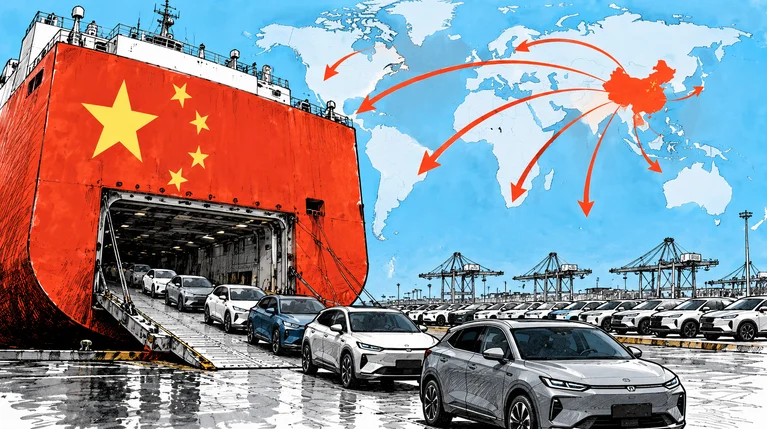
China’s automakers are leaning harder on foreign markets as home sales weaken, but the export surge is already colliding with quotas, tariffs and pressure to build cars overseas.

As India prepares a national obesity guideline, physicians are pushing for a broader way to identify metabolic risk—one that looks beyond BMI. At the same time, the country is proving that recognizing obesity as a health problem does not automatically translate into embracing GLP-1 treatment.

Heavy rainfall flooded homes, businesses and major transportation routes across Turkey's largest city. The disruption illustrates how quickly extreme weather can overwhelm the systems that keep urban life functioning.
Britain's economy expanded by just 0.1% in August, slowing from 0.4% growth in July, according to figures released October 15 by the Office for National Statistics. Production increased 0.8% during August, while services recorded no growth and construction declined 0.2%. The broader three-month picture was stronger, with GDP growing 0.7% in the three months through August and services output increasing 0.9%. Those figures show an economy that is expanding but not consistently across industries or time periods. The August slowdown also illustrates why a positive headline GDP figure does not necessarily indicate that businesses throughout the economy are experiencing similar conditions. For workers and consumers, the next question is whether continued growth translates into stronger employment, real earnings and household purchasing power. Britain's economic performance will depend not only on whether output keeps increasing but also on how broadly the benefits of that expansion are distributed.
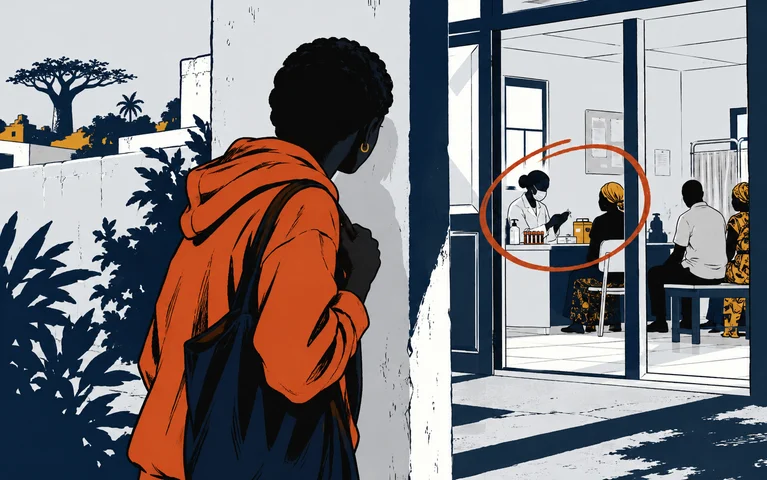
Human Rights Watch says Senegal’s expanded criminal penalties are producing consequences beyond arrests, including fear of seeking HIV testing and treatment.
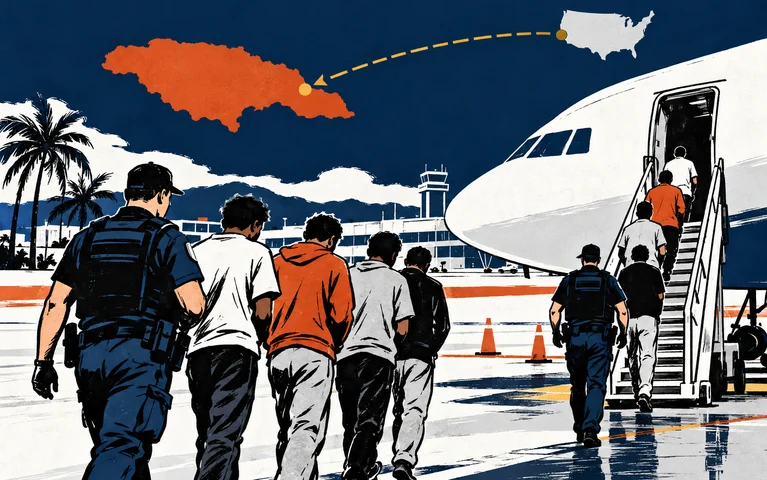
Twenty-two migrants were transferred to Kingston under a new U.S.-Jamaica agreement. The arrangement shows how quickly third-country deportations are becoming infrastructure rather than an exceptional immigration measure.

The United States is preparing to take more ownership stakes in African companies and infrastructure projects, adding a new dimension to its competition for critical minerals and digital networks. In an October 9 interview with Reuters, Vibhuti Jain, the U.S. International Development Finance Corporation’s regional managing director for Africa, said the agency intends to deploy equity more often where projects are strategically significant. DFC already has more than $14 billion in investment commitments across Africa, including more than $3 billion in critical minerals and related projects. The announcement is a statement of direction, not proof that every proposed investment has been approved or completed. It nevertheless signals a change in how Washington wants to participate in African industries.
An approximately €31 million agreement over alleged exploitation at a Milan construction site highlights the challenges of protecting migrant workers on government-commissioned projects.
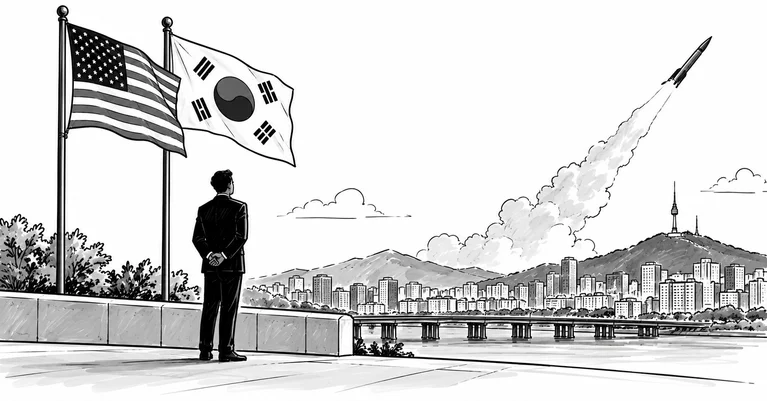
Public opinion toward the United States has fallen to a two-decade low in South Korea. Now Seoul is pairing that frustration with a more explicit push to build military power it can control itself.
