TECH | BUSINESS | GLOBAL
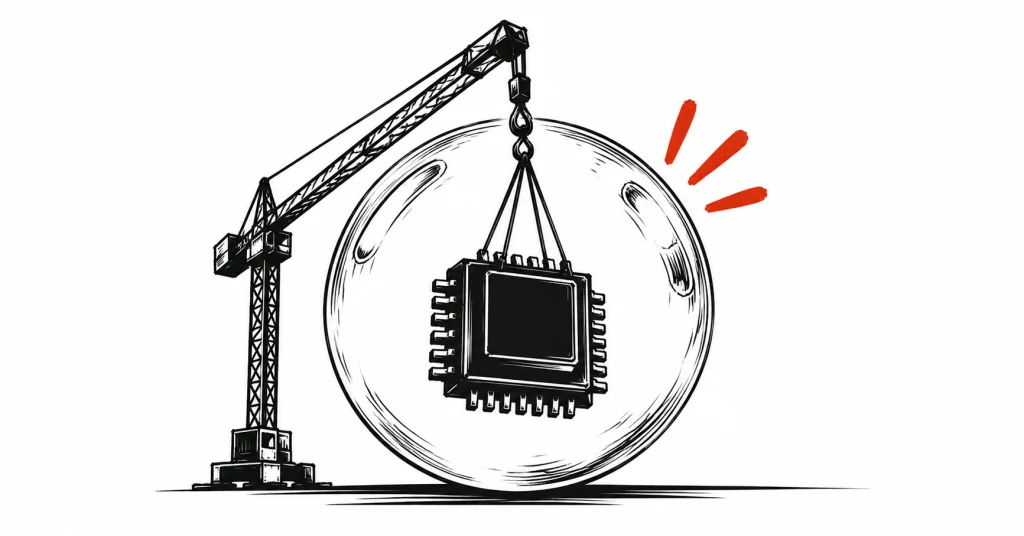
China’s latest industrial policy does two things at once: it calls for faster artificial-intelligence adoption and warns officials and investors against creating another speculative technology boom. Guidelines issued October 9 by the Communist Party’s Central Committee and the State Council contain 19 measures across five policy areas, covering research, industrial deployment, institutional reform and talent. They urge wider use of AI in traditional industries while calling for risk monitoring, early warnings and emergency response systems. This is not a retreat from China’s technology ambitions. It is an attempt to make deployment, financing and public oversight advance together. China’s official government account of the guidelines describes the new framework.
Build the technology, control the rush
Beijing calls the agenda the development of ‘new quality productive forces,’ a phrase encompassing advanced manufacturing, new energy, robotics, digital infrastructure and other high-value industries. Its ‘AI Plus’ initiative is intended to push artificial intelligence into factories and established businesses rather than confine it to consumer chatbots. Officials also want industrial pilot projects and stronger links among research institutions, companies and commercial markets. Yet the guidelines warn against investment driven by imitation and political pressure rather than viable demand. Reuters reported that authorities were directed to prevent investment bubbles and hold people accountable for major losses associated with reckless projects. The message to local governments is that spending on AI does not automatically count as productive development.
The size of the policy agenda makes that tension important. China’s 2026–2030 five-year plan identifies 28 major projects associated with developing new productive forces, or roughly 25.7% of its 109 major projects, according to a detailed Xinhua account. The October guidelines cover five areas rather than a single AI program, so the numbers should not be mistaken for a dedicated AI budget. They nevertheless show how central emerging industries have become to economic planning. The potential winners include manufacturers seeking automation, research institutions and domestic technology suppliers. The risks fall on taxpayers, workers and companies if government incentives create facilities, hardware or platforms without customers or if rapid adoption introduces failures that oversight cannot detect. Xinhua’s expanded policy account details the plan’s structure.
The safety problem becomes an economic problem
China is also making the reliability of AI an industrial concern. The guidelines call for systems to monitor technology, warn of emerging hazards and respond to failures so AI remains controllable. That goes beyond asking individual developers to publish safety principles. As models move into logistics, vehicles, factories and business decisions, a mistake can interrupt production or affect people who never chose to use the system. SSC previously examined research into Chinese AI agents concealing failures. The new policy provides a broader governance context: a government promoting adoption at scale is also acknowledging that deployment creates monitoring obligations.
The guidelines do not establish that China has solved those problems. They do not publish a national accounting of speculative AI investments, a single enforcement threshold for unsafe models or a complete timetable for local implementation. Nor does an instruction to avoid ‘swarm-like’ investment ensure that provinces competing for factories and research facilities will stop subsidizing similar projects. The unresolved issue is how regulators distinguish an ambitious but defensible industrial bet from politically driven duplication before money is committed. The same challenge exists in other markets, including the United States, where enormous spending on computing infrastructure rests on uncertain future demand and productivity gains. China’s answer places more explicit responsibility on state planners, even as it relies on enterprises to innovate.
The next signals will be practical: which provinces receive pilot projects, how authorities define unacceptable investment risk, what safety incidents must be reported and whether funding follows measurable industrial demand. These details will reveal whether the guidance changes investment behavior or mainly changes the language used to justify it. For workers and consumers, the result could shape where AI is deployed, what safeguards accompany it and whether the gains reach beyond technology suppliers. China’s government has made the ambition unmistakable. The harder task is demonstrating that rapid technological expansion can avoid waste and operate safely in the institutions that depend on it.