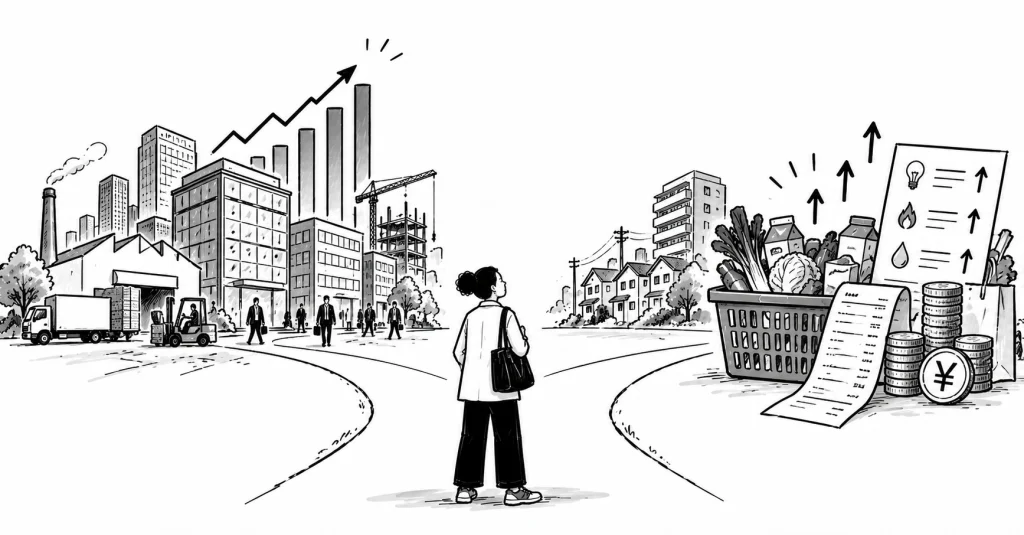
The Bank of Japan’s regional assessment shows improving activity alongside broader cost pass-through, leaving purchasing power central to the recovery.
The Bank of Japan upgraded its economic assessment for two of Japan’s nine regions in its October 8 review, according to Jiji Press’s account of the report. The central bank’s regional summary describes recovery while acknowledging areas of weakness. At the same time, Reuters reported broader cost pass-through and cautious consumer spending. The combination deserves attention because improving business conditions and improving household living standards are related but separate outcomes. A recovery can become more visible in production and investment before it delivers the relief people expect when they pay their monthly bills.
The central bank’s assessments are qualitative descriptions assembled across regions, rather than a declaration that every industry or household is doing better. An upgrade in two regions therefore does not mean that the other seven are shrinking. It means officials changed their judgment about the pace or character of activity in those places. That is useful evidence, but it cannot by itself establish whether a particular worker’s income now buys more. Reading the assessment carefully prevents a national recovery story from flattening differences among employers, occupations, regions, and families with very different exposure to changing prices.
SSC Premium · Free with signup
Keep reading. It’s free.
This is a Premium story from Social Storytellers Collective. Enter your email to unlock the rest right now, and get the End of Day Closing Note six nights a week. Already a subscriber? Use the same email and you’ll go straight back to the story.
Free. Unsubscribe anytime. Premium readers also hear first when The Deep View membership opens.