
The Song Didn’t Start the Debate. It Revealed Where the Debate Already Was.
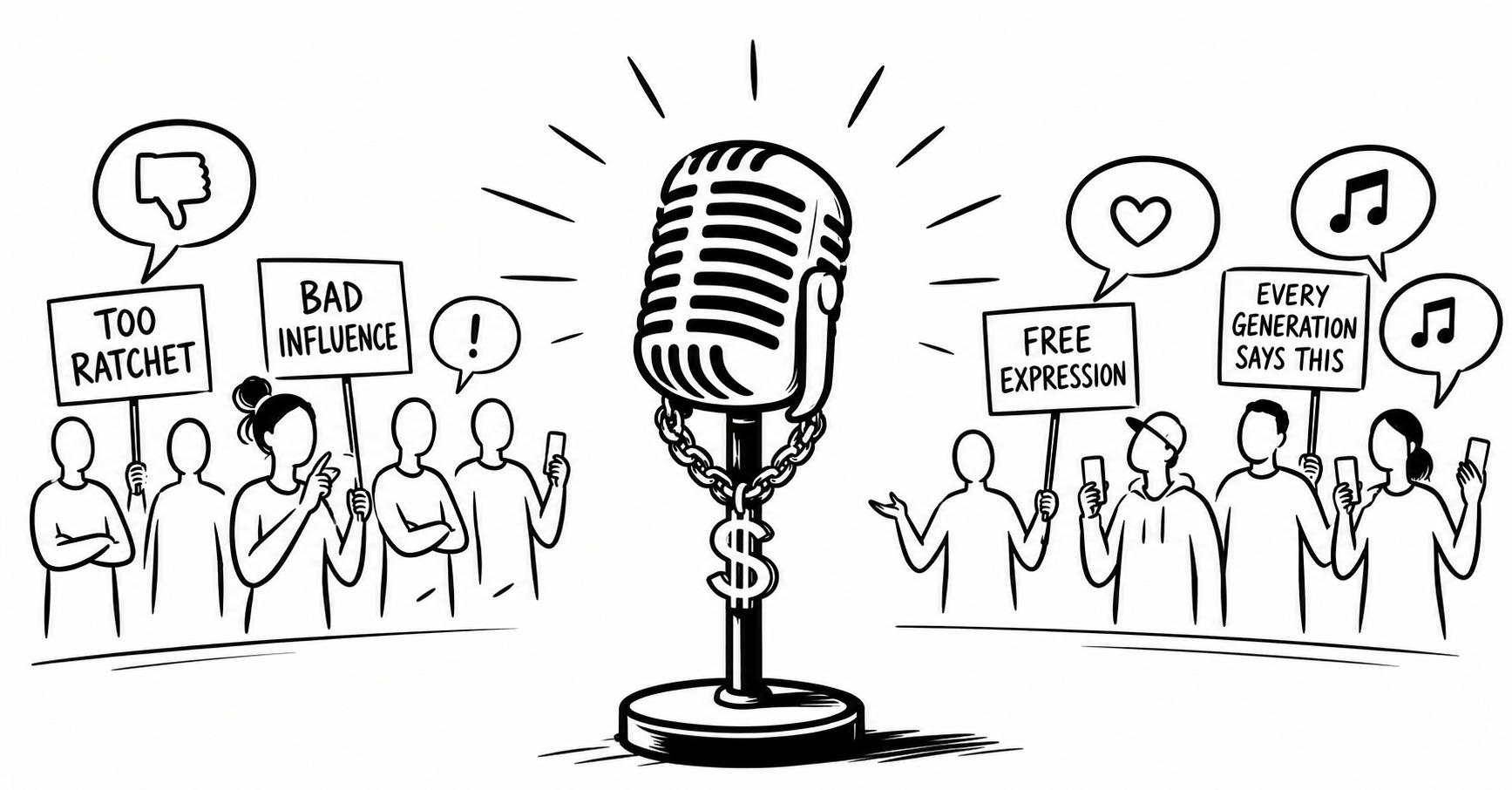
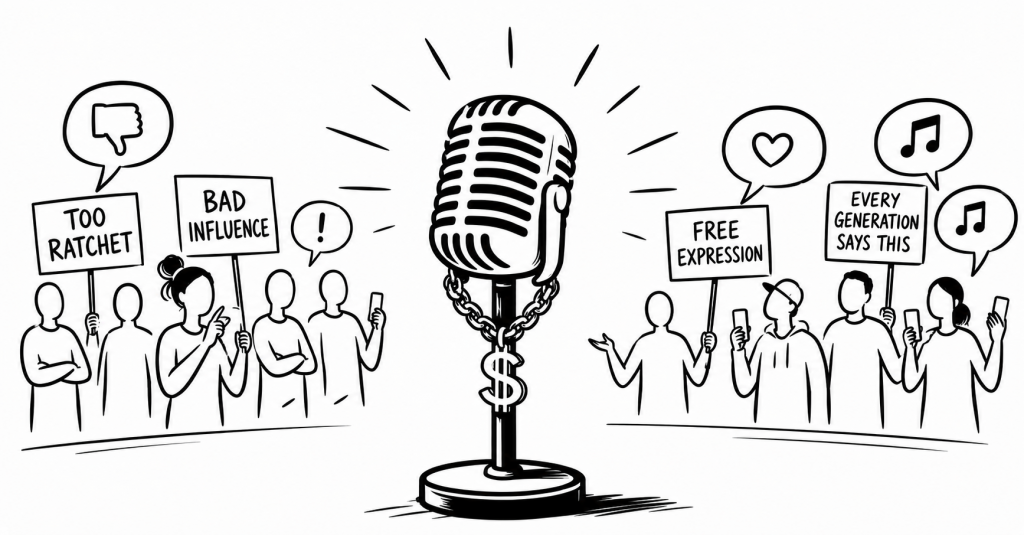
Yung Miami’s “Spend Dat” became a proxy fight over music, morality, generational memory, and who gets to decide when culture has gone too far.
Yung Miami’s “Spend Dat” has climbed to No. 25 on the Billboard Hot 100 since its April 24 release, and has been treated as a song-of-the-summer contender since. At the BET Awards on June 28, the crowd gave Yung Miami a standing ovation and kept singing the hook a cappella after the track cut out — a moment that immediately became its own flashpoint.
The backlash arrived on a different stage. R&B singer Nicci Gilbert first raised concerns about the song June 21 on her YouTube series “Diary of a Diva,” criticizing children’s participation in the “Spend Dat” dance challenge circulating online. She escalated the criticism July 1, telling followers on Instagram that she is a Recording Academy voter and hopes to keep the song from earning a Grammy nomination, arguing that what she called “ratchet-a**, ghetto-a**, low vibrational-a** music” is “plaguing our communities,” Hollywood Unlocked reported.India Arie’s entry into the conversation carried different weight. The four-time Grammy winner responded on Threads to a user who had posted a call to boycott the song, co-signing the concern in language that quickly spread further than the original post. “I spent my entire adult life caring way too much,” she wrote, “because I finally learned that not everybody cares (with a capital C). And explaining it to them is not going to make them care. Everything you listen to or eat is going to influence you. So, make wise choices, y’all.” When another user connected the song to Yung Miami’s public defense of her former boyfriend Sean Combs — currently imprisoned for violating the Mann Act — Arie called the mass acceptance of “Spend Dat” a “crystal clear sign of this much bigger truth,” adding: “I finally realized that not everybody wants to get free. And it was a very, very, very rude awakening.”Arie later published a Substack video walking back the boycott framing specifically, while holding her position on the underlying concern. “I want you to have an understanding of what’s good for you and to have the love for yourself to do it,” she said. “But also, who cares what I want for you? I know what I want for me and I do what is best for me.” Complex’s Jaelani Turner-Williams reported on the exchange; Arie did not back away from the cultural critique, only the implication that she wanted anyone else to act on it.The internet’s response landed on both sides and revealed the actual argument underneath the one about the song. One camp agreed with the premise that lyrics shape attitudes, especially among younger listeners. Another argued that the concern feels selective — pointing to decades of commercially successful music centered on violence, sexual explicitness, materialism, and degradation, and asking why this particular record became the line in the sand. Several commenters weren’t necessarily defending the lyrics; they were questioning why cultural accountability appears episodic rather than continuous.The producer J. White Did It sharpened that paradox without saying a word about it. Days after Arie’s comments circulated, he released a viral mashup combining “Spend Dat” with Arie’s own 2001 anthem “Video.” The remix spread immediately across social platforms and drew reactions from both artists, turning the debate about music’s influence into an involuntary demonstration of how quickly that influence moves in every direction, including through the catalog of the person raising the concern.The conversation also exposes a generational paradox with no clean resolution. Younger audiences often hear criticism as censorship or nostalgia. Older audiences may see it as responsibility earned through hindsight. Both positions can coexist without either settling how much influence popular music actually has, or whether the answer changes depending on who is listening at what age.Nicci Gilbert’s move goes further than critique. As a self-identified Recording Academy voter, she is naming the one institutional lever that could actually cost the song something: a Grammy nomination. That shifts a cultural argument into an institutional one. The debate about whether “Spend Dat” deserves criticism is happening in comment sections. The debate about whether it deserves recognition may now be happening inside the Recording Academy’s own voting body — and those are two different fights with two different sets of rules about who gets to decide the outcome.The song becomes the headline. The vote becomes the story.