
Birthright Citizenship Survives, but the Fight Moves to Constitutional Power
The Court protected citizenship by birth, but the ruling also showed how belonging remains vulnerable when executive power treats identity as an administrative category.
AP reported on June 30 that the Supreme Court upheld birthright citizenship in a 6-3 decision, rejecting Donald Trump’s attempt to deny citizenship to children born in the United States to undocumented or temporary immigrants. The ruling protected a constitutional rule that has shaped American civic life for more than a century: nearly everyone born on U.S. soil is a citizen at birth.
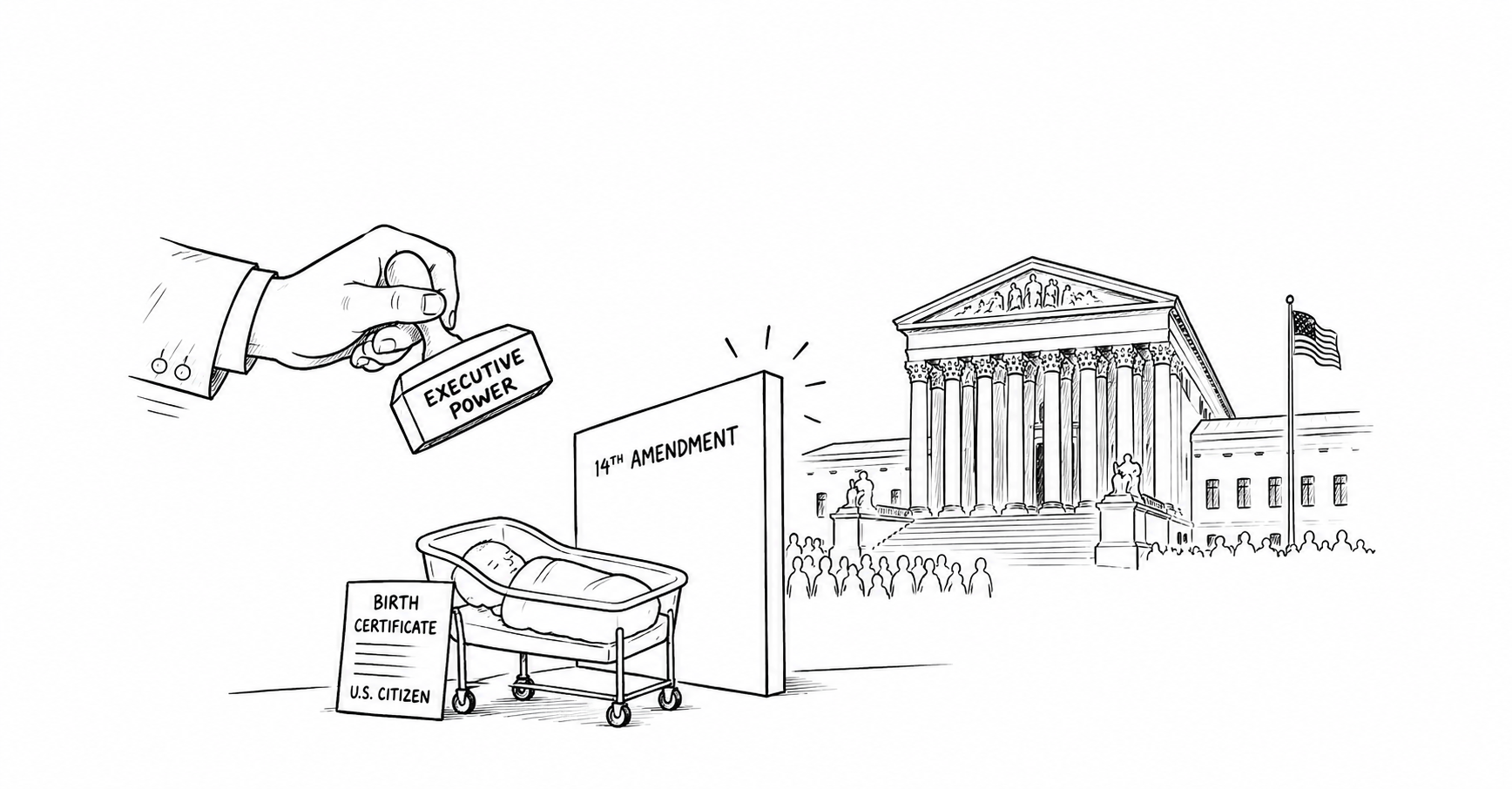
Government power depends on classification. The fight over birthright citizenship was not only about immigration policy. It was about whether the executive branch could redraw the first legal boundary a person crosses before they can vote, work, travel, receive documents, or claim protection from the state.
That boundary matters because citizenship is the access point underneath nearly every other public system. A birth certificate becomes a passport. A passport becomes mobility. Citizenship becomes the basis for Social Security eligibility, labor rights, political representation, public benefits, and protection from removal. When an administration tries to change who counts at birth, it is trying to change the population that institutions must recognize later.
The Court’s decision blocked that move. AP reported that the ruling affects more than 250,000 annual births. That number is the practical reason the case mattered beyond constitutional theory. A different outcome would not have created a narrow paperwork dispute. It would have produced a class of children born in the United States whose legal status could be contested from the moment they entered public records.
That is where power moved in this decision. It moved away from executive discretion and back toward constitutional floor-setting. The White House wanted the ability to decide that certain children, because of their parents’ immigration status, did not automatically belong to the political community. The Court said that power does not sit with a president.
But the ruling does not end the larger conflict. It narrows one route for changing citizenship while leaving the political incentive intact. Immigration enforcement has increasingly treated legal status as something that can be pressured, delayed, challenged, or made uncertain. Birthright citizenship resisted that logic because it has operated as a bright line: born here, citizen here.
Bright lines are powerful because they reduce administrative discretion. They limit the number of officials who can decide whether a person belongs. They also protect families from having to prove, over and over, that a child’s legal identity is real.
That is why the attack on birthright citizenship was attractive to restrictionists. It would have turned belonging into a question of parental status, documentation, and interpretation. Once that happens, citizenship stops being a constitutional guarantee and becomes a file that can be challenged.
The Court preserved the guarantee, but it also revealed how much of modern citizenship depends on institutional willingness to honor old rules under new political pressure. A future administration may look for other tools: slower documentation, narrower benefit access, tougher proof standards, or legislative attempts to test the same boundary from a different angle.
The next fight over citizenship may not announce itself as an effort to end birthright citizenship. It may arrive through paperwork, eligibility systems, benefit rules, and enforcement priorities that make recognition harder even when the formal right survives.