
Chicago Is Subsidizing Entry Into a Market Wages No Longer Unlock

Chicago Is Subsidizing Entry Into a Market Wages No Longer Unlock
The city’s new homebuyer assistance program offers up to $70,000. The grant is a housing intervention, but it also admits how far wages have fallen behind ownership.
The grant doesn’t lower the threshold. It closes the gap for roughly 300–400 households — without changing the market that created the gap.
Chicago has launched the HomeGrown Purchase Assistance Grant, a program offering eligible first-time homebuyers up to $70,000 in down-payment support. The Sun reported that the program is backed by a $21 million fund and is expected to help 300 to 400 buyers, with grants reaching $70,000 in high-cost areas and $50,000 in lower-income areas.
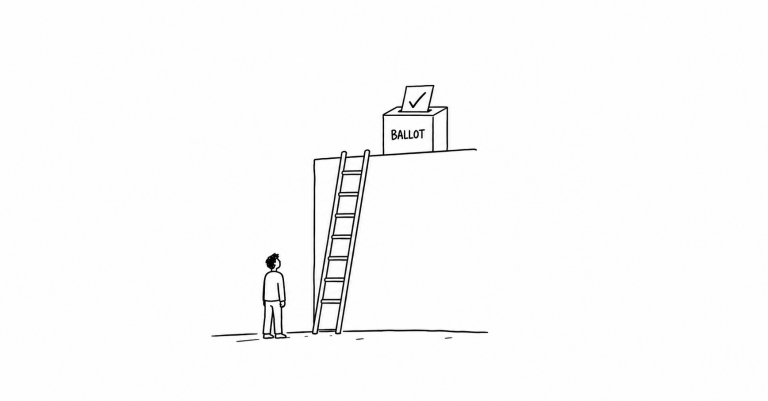
The policy mechanism is subsidy as access repair. The city is not lowering home prices directly — it is helping selected buyers cross the threshold that the market has raised beyond what many wages can cover. That makes the program both practical and revealing. Homeownership used to be framed as a reward for stable work, savings, and patience. In many cities, that ladder no longer reaches the ground. Down payments, interest rates, insurance, property taxes, and competition from better-capitalized buyers have turned entry into ownership into a capital problem that income alone often cannot solve.
Chicago’s program tries to restore access by injecting public money at the point where households are blocked. That can help families build equity, stabilize neighborhoods, and remain in communities where prices might otherwise exclude them. But it also raises a structural tension: public subsidy is being used to help residents buy into a market whose underlying affordability problem remains intact. A $21 million program helping 300 to 400 buyers can change individual lives without changing the market that made the grant necessary.
Power moved from the market’s full exclusionary force back toward a limited number of eligible households — but the scale matters. The next housing policy debate will not only be about supply. It will be about whether public money is being used to expand ownership broadly, or to help a narrow set of households survive a market that wages no longer govern.