AI Economists Can’t Agree on Whether AI Is Actually Raising Productivity. That Disagreement Has a Price Tag.
Governments, central banks, and businesses are making trillion-dollar decisions before the data can settle one of the decade’s biggest economic questions.
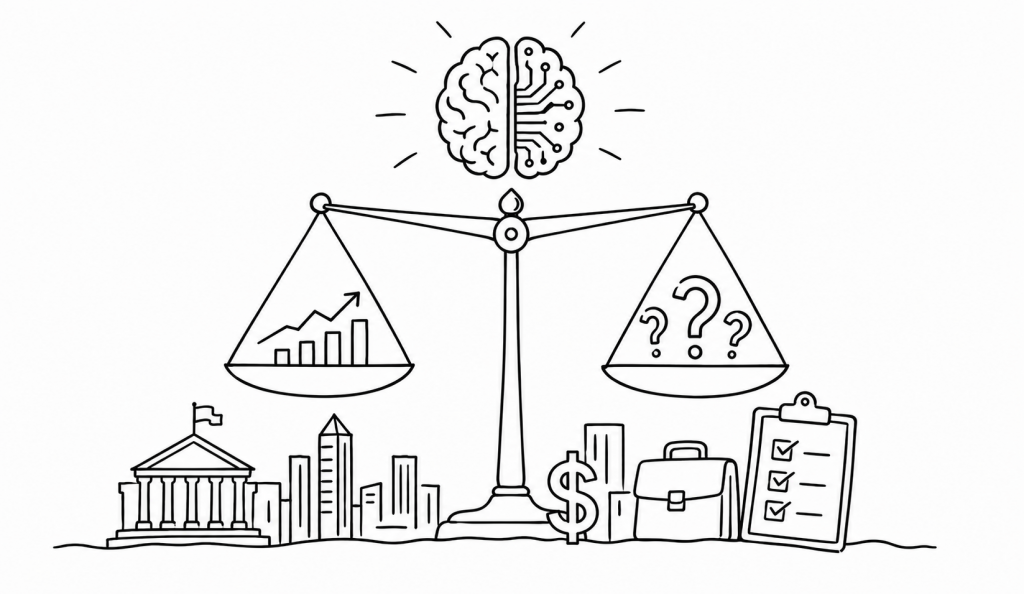
In 2020, two economists made a bet. Stanford’s Erik Brynjolfsson wagered that artificial intelligence would push U.S. labor productivity growth above 1.8% annually through 2030. Northwestern’s Robert Gordon took the other side. Six years into the decade, Bloomberg Businessweek revisited the wager in its June 1, 2026 issue. Neither man has clearly won.
Brynjolfsson, director of Stanford’s Digital Economy Lab, has long argued that transformative technologies produce measurable gains only after a lag. Economists call it the productivity paradox: computers spread throughout the economy during the 1980s, but their effects on output did not become fully visible for years. Gordon has taken the opposite view, arguing that the truly transformative inventions — electricity, indoor plumbing, and the internal combustion engine — changed daily life in ways AI may never match.
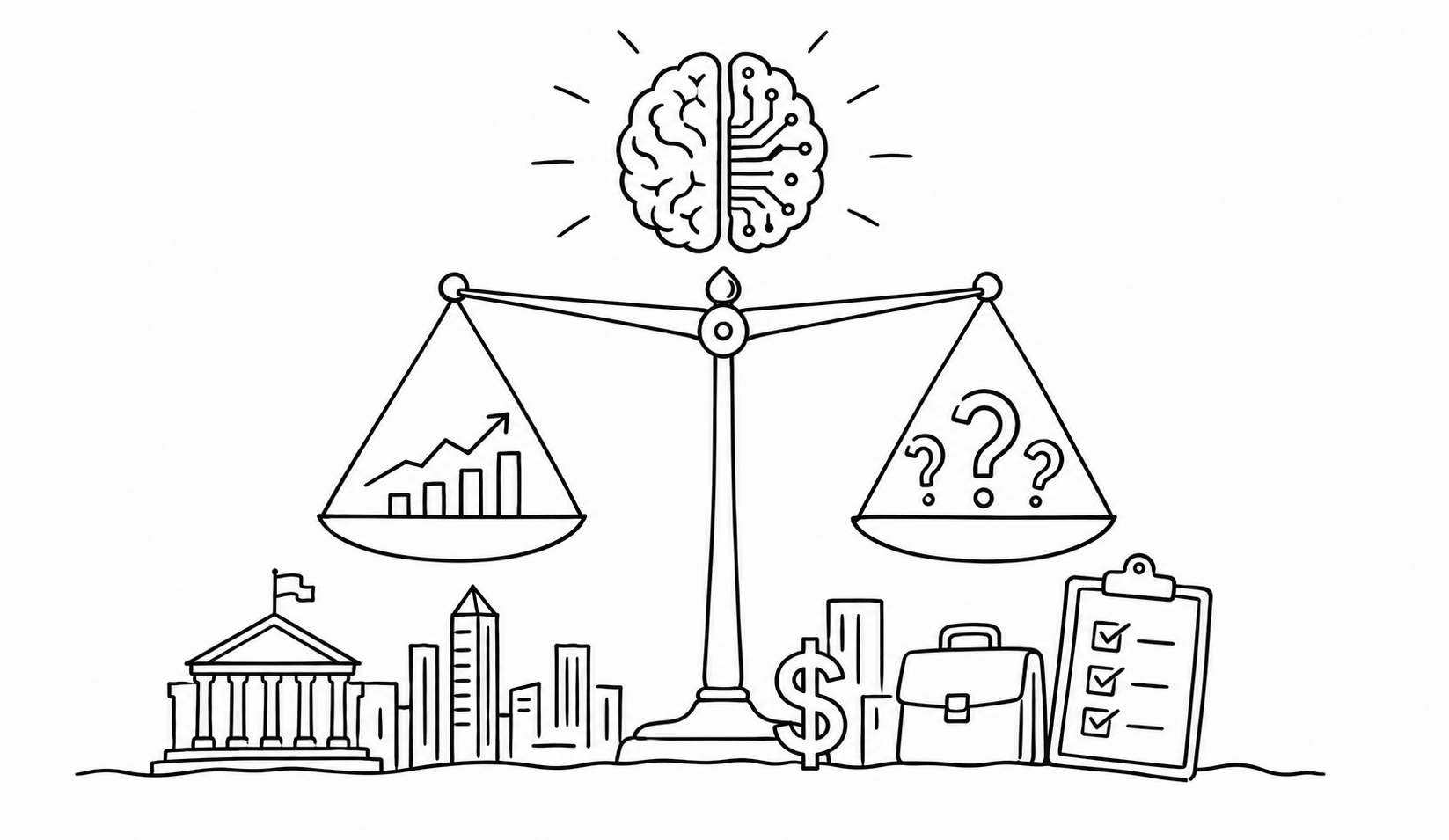
As of mid-2026, the macroeconomic data does not resolve the debate. Productivity has improved, but not consistently and not in ways economists can confidently attribute to AI. At the individual level, studies repeatedly show workers completing tasks faster and producing better outputs with AI assistance. At the national level, those gains remain difficult to measure.
The uncertainty matters because policymakers and executives are making decisions in the shadow of competing assumptions. Central banks, corporations, universities, and governments are investing as though productivity acceleration is coming. Interest-rate decisions, workforce development programs, immigration policy for technical talent, and capital spending plans all implicitly depend on how much output the economy can generate without reigniting inflation.
If AI-driven productivity is about to accelerate, today’s investments may prove prudent. If the gains remain concentrated in narrow tasks rather than the broader economy, trillions of dollars are being allocated on the basis of expectations that may never materialize.
The wager itself was only $400. The economic consequences of getting the answer wrong are much larger.
Source: Bloomberg Businessweek, June 1, 2026.