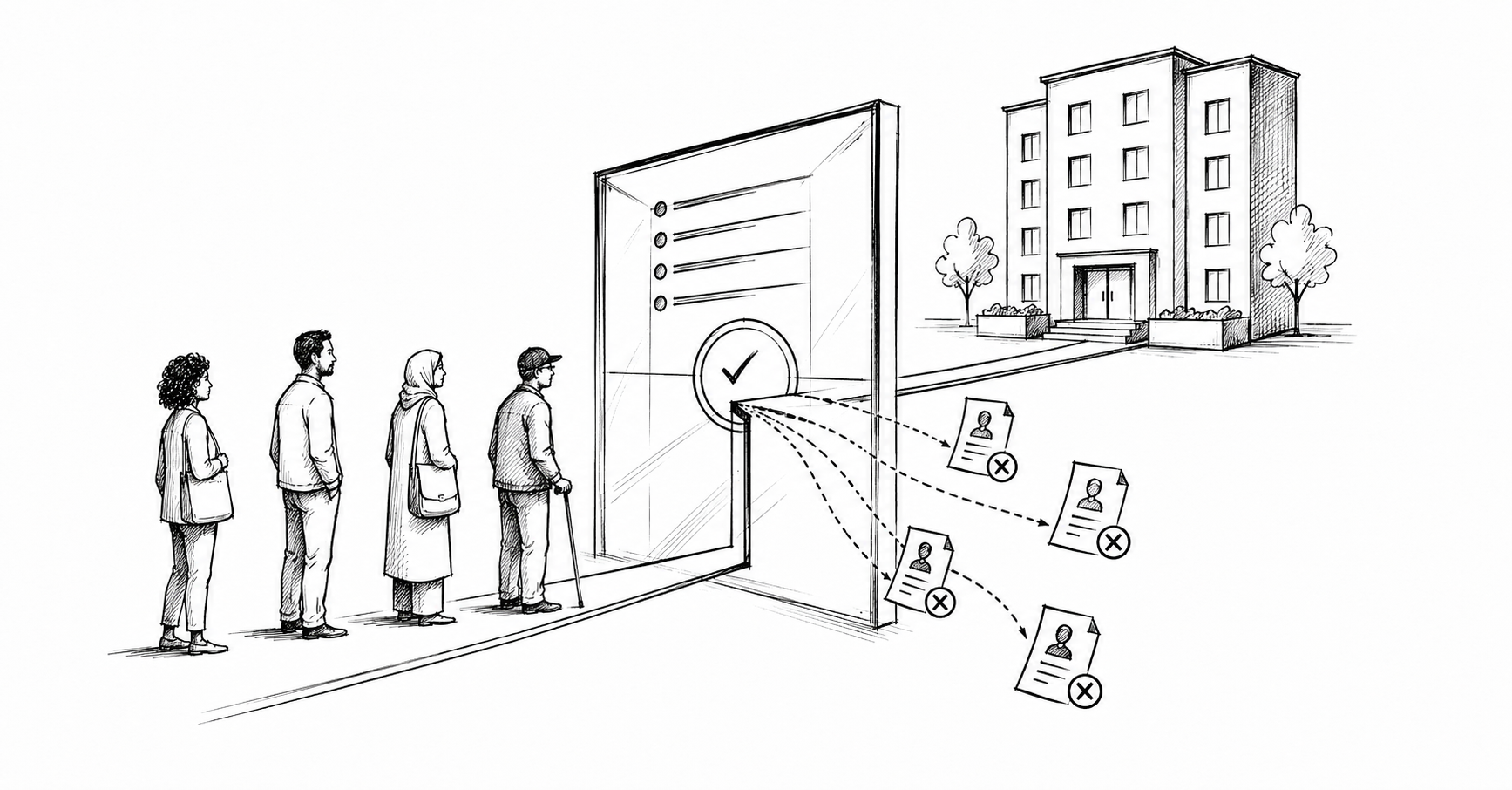
The Rental Market Segregation Problem Is Not Racist Landlords. It Is Systemic Design.
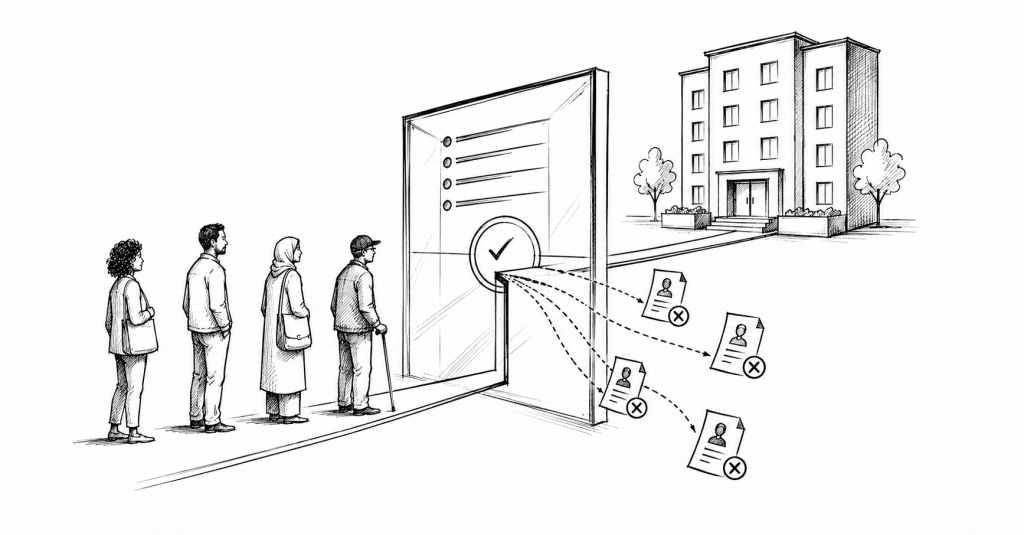
According to the Center for Democracy and Technology and the Daily Journal, tenant screening algorithms are enabling racial and disability discrimination at scale. These automated tools, which landlords increasingly use to evaluate prospective tenants, replicate discriminatory historical practices by relying on eviction filings, criminal records, and credit history data shaped by generations of policy-driven discrimination. The result is "algorithmic redlining"—race-neutral discrimination perpetuated through systems that appear objective and data-driven.
Systems reproduce inequality without individual discrimination. A landlord screens tenants using objective criteria: credit scores, eviction history, income. Not making racial decisions. Applying criteria uniformly. Screening tools measure outcomes shaped by generations of policy-driven discrimination. This is how segregation persists without racist intent. The neutral mechanism reproduces the historical exclusion.
Breaking this pattern requires redesigning screening mechanisms, which is politically harder than removing racist intent. It requires admitting that neutral systems produce racialized outcomes. That credit scores—appearing fair and objective—reproduce historical discrimination in numerical form. That individual fairness doesn't produce equity when criteria themselves measure outcomes shaped by historical injustice.
Landlords using algorithmic screening believe they've removed human bias. But algorithms encode historical patterns. If credit scores correlate with race due to historical discrimination, algorithms using credit scores reproduce that discrimination automatically. The algorithm launders discrimination, making it appear objective and data-driven rather than recognizing it as the perpetuation of systemic exclusion.
A landlord in a major city implemented algorithmic tenant screening in 2025. The algorithm evaluated applications using credit scores, eviction history, income-to-rent ratios, and criminal records—all factors that correlated with race due to historical discrimination. In 2026, the landlord approved 120 applications: 110 white, 8 Black, 2 Latinx. The landlord could point to the algorithm and say decisions were objective. The outcomes were racialized. The mechanism was invisible.
According to the American Bar Association's research on algorithmic tenant screening systems, errors and racial disparities exist in the eviction filings, criminal records, and credit history data fed into these algorithms. Because screening tools rely on data drawn from discriminatory and historically segregationist practices, they replicate those practices' unequal outcomes automatically.
What happens when segregation persists because the mechanism is invisible? It persists indefinitely. Nobody has to choose discrimination. The system produces it automatically. The rental market stays segregated. The mechanism stays hidden. Future discrimination is built into today's system design. Fair housing liability questions remain unresolved—whether landlords or software companies can be held liable under fair housing laws for discrimination when using race-neutral algorithms that produce discriminatory outcomes.