31 African Countries Now Spend More on Debt Servicing Than on Healthcare. 25 Spend More on Debt Than on Education.
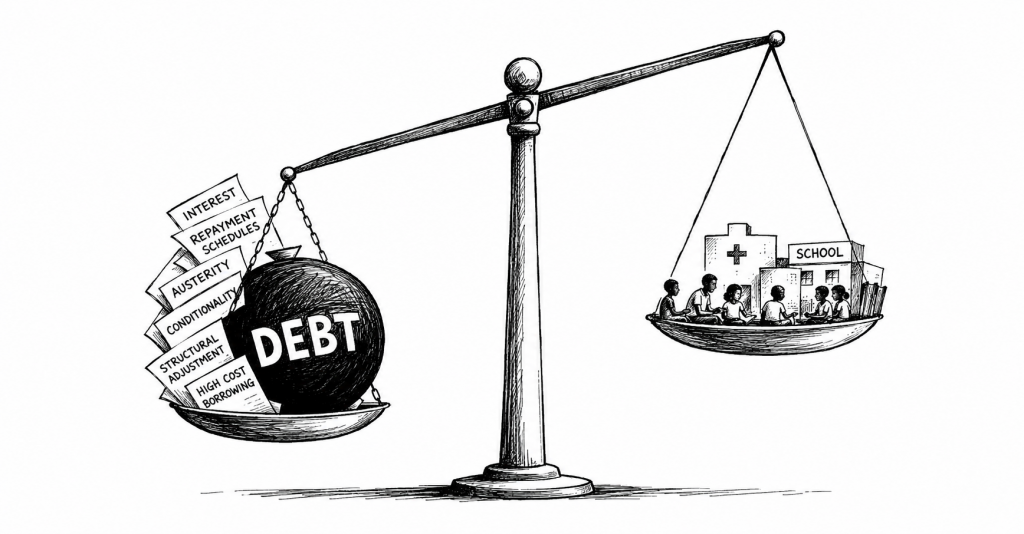
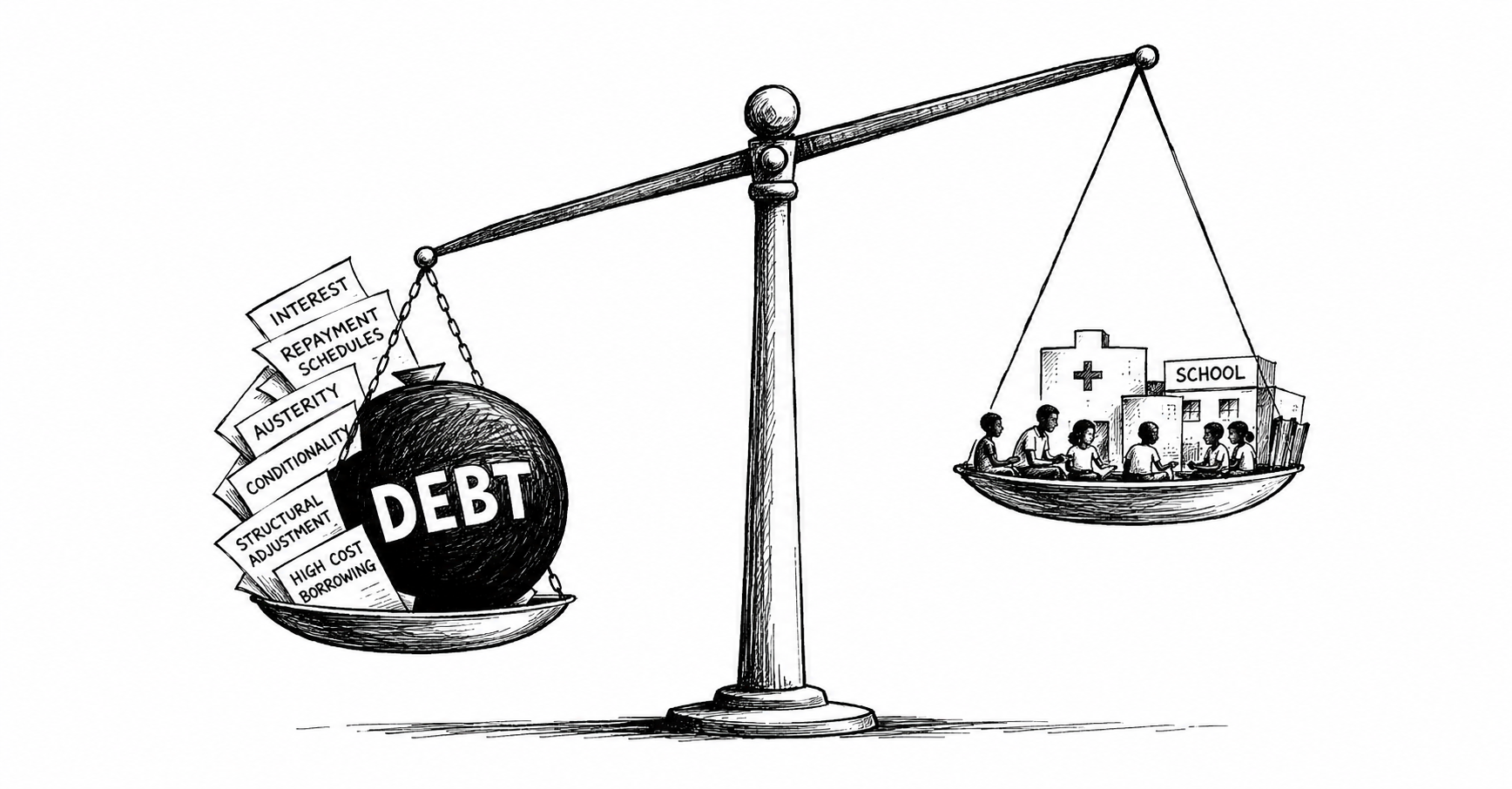
Thirty-one African nations spend more annually on debt repayment than on healthcare. Twenty-five spend more on debt than on education. Education budgets across the continent have declined from 3.9% of GDP in 2008 to 2.9% in 2023, according to research compiled by Premium Times, the Africa Health Foundation, and the Atlantic Council in 2026. The IMF projects Sub-Saharan Africa will grow at 4.6% this year — a number that coexists with a fiscal architecture in which the institutions responsible for human capital development are being outcompeted for resources by the institutions managing the debt that was borrowed, in many cases, to finance the infrastructure the growth now runs on.
The mechanism is the structure of sovereign debt as it was designed and deployed across Africa from the 1980s through the 2020s. IMF and World Bank structural adjustment programs in the 1980s and 1990s conditioned debt relief on fiscal austerity, privatization, and trade liberalization — a package that reduced government spending on social services as a condition of maintaining access to capital markets. The successor instruments — Eurobonds, bilateral lending from China and the Gulf states, and concessional lending through multilateral development banks — came with interest rates and repayment schedules calibrated to sovereign creditworthiness metrics that did not account for the climate shocks, commodity price volatility, and pandemic disruptions that have since compressed the fiscal space those debts assumed.
The result is a fiscal trap: governments that borrowed to build infrastructure and grow economies now spend more servicing the debt than investing in the healthcare systems and education systems that would allow those economies to grow in ways that make the debt serviceable over the long run. A country that cannot adequately fund primary education does not produce the skilled workforce that generates the productivity gains needed to service long-term debt. A country that cannot fund its healthcare system loses working-age adults to preventable illness and pays higher costs for emergency care that does not prevent the productivity losses. The debt service crowds out the investment that would make the debt sustainable.
The $63 billion annually (approximately £50 billion) in potential funds that proposed debt relief reforms could release — the figure cited by Atlantic Council analysts — is a conservative estimate of what redirecting debt service toward health, education, and climate adaptation would make available. Whether that relief materializes depends on negotiations between debtor governments and creditor institutions that have, historically, prioritized repayment certainty over development outcomes. The Paris Club framework, G20 debt suspension mechanisms, and bilateral debt restructuring have all been deployed in recent years with results that, in most cases, deferred rather than reduced the debt burden.
The 4.6% GDP growth projection sits alongside 31 countries spending more on creditors than clinicians. Those two numbers are not in contradiction — an economy can grow while its government services contract, particularly when growth is concentrated in extractive industries or infrastructure sectors that do not require broad labor market participation. What the combination reveals is that Africa’s growth is currently producing returns that the fiscal architecture sends out of the continent before it reaches the social infrastructure the people inside those economies depend on.
Proposed reforms to the global debt architecture — including the Common Framework and the G20’s Debt Service Suspension Initiative — have moved slowly and incompletely. The countries most in need of relief are least positioned to negotiate its terms. The countries holding the debt are least motivated to provide relief that reduces their returns. The 31 is not a number that resolves itself through growth projections. It resolves through political decisions made by creditors — decisions that the current framework does not incentivize them to make.