Young Men Are Walking Away From College. A New Survey Reveals the System Pushed Them Out Long Before They Left.
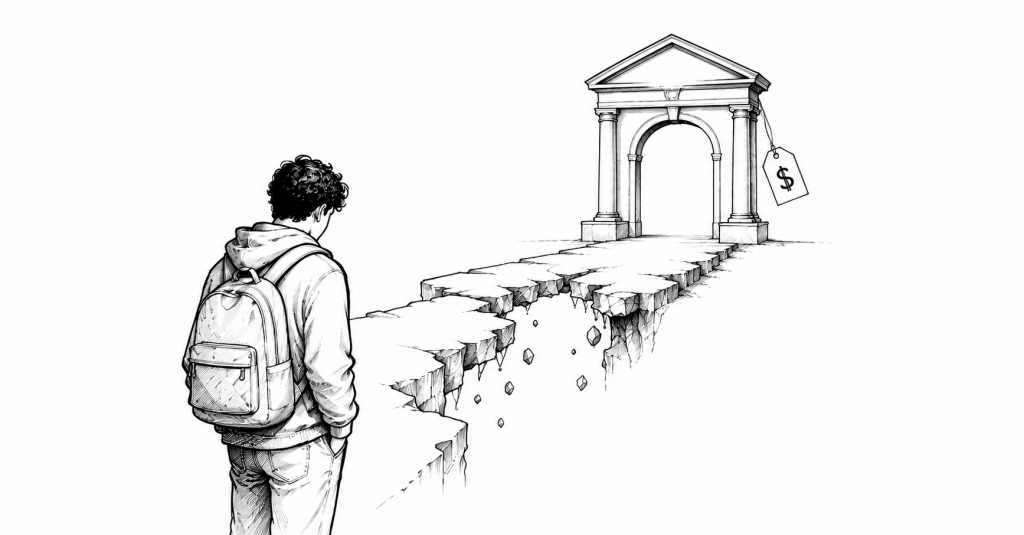
In a survey released this week by Public Agenda, 53% of men said they view college as a questionable financial investment — a finding reported by CC Daily that rippled quickly through education policy circles but landed with a particular kind of silence from the institutions it indicts. The survey, titled “Listening to Young Men,” polled 3,559 adults and found that the retreat from higher education is not a story of young men who don’t value knowledge. It is a story of young men who did the math and concluded the system wasn’t designed to reward them.
The irony is buried in the data. 80% of young men who do not hold college degrees say they want one. The desire hasn’t gone anywhere. What has gone is the belief that the current system will deliver anything close to what it once promised. That gap — between the thing they want and the institution they’ve stopped trusting — is where most of the reporting on this story starts and stops. SSC is starting there, too, but not stopping there.
The survey is specific about what has caused the distrust to calcify. 63% of young men without degrees say college is a questionable investment, compared to 42% of those who hold degrees. That 21-point spread is significant: men who have been through the system are substantially less skeptical than those outside it, which suggests the doubt is not irrational, but structural. The men who haven’t made it in — or chose not to — are making a different assessment than the men who did. And they may be right.
There is a detail in this data that virtually every story in the mainstream coverage cycle missed: 55% of young Black men said college is the best investment they could make in themselves. That is the highest rate of any group in the survey — including white men, who poll far lower. The same system that under-resources historically Black colleges and universities, siphons federal aid into institutions where Black students carry the heaviest debt loads, and routinely fails Black students post-graduation in the labor market — that same system is the one Black men are most committed to entering. What that tells you is not that Black men are more naive about higher education’s failures. It tells you that the exit ramp available to white men — trade pathways, inherited wealth, entrepreneurship capital, informal professional networks — is narrower for Black men. College, for all its failures, is still the most visible structural route to credentialed earning power for communities locked out of the informal economy of inherited privilege.
The survey also found that 70% of young men say they wish they had received better guidance in high school, and 65%say they feel that most people don’t understand them. 40% report experiencing frequent isolation. Read together, these numbers describe a cohort that is not lazy, not indifferent, and not simply disengaged from ambition. They describe a cohort that has been systematically under-mentored, under-supported, and under-seen by the very institutions — high schools, community colleges, universities — that are now puzzling over their departure.
The framing that has dominated coverage of this story presents the male decline in higher education as a cultural or ideological phenomenon — sometimes coded to signal conservative grievance, sometimes coded as a mental health story, sometimes framed around a vague crisis of masculinity. What the data actually describes is a funding story, a guidance story, and an inequality story running simultaneously. High schools that don’t invest in counselor-to-student ratios, community colleges that have cut vocational programs, universities that raised tuition faster than wage growth — these are institutional failures, not individual ones.
The moment this becomes a story about young men’s feelings about college rather than about what the institutions failed to provide, the structural argument disappears. Public Agenda is not named in most headline treatments of this survey because naming the researcher shifts the reader toward systems thinking. Naming the young man and his confusion keeps the focus on the individual. SSC is naming the researcher deliberately.
There is also a class dimension here that the “male retreat from higher education” narrative consistently flattens. Young men from lower-income households face a different calculus than those with family financial support. The debt risk is not the same. The wage premium on the other side is not guaranteed equally. And the ability to take a financial gamble on a four-year institution is itself a form of capital that requires prior capital to exercise. The survey does not fully break out class, but the isolation and guidance gaps it documents track heavily with resource scarcity.
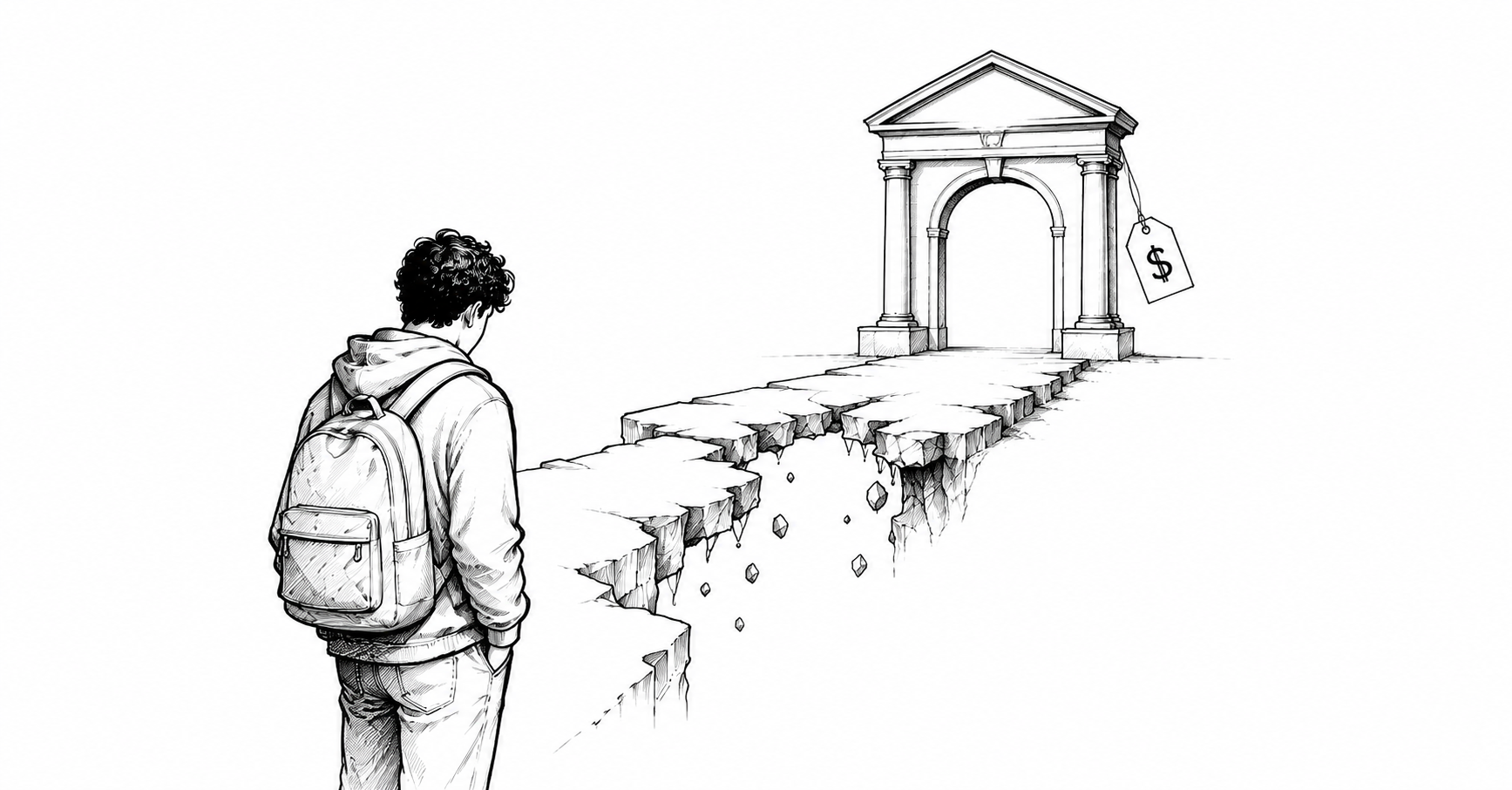
What this survey is really measuring is what happens when institutions coast on prestige long enough that the communities they were supposed to serve stop believing the prestige means anything. The credential is still real. The opportunity attached to it is still real in many sectors. But the path between enrollment and employment has been eroded by cost, debt, underinvestment, and institutional indifference to who gets left behind on it.
The finding that most directly implicates the institutions is the one that gets least attention: 70% of young men wanted more guidance. The system had them. It did not show up. That is where the accountability for this retreat actually lives — not in the culture, not in a masculinity crisis, not in a political movement, but in the investment gap between what institutions promised and what they delivered.
When 55% of young Black men still believe — against considerable structural evidence to the contrary — that higher education is their best path forward, the correct response from policy is not to use that belief as a data point proving the system is fine. The correct response is to take that belief seriously enough to fund the institutions those men are trusting with their futures.