Stanford Data: Young Software Developer Employment Fell Nearly 20% Since 2024
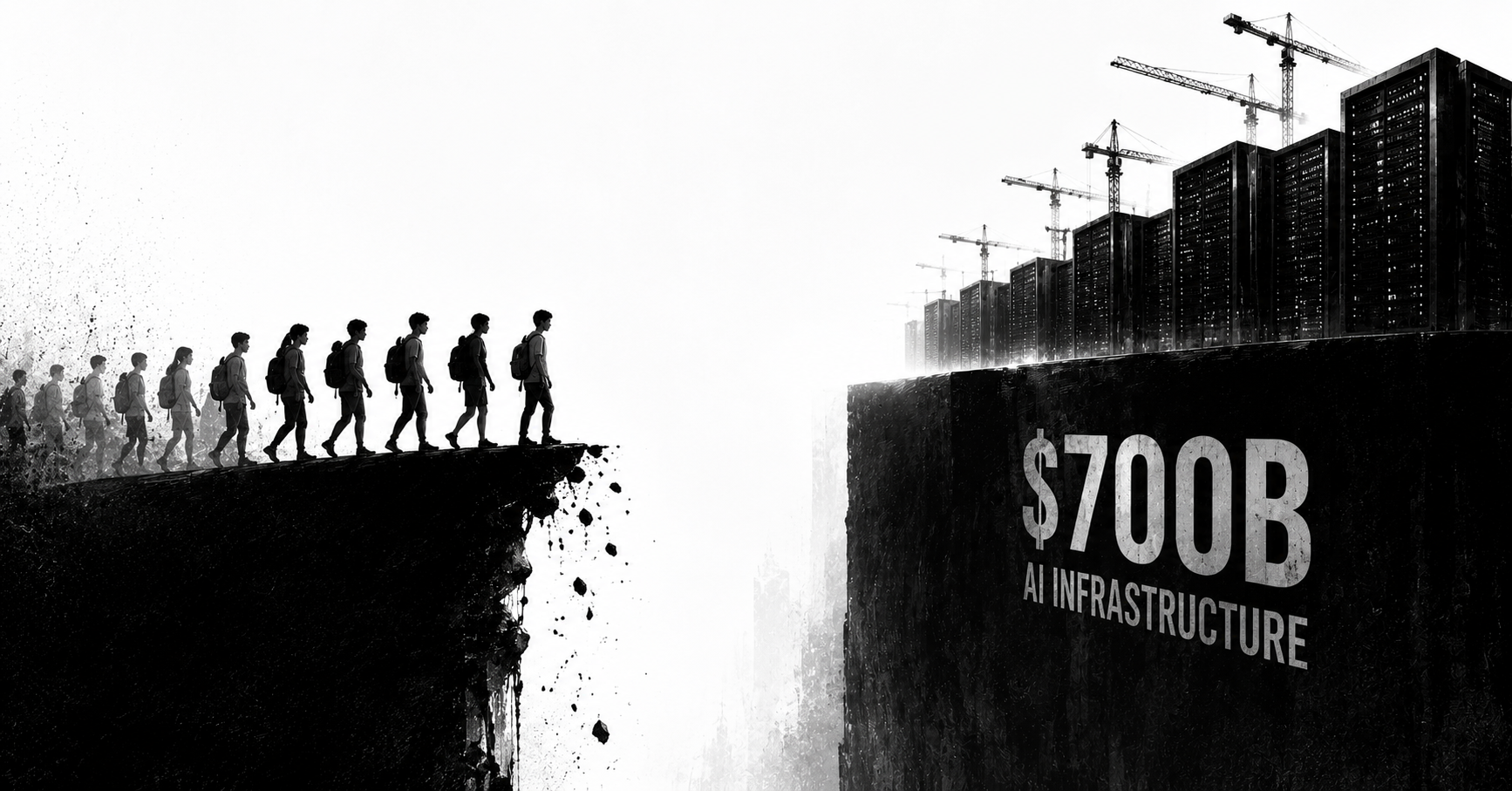
That decline is unfolding at the same moment profitable companies — Meta, Amazon, and Oracle among them — are cutting jobs to help fund a combined $700 billion buildout of AI infrastructure.
The juxtaposition is the story: companies citing efficiency and AI necessity while simultaneously committing three-quarters of a trillion dollars to build the systems that, by their own framing, are supposed to make some of those same jobs unnecessary.
The casualty isn’t where most coverage points first. Senior engineers, the workers with the institutional knowledge and judgment AI tools are furthest from replacing, have largely kept their footing. It’s entry-level software employment — the jobs that exist specifically to train someone into becoming a senior engineer — that’s collapsed by nearly a fifth in two years. That’s not a coincidence of timing. AI coding tools are genuinely good at the kind of bounded, well-specified tasks that used to be junior developer work: writing boilerplate, fixing straightforward bugs, building out scaffolding around someone else’s architecture. Take that work away, and you haven’t just cut headcount — you’ve cut the on-ramp.
That on-ramp question connects directly to who gets to enter the tech pipeline at all. HBCUs already produce roughly 20-25% of all Black STEM graduates nationally, a disproportionate share relative to their enrollment. If entry-level technical roles keep compressing, the students coming out of institutions with less alumni density in big tech, less existing internship pipeline infrastructure, and less name recognition with hiring managers are positioned to absorb that compression hardest — not because they’re less qualified, but because they have fewer of the informal advantages that help a graduate survive a tighter entry-level market.
The $700 billion AI infrastructure bet and the disappearing junior developer role are the same story told from two different vantage points. One of them just happens to land hardest on graduates who already had the steepest climb.