
The World Cup Was Supposed to Lift Service Jobs. It Didn’t.
Major events promise local economic spillover, but June’s hiring data suggests tourism momentum may not be enough to offset a softer consumer economy.
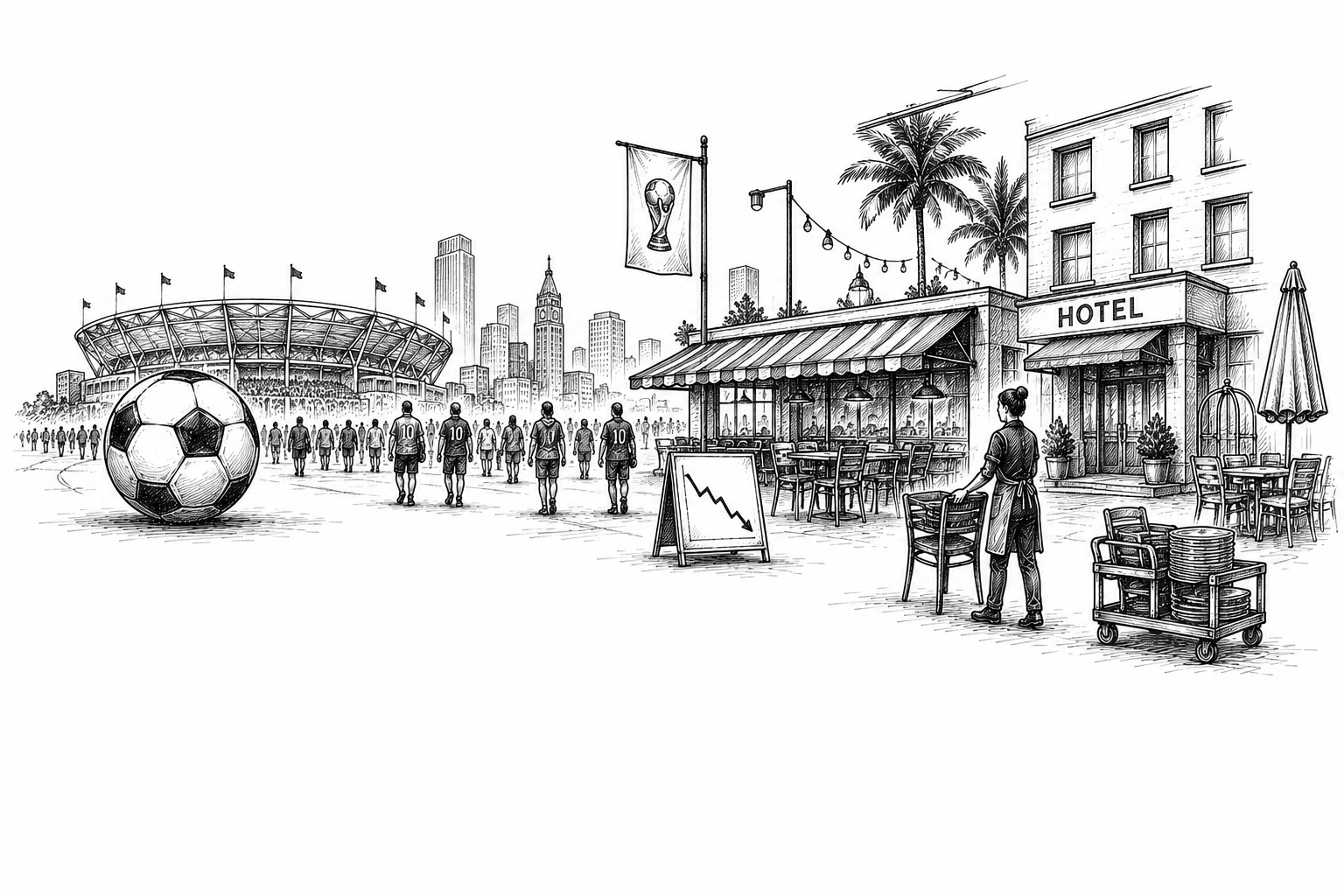
The Associated Press reported Thursday that restaurants, bars, and hotels cut 61,000 jobs in June, a sharp disappointment for a sector expected to receive at least a temporary lift from World Cup activity across multiple U.S. cities. Axios reached the same conclusion from the jobs data: no clear World Cup hiring bump appeared in June.
That gap between expectation and employment is the story. Major events are sold to cities as economic accelerators. They promise visitors, hotel demand, restaurant traffic, transit use, merchandise sales, global attention, and short-term work. The public is told that a tournament does not only entertain. It circulates money.
But circulation is not the same as broad labor demand. A city can host more visitors without creating a durable hiring boom. Businesses can serve larger crowds by stretching existing staff, relying on temporary scheduling, raising prices, automating more tasks, or concentrating gains among operators already positioned to capture event traffic.
The June numbers make that distinction visible. Leisure and hospitality is the category most sensitive to tourism. If World Cup demand were producing a clear labor surge, that sector should have shown it. Instead, Axios reported that leisure and hospitality employment fell by 61,000 jobs in June and that the sector has shed an average of 9,000 jobs over the last three months.
Monthly labor data can be noisy. Seasonal adjustments can miss local surges, and metro-level data will matter more once released. A crowded bar in Boston or a busy hotel district in one host city can be real without appearing as a national hiring wave. The point is not that the World Cup had no economic effect. The point is that the effect did not show up where the public was told to expect it first: jobs.
That should make cities more skeptical about event-economy promises. Hosting a global tournament creates costs before it creates benefits. Cities plan security, transportation, crowd control, sanitation, public space, policing, street management, and business coordination. Some of those costs are public. Many of the benefits are private, concentrated among hotels, venues, sponsors, landlords, and businesses located in the right zones.
Workers do not automatically share in that upside. A restaurant can be busier and still avoid hiring if food costs are high, consumers are spending unevenly, or managers fear that demand will disappear once the tournament leaves town. The National Restaurant Association’s chief economist told AP that restaurants are seeing consumers pull back on dining out, especially outside higher-income households. That matters because event tourism is layered on top of the consumer economy that already exists.
A K-shaped economy changes how events perform. Wealthier fans may fill premium venues, hotels, and high-end restaurants. Middle- and lower-income customers may still cut back. Service businesses facing higher food costs, labor costs, rent, and energy prices may decide that the safest response is not more hiring. It is tighter staffing.
That is the structural warning. Mega-events can create a sense of abundance while leaving the underlying service economy fragile. The crowds are visible. The labor conditions are less visible. A city can look activated on television while workers face fewer hours, unstable schedules, or no new openings at all.
The next test will be local data: sales taxes, hotel occupancy, transit ridership, small-business revenue, and neighborhood-level employment. Those numbers will show whether the World Cup produced broad spillover or concentrated event revenue.
For now, the hiring data is a caution against spectacle economics. A global event can fill the streets without strengthening the workers who keep those streets running.