Pakistan Just Banned International Media from Most of the Country. The Timing Tells You Why.
SSC News Desk
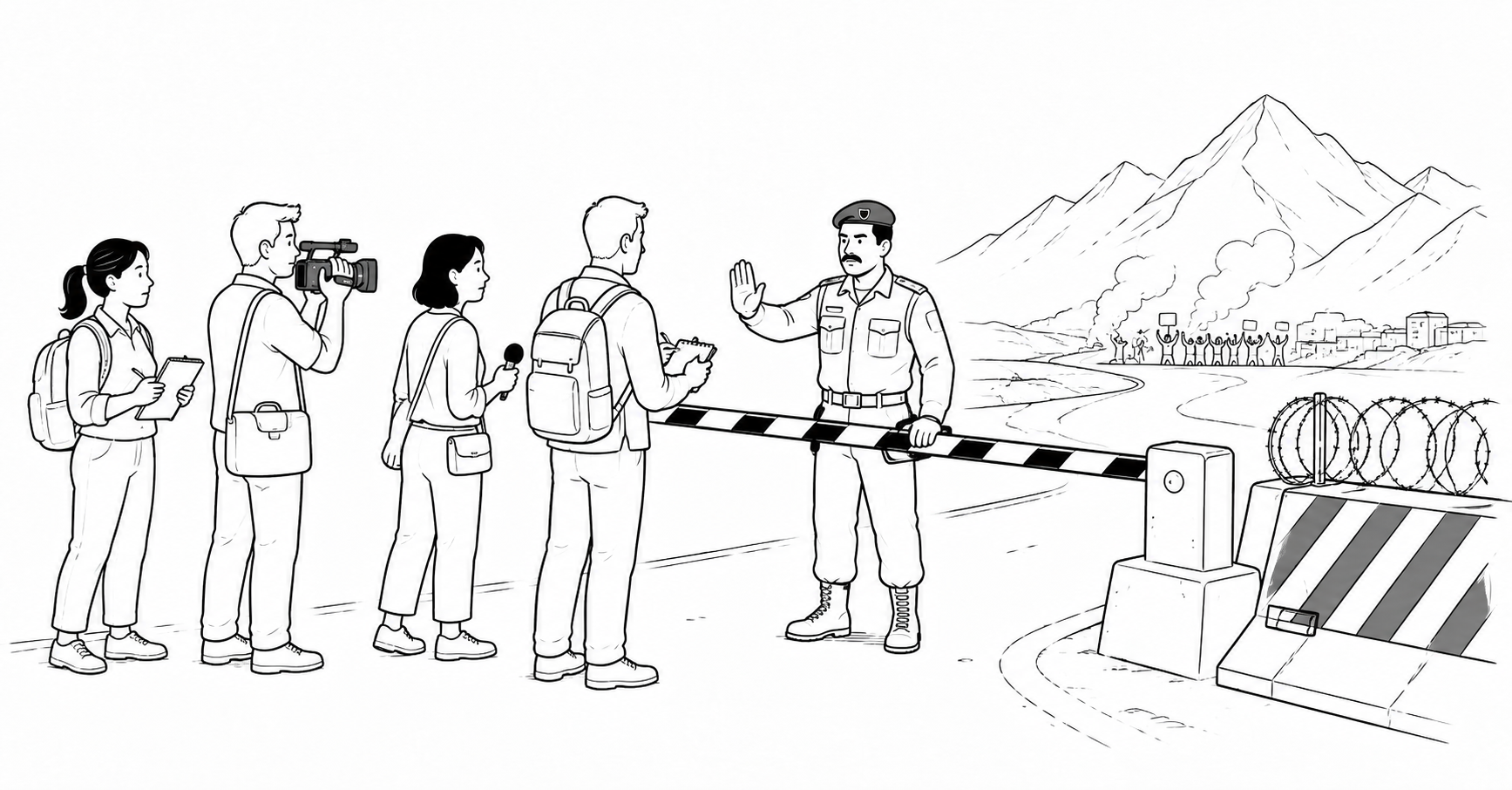
Days after international outlets became the only journalists reporting on the killing of protesters in Pakistani-administered Kashmir, the government issued rules requiring foreign media to get permission before reporting anywhere outside three cities.
Governments do not ban coverage of events that did not happen.
On August 3, Pakistan’s Ministry of Information issued what it called the Foreign Media Facilitation Guidelines 2026 — rules requiring any journalist working for international media, including Pakistani nationals, to obtain government permission before reporting from anywhere in the country except three cities: Islamabad, Karachi, and Lahore. The permission mechanism is called a No Objection Certificate, or NOC. The new rules do not specify how long that process takes. Foreign journalists already required NOCs before the guidelines were issued, and the wait time has historically ranged from weeks to months — or no answer at all.
The rules arrived days after dozens of protesters were killed in Pakistan-administered Kashmir in late July 2026. International outlets — including Al Jazeera and the BBC — were the only journalists who reported on the killings. Pakistani domestic media did not. After Al Jazeera’s coverage of the protests and a reported boycott of regional elections in Muzaffarabad, the capital of Pakistan’s Kashmir region, the government blocked Al Jazeera’s website across the country. It remains inaccessible without a VPN. Pakistani authorities called the reporting “yellow journalism.” When the BBC published accounts from protesters accusing Pakistani security forces of firing on unarmed civilians, officials issued a denial and ordered all journalists to immediately leave Kashmir.
The new guidelines also allow authorities to revoke a journalist’s accreditation for “acts against ideology, sovereignty, security or public order of Pakistan.” Legal experts have noted that the language is vague by design — vague enough to apply to almost any reporting the government finds inconvenient.
Pakistan is ranked 153 out of 180 countries on the World Press Freedom Index. Successive governments have restricted and censored domestic media. What makes the August 2026 guidelines different is their target. This is the first time Pakistan has imposed formal restrictions specifically on international media — the reporting infrastructure that has functioned, in practice, as the primary accountability mechanism for events the government prefers go uncovered.
Nasir Zaidi, a former general secretary of the Pakistan Federal Union of Journalists who was publicly flogged during the military dictatorship of General Zia ul-Haq for advocating media rights, said he had not seen anything comparable. “Despite the fact I have worked during martial laws, such curbs and restrictions on international media were unseen,” he said. “It is worse than martial law.”
The government’s characterization of the guidelines contradicts that assessment. A ministry spokesperson said the rules were not designed to restrict media but to “provide an administrative mechanism” to verify journalists, facilitate access, and coordinate reporting. This framing — bureaucratic facilitation rather than political suppression — follows a pattern visible in press freedom restrictions globally. The apparatus of access management and the apparatus of censorship are the same apparatus. The label determines which one it is called.
What the guidelines accomplish in practice: international journalists who want to cover any area outside the three exempt cities must wait for permission that may never arrive, in a system with no stated timeline and penalties for coverage the government classifies as a threat to national security or ideology. The result is that the regions where the Pakistani state has the most to conceal — conflict zones, protest sites, politically sensitive border areas — become effectively off-limits to outside reporting. The Kashmir coverage that triggered the policy was exactly the kind the policy is now designed to prevent.
Mustafa Nawaz Khokhar, a Pakistani political commentator, said the guidelines were “tantamount to choking international media in an increasingly shrinking space.” What shrinks with it is the record. When governments control who can report and from where, the events that happen in the restricted territory do not stop occurring. They stop being documented.