Kellogg’s Says It’s Removing Artificial Dyes From Froot Loops. It Left Out the Part About the Government.
SSC News Desk
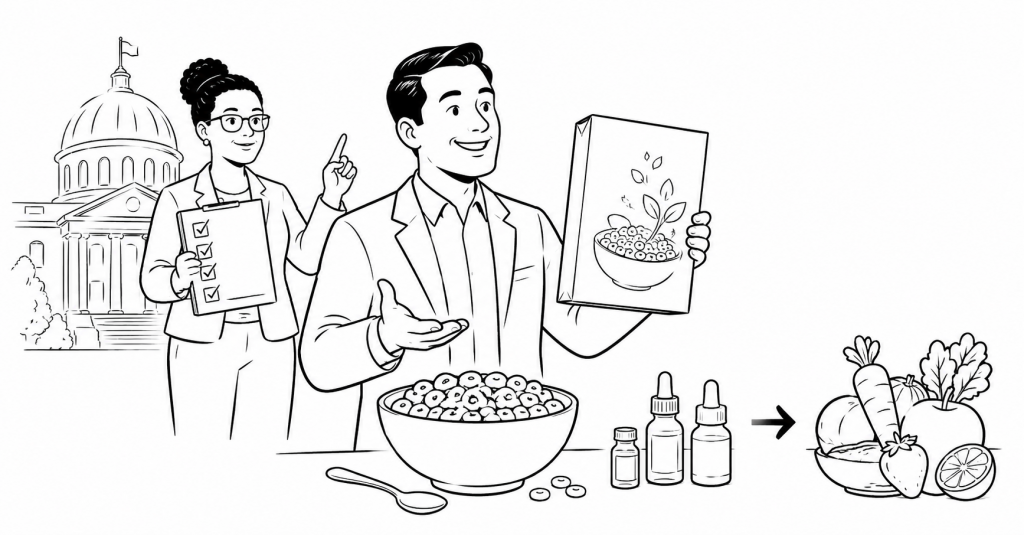
WK Kellogg announced this week it’s eliminating artificial colors from its entire cereal line a year ahead of schedule. The announcement did not prominently mention that the federal government asked the food industry to do exactly this.
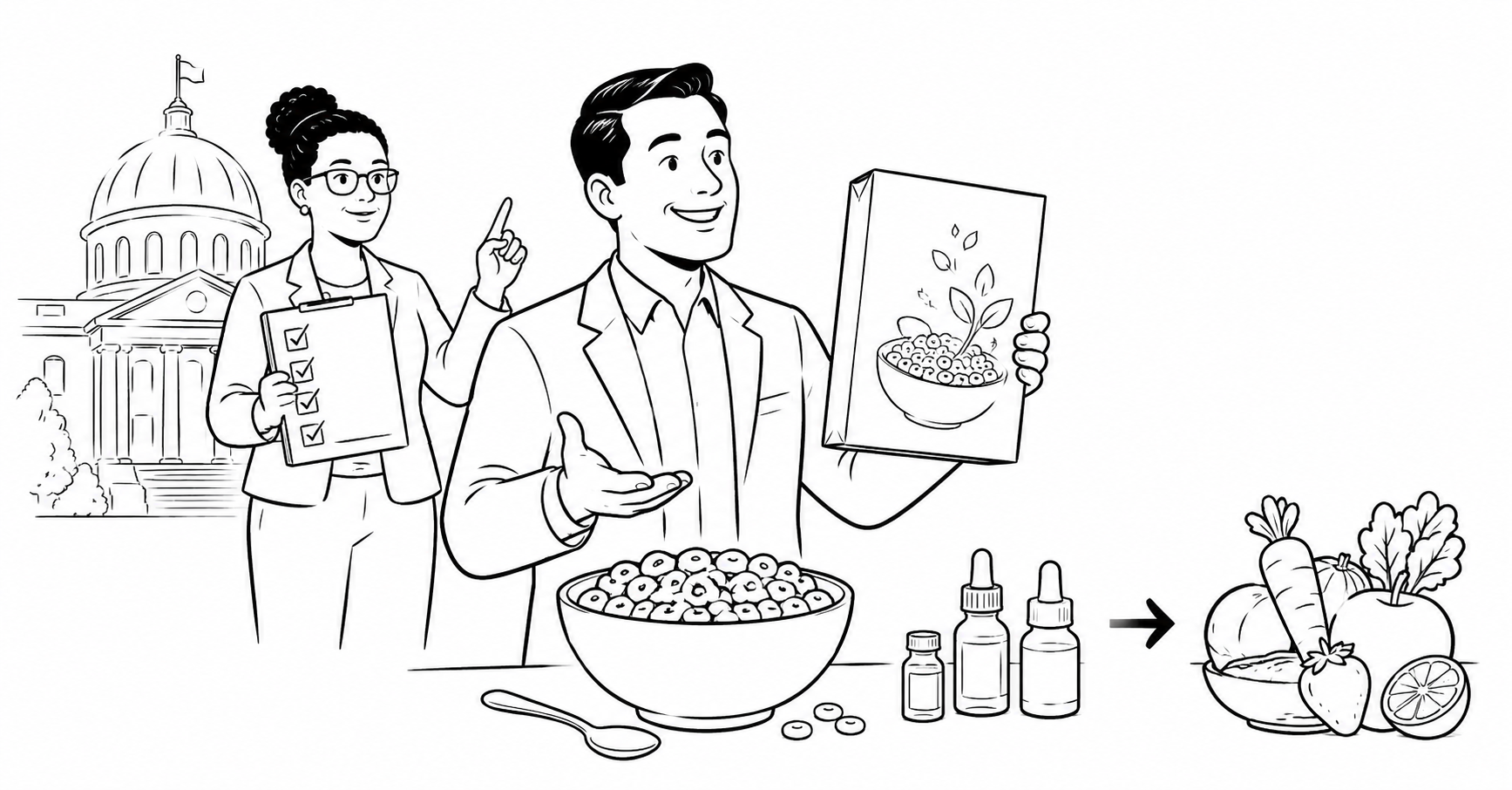
WK Kellogg Co announced on August 6, 2026 that it will eliminate all artificial colors — and the preservative BHT — from its entire cereal portfolio by the end of this year, one year ahead of its original 2027 commitment. The reformulation covers every brand in the company’s line: Froot Loops, Apple Jacks, Frosted Flakes, Rice Krispies, Kashi, Special K, Raisin Bran, and Bear Naked. Colors will be replaced with ingredients derived from fruit and vegetable juices and other plant-based sources. The company says consumers will see the same rainbow — red, orange, yellow, green, purple, and blue — maintained through natural alternatives.
“More and more consumers are looking for foods made with simple, recognizable ingredients and we are proud to meet those expectations, even sooner than planned,” said Doug VanDeVelde, WK Kellogg’s Chief Growth Officer. The press release framed the move as a continuation of a century-long nutrition legacy, noting that the company hired the food industry’s first in-house dietitian in 1923.
What the press release did not prominently mention: the federal government asked the food industry to stop using synthetic dyes, and the food industry agreed.
In April 2025, major food manufacturers reached a voluntary agreement with the Trump administration’s Department of Health and Human Services and FDA to phase out eight petroleum-based synthetic dyes from all US food products by the end of 2026. The effort was a central objective of HHS Secretary Robert F. Kennedy Jr.’s Make America Healthy Again initiative. The FDA is formally revoking authorization for two of the eight dyes — Citrus Red No. 2 and Orange B — but those are rarely used. For the six dyes that appear in thousands of food products, including the ones in Kellogg’s cereals, the arrangement is voluntary. FDA Commissioner Marty Makary explained the approach directly: “There’s no need to have a regulation or a statute when companies are volunteering to do it.”
That framing inverts what actually happened. The companies are not volunteering unprompted. They are complying with a politically high-pressure request from an administration with both regulatory authority and a significant public platform dedicated to reformulating the American food supply. The “voluntary” designation is accurate in the narrow legal sense — no statute was written, no enforcement mechanism exists. In the practical sense, a food company that declined to participate would be choosing to publicly align itself against a federal health initiative with the word “America” in its name.
The result is a policy outcome that required neither legislation nor rulemaking, secured through the same mechanism that usually produces corporate commitments: reputational risk management. WK Kellogg made “a significant investment in its manufacturing facilities” to support the transition, according to its announcement — a real cost, undertaken not because the company decided on its own that artificial dyes were a problem, but because the political environment made the cost of inaction higher.
None of this makes the reformulation less real. The dyes are coming out of the cereal. Froot Loops will be made with natural colors. Consumers who were concerned about petroleum-based synthetic additives in children’s breakfast foods will get what they wanted. The outcome is the same regardless of the mechanism.
What the mechanism reveals is how food policy has actually moved in 2025 and 2026 — not through formal regulation, but through voluntary frameworks that give companies credit for cooperation while creating no legal accountability for backsliding. The FDA is revoking authority over two dyes nobody uses. The six that matter are operating on goodwill and public relations calculus. If a future administration decided it preferred the original formulations, no rule would have to be reversed. The companies would simply stop volunteering.
WK Kellogg says it conducted extensive consumer testing to ensure the reformulated cereals maintain their taste and appearance. It has already reformulated foods served in school programs to remove artificial colors and stopped launching new products with artificial dyes since January 2026. The commitment is real. The framing — “pioneer in nutrition,” “even sooner than planned” — describes a company choosing leadership. What it is describing is compliance presented as initiative.