
The AI Buildout Is Coinciding With Another Wave of Tech Layoffs

As companies pour billions into AI infrastructure, workforce reductions are increasingly becoming part of the financing equation.
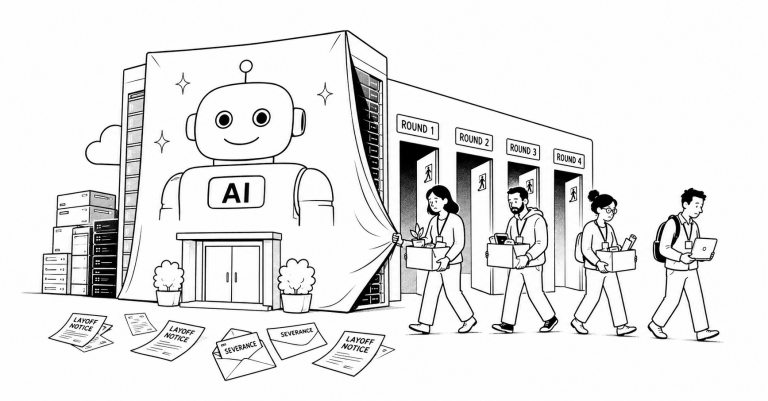
Tech-sector employers announced 123,653 job cuts through the first five months of 2026, a 66% increase over the same period last year, according to Challenger, Gray & Christmas data reported by Yahoo Finance, with artificial intelligence cited as the leading reason for job eliminations across industries for three consecutive months. Robinhood became the latest entry in that count this month, cutting roughly 290 positions — about 10% of its workforce — with CEO Vlad Tenev telling staff the move was necessary to flatten the company’s org structure in order to “achieve the massive scale of our mission.” Coinbase moved earlier to shed about 700 positions, or 14% of its headcount, even as its first-quarter earnings report showed staff levels had climbed 22% year-over-year while annualized revenue per employee slid 8% — a gap CFO Shiv Verma’s regulatory filing framed as necessary to “maintain a high performance culture” and “remain lean and disciplined.”
The pattern doesn’t mean AI is replacing entire workforces, and several companies have been explicit that the cuts aren’t framed internally as AI-driven automation. When LinkedIn laid off roughly 875 employees, 5% of its staff, a source close to the decision told Reuters the reorganization was about focusing resources on growth areas, “not for artificial intelligence to replace jobs.” What the layoffs do suggest, regardless of each company’s internal framing, is that the transition into the AI era is changing how companies allocate capital — and labor costs are increasingly one of the line items companies adjust to fund the other side of that transition. Building advanced AI systems requires billions of dollars in data centers, chips, software, and specialized engineering talent, and those investments have to come from somewhere. Across the industry, companies are managing slowing growth, investor expectations, and the rising cost of competing in AI simultaneously, and that combination is producing a familiar result: labor expense is becoming more flexible while technology spending becomes more strategic, treated less like a cost center and more like the asset the rest of the business now exists to fund.
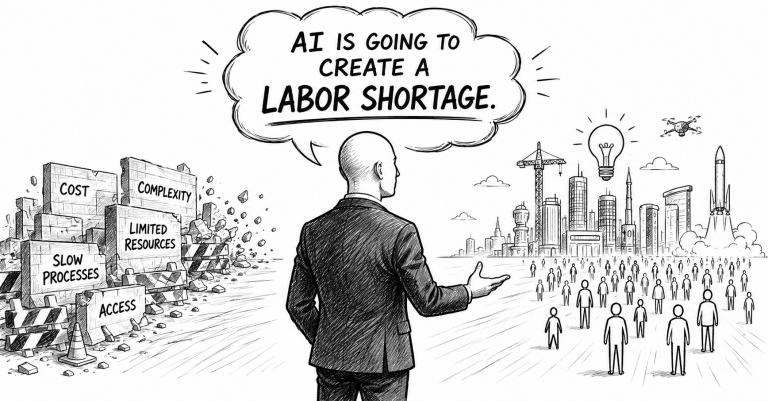
None of this means every layoff traces back to AI specifically. Companies cut jobs for plenty of reasons, including restructuring, flattening management layers, and adjusting to slower markets, and several of the layoffs counted in this year’s tally — Rivian’s cuts to its service organization, GM’s reduction in IT staff — have little to do with artificial intelligence at all. But AI has become one more priority competing for the same pool of resources that used to fund hiring, which means companies are now making explicit choices about which capabilities to own internally and which costs they’re willing to absorb elsewhere. Executives describe AI as a growth opportunity that will unlock new products and productivity gains down the line. The employees living through hiring freezes, reorganizations, and a shrinking number of entry-level roles are experiencing the same transition very differently, and both descriptions can be accurate at once — technology cycles have historically produced long-term growth alongside genuine short-term disruption for the people inside them.
The deeper question isn’t whether artificial intelligence eventually eliminates work. It’s who pays for the transition while that question gets answered. So far, the answer is uneven: shareholders are funding the infrastructure, companies are funding the research, and workers are increasingly absorbing the organizational cost of getting there. Artificial intelligence isn’t only a technology story anymore. It’s a capital allocation story, and at a growing number of companies, labor is where management has decided to find the money to finance the future.