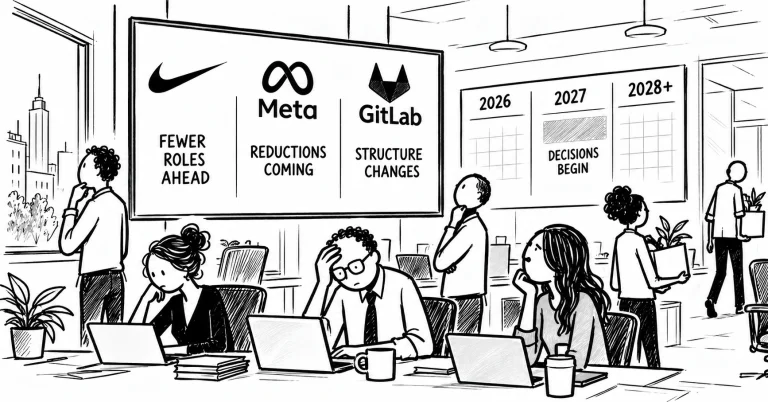
Nike, Meta and GitLab have announced reductions before identifying affected employees. The gap gives companies time to reorganize while workers decide how much uncertainty they can afford.
Advisers are examining how to separate U.S. product-liability exposure from the beauty company’s operations. For claimants, the terms would determine who manages the cases and what resources stand behind them.
Opening more routes into law can expand access while leaving graduates with different options across state lines. A graduate holds a diploma-shaped key beside two doors: one opens, while the other requires a different credential. The scene captures the tradeoff in recognizing law schools outside traditional accreditation pathways. A potentially cheaper education may offer a route into practice in one state without providing comparable mobility elsewhere. For prospective students, the decision involves both what a degree costs and where it will allow them to build a career.
1. HubSpot is rebuilding around AI—and nearly 660 employees are leaving. The software company announced a roughly 7% workforce reduction on October 6 as it reorganizes product teams, reduces management layers and moves toward delivering customer outcomes with AI. In her message to employees, CEO Yamini Rangan said the cuts were not driven by efficiencies from AI replacing work, but by the structure and capabilities the company believes its new strategy requires. For workers, that explanation reveals another route from AI investment to job loss: a company can eliminate positions because its priorities change, even without claiming a machine now performs those jobs.
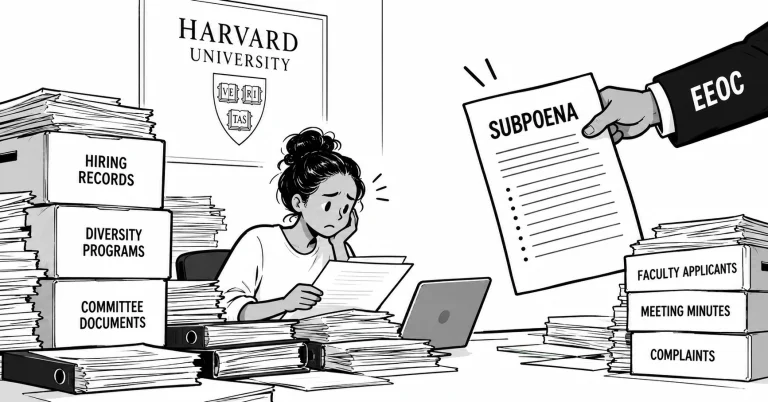
The federal agency says it needs additional records to investigate alleged employment discrimination. Harvard says more than 700 requests amount to an excessively broad investigation that would burden operations across its 13 schools.
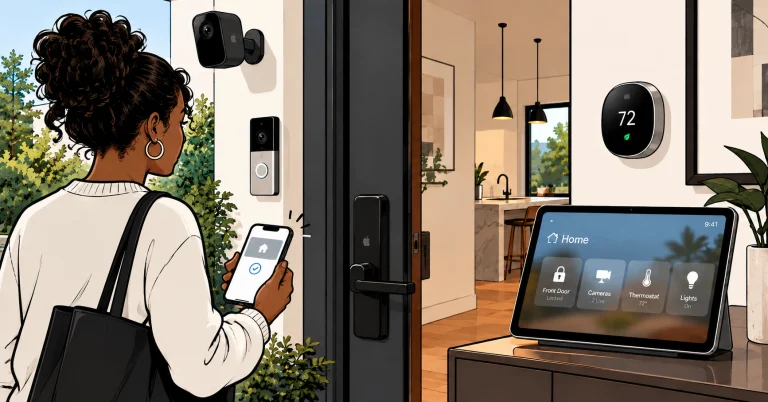
Apple is reportedly developing a smart lock, doorbell, thermostat and security cameras with LG, turning its coming home hub into the center of a much broader push into the connected home.
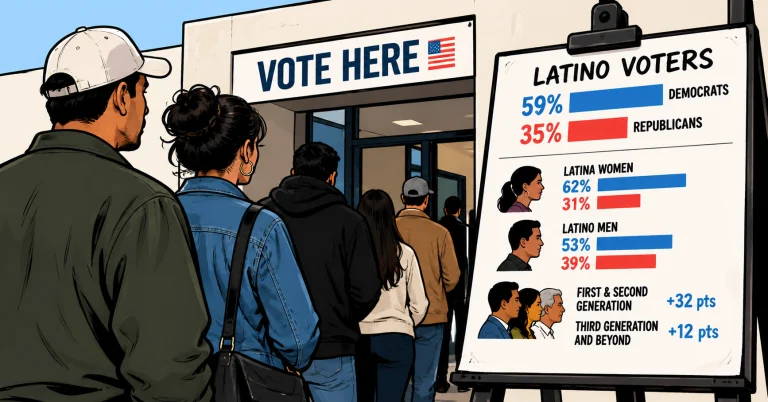
An NBC News/Telemundo poll finds a Democratic advantage among Latino voters, but the differences within that electorate complicate any claim of a permanent political realignment.
The dispute has reached the appeals court, extending a fight over whether federal immigration authority can be used to restrict who attends a particular university.
A federal judge in Boston blocked the Trump administration’s immigration-fine policy October 5, ruling that its implementation violated administrative law. The government had assessed penalties of $998 per day against migrants who did not leave after final deportation orders, applying them retroactively for up to five years. Judge George O’Toole found deficiencies in individualized allegations and in the process used to change the rules. The decision interrupts a financial enforcement mechanism capable of imposing enormous debts; it does not itself cancel the underlying deportation orders.
Christopher Pelkey’s family used artificial intelligence to recreate him delivering a victim-impact statement after his death. An Arizona appeals court has now drawn an early legal boundary around something AI makes increasingly possible: putting words into the mouths of people who can no longer confirm them.
The Television Academy and Amazon announced October 6 that the Emmy Awards will move exclusively to Prime Video beginning in 2027 under a six-year agreement. The ceremony will stream live and free in more than 240 countries and territories, without requiring a Prime subscription. The deal replaces the awards’ rotating broadcast-network arrangement with one global distribution partner. Amazon gains another major live event, while the academy gains a consistent platform for production and audience development. Viewers retain free access, but reaching the ceremony will increasingly depend on a streaming connection rather than a broadcast signal.
U.S. News & World Report announced October 6 that its new direct admissions platform will deliver instant, conditional college offers to qualifying high school students. Participating institutions can match student profiles against criteria including GPA, test scores, geography and intended major. Initial partners include the University of Idaho, Savannah College of Art and Design and University of Arkansas at Little Rock. The platform gives colleges a recruitment channel inside students’ research process and could introduce applicants to unfamiliar institutions. Families will still need to examine admission conditions and financial aid before treating an offer as an affordable route to enrollment.