Luxury Brands Are Selling Experiences Instead of Products
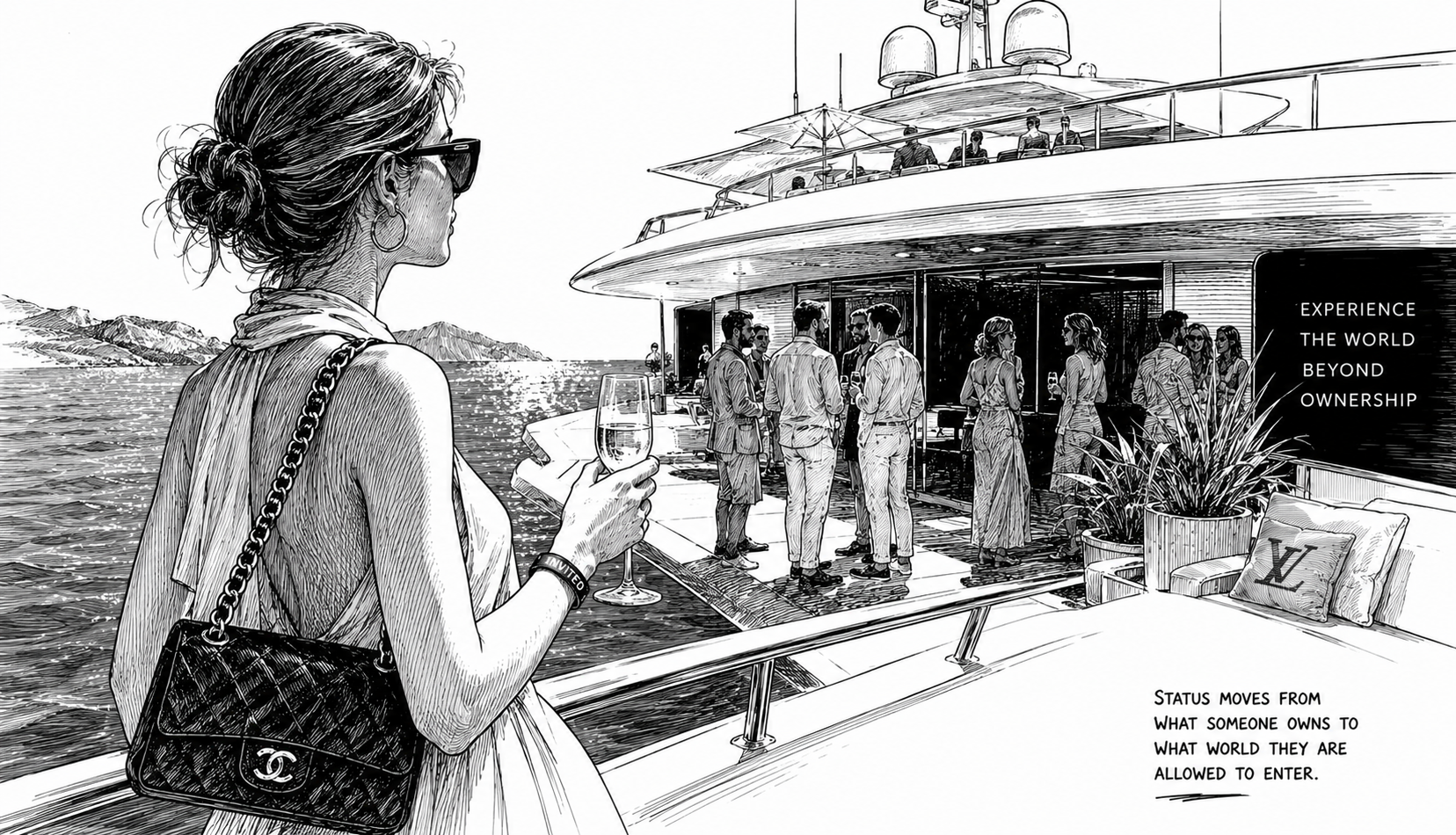
Status moves from what someone owns to what world they are allowed to enter.
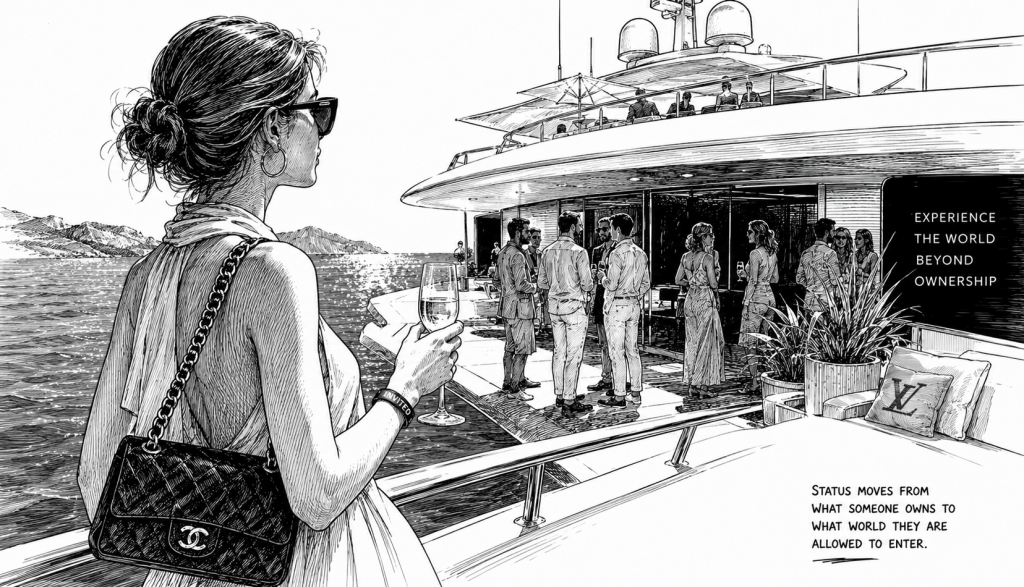
Luxury marketing is shifting its center of gravity from the product to the activation around it. Brands are increasingly staging travel, wellness retreats, and influencer-driven events on yachts and in private settings rather than relying on the object alone to carry the message. The mechanism is straightforward: an invitation generates more cultural value than a transaction, because an invitation cannot be purchased off a shelf.
A handbag signals taste. A seat at a brand-hosted yacht weekend signals access — and access is harder to copy than craftsmanship. Luxury houses have spent decades building supply chains that can replicate stitching, leather, and design at scale. They cannot replicate scarcity of belonging at the same scale, which is exactly why scarcity of belonging has become the more valuable asset to sell.
This is why yacht-based and retreat-based branding functions as infrastructure rather than spectacle. It gives a luxury company a controlled environment where fashion, wellness, hospitality, and social media visibility collapse into a single, photographable scene — one that an influencer’s audience experiences as aspiration rather than advertising. The content produced inside that environment carries more persuasive weight than a traditional campaign because it reads as lived experience, not paid placement.
A consumer who can afford the bag but was never invited to the activation still experiences exclusion — the product purchase no longer closes the gap between spectator and participant. Luxury brands have effectively created a second tier of status that money alone does not unlock, and the visibility of that second tier, amplified across social platforms, is what makes the rest of the audience want in.
The next phase of luxury marketing will be decided by which brands can scale exclusivity without destroying it. The economics only work as long as access remains genuinely limited. The moment a brand opens the activation to everyone who can pay, the participation premium collapses back into an ordinary transaction — and the brand will need a new scarce experience to sell.