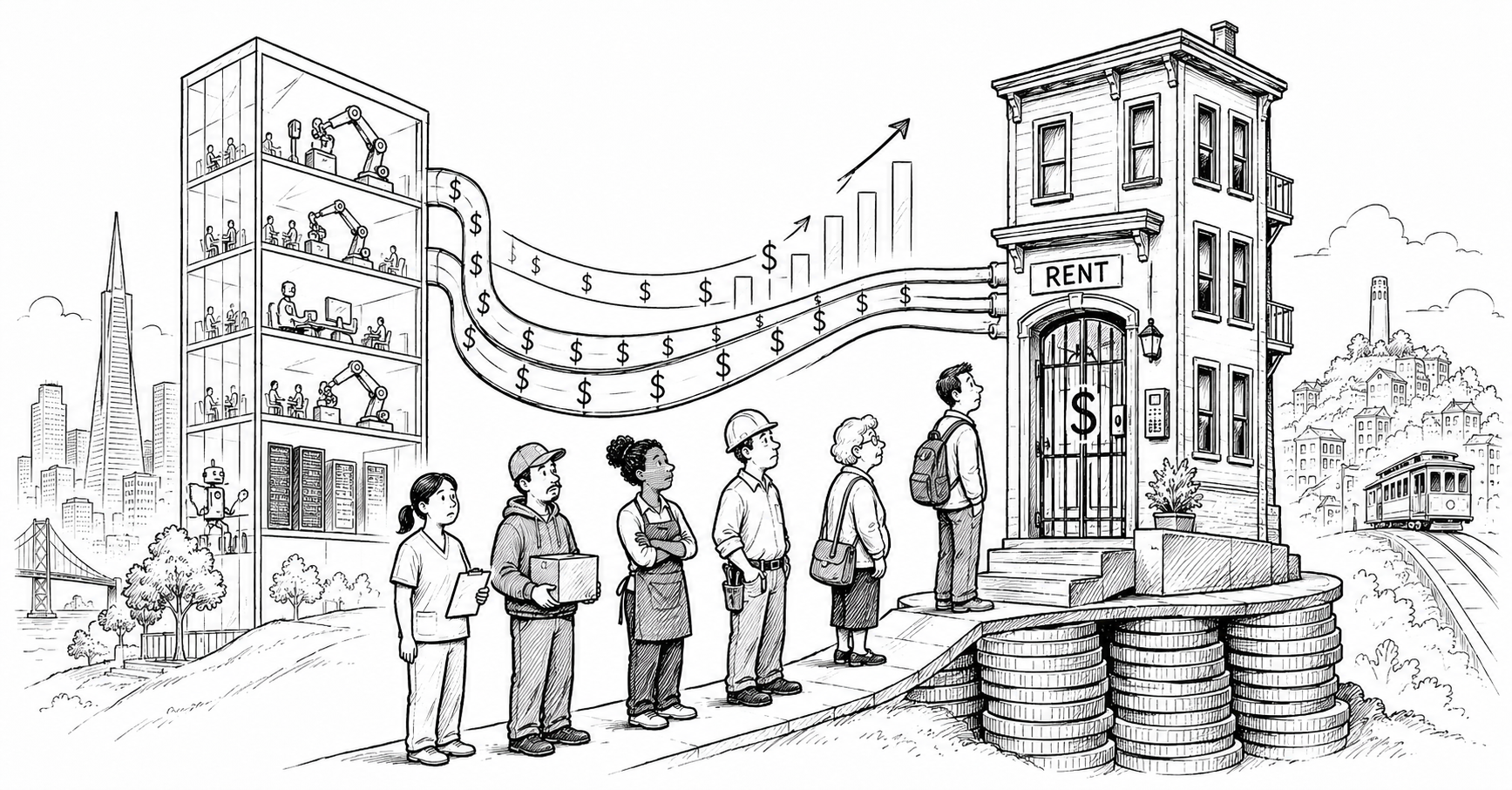
San Francisco Rent Is Becoming the First Tax of the AI Economy
AI demand is flowing into a housing system built to ration entry, turning rent into the first price of participation.
Christian Leonard reported for the San Francisco Chronicle on June 25 that San Francisco’s median asking rent for a one-bedroom apartment rose from $2,980 in May 2025 to $3,480 in May 2026, a nearly 17% increase in one year. The rebound is being driven by renewed tech and AI demand colliding with a housing market that has spent decades constraining supply.
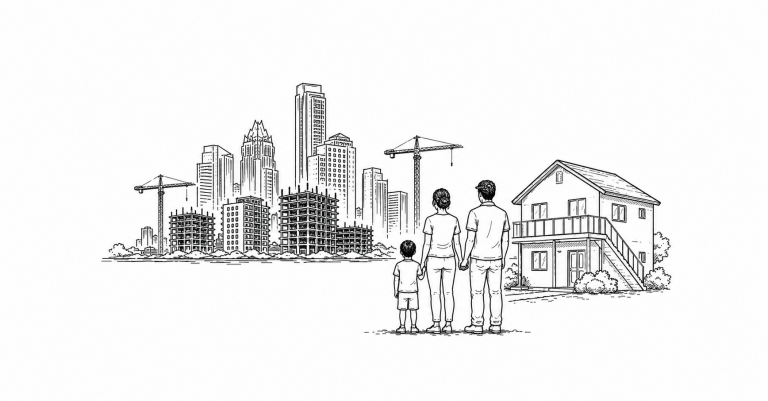
Housing policy decides who can enter an economy before the economy decides who can advance inside it. San Francisco can be described as a city in recovery — AI companies expanding, workers returning, capital moving back — and all of that can be true at the same time that the city is becoming harder to live in. Recovery without housing supply does not spread opportunity. It auctions access to the first people who can meet the price.
The city’s supply constraint is not accidental. Restrictive zoning, long approval timelines, neighborhood resistance, and a political culture that has treated scarcity as manageable have kept the number of new units well below what demand requires. When capital returns to that structure, it competes for a limited number of places. High-wage AI workers may absorb $3,480 as the cost of proximity. Lower-wage workers absorb it as displacement pressure. Everyone else absorbs it as proof that the recovery is not for them.
Rent becomes the sorting mechanism before the job market does. A teacher, a transit worker, a nurse, a restaurant cook, or a building services employee may hold a job inside the AI economy’s support system and still not be able to afford the neighborhood that economy is rebuilding. The income from those jobs does not scale with AI wages, but the rent does. That is not a market inefficiency. It is the market working as designed inside a constrained supply system.
Landlords and incumbent property holders capture the first-order gain from renewed demand. Renters, newcomers, and workers outside the top wage tier pay the cost of entry. The city gains a recovery narrative. The county gets higher assessed values. The workers who make the growth functional get priced out of the density that makes their jobs necessary.
San Francisco’s rent spike should be read against its technology rebound because the two outcomes are not separate stories. A city can win the AI economy and accelerate housing exclusion at the same time. It has done both before. The question now is not whether AI is bringing capital back to San Francisco. It clearly is. The harder test is whether capital coming back will produce a different outcome than capital being there the first time.