The Labor Market Isn’t Failing. It’s Reorganizing. And Nobody’s Tracking Who Gets Left Behind.
According to AP reporting, initial jobless claims ticked up this week as layoffs continued across tech, entertainment, and creator platforms. The unemployment rate remained stable at 4.2%. On the surface, this is reassuring. Claims are rising but unemployment holds steady—the economy is adjusting, not collapsing. But the stability masks what’s actually happening beneath the headline number. The labor force isn’t shrinking uniformly. It’s reorganizing by skill. And the people being reorganized out have very different outcomes depending on what skills they possessed.
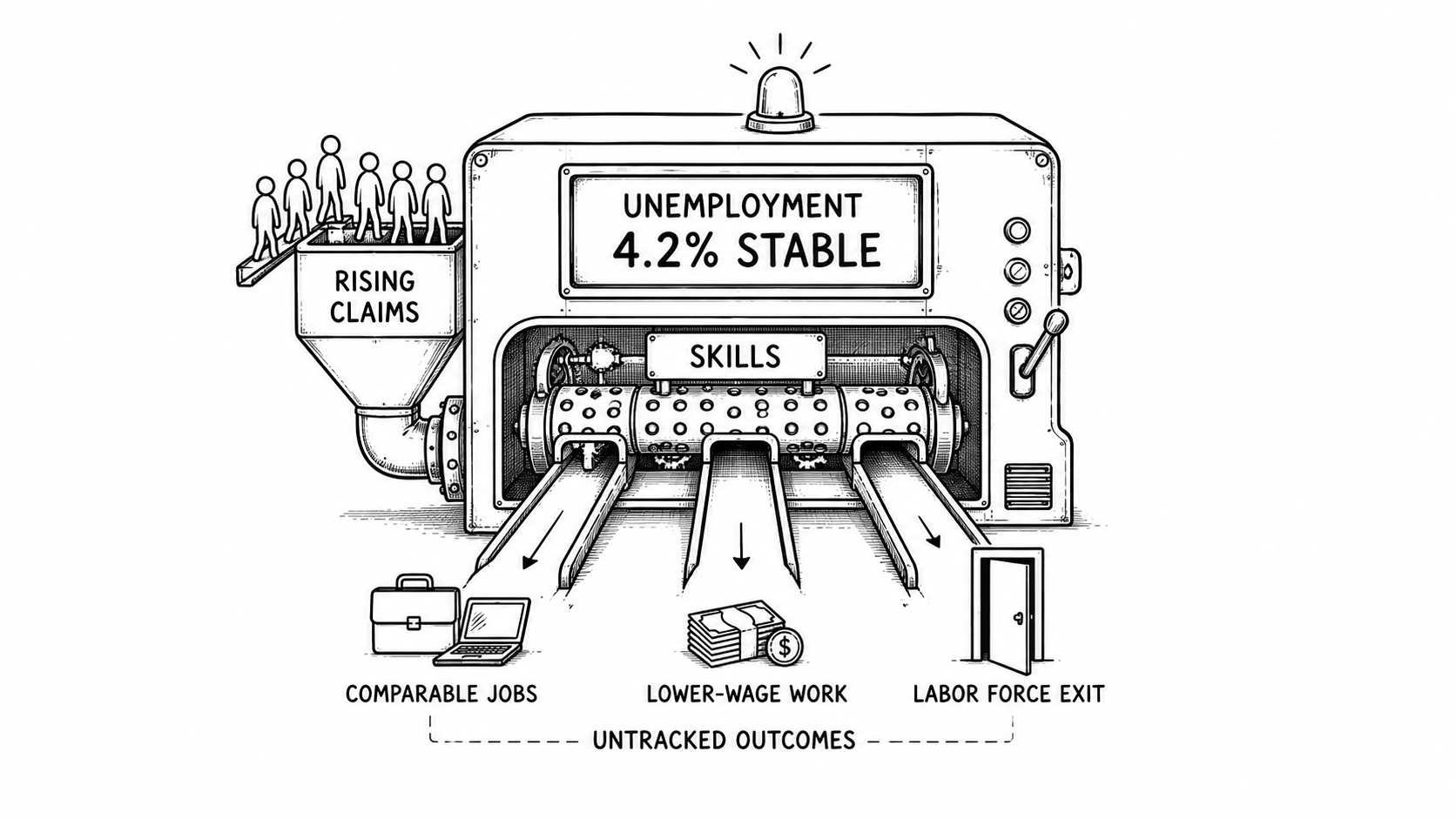
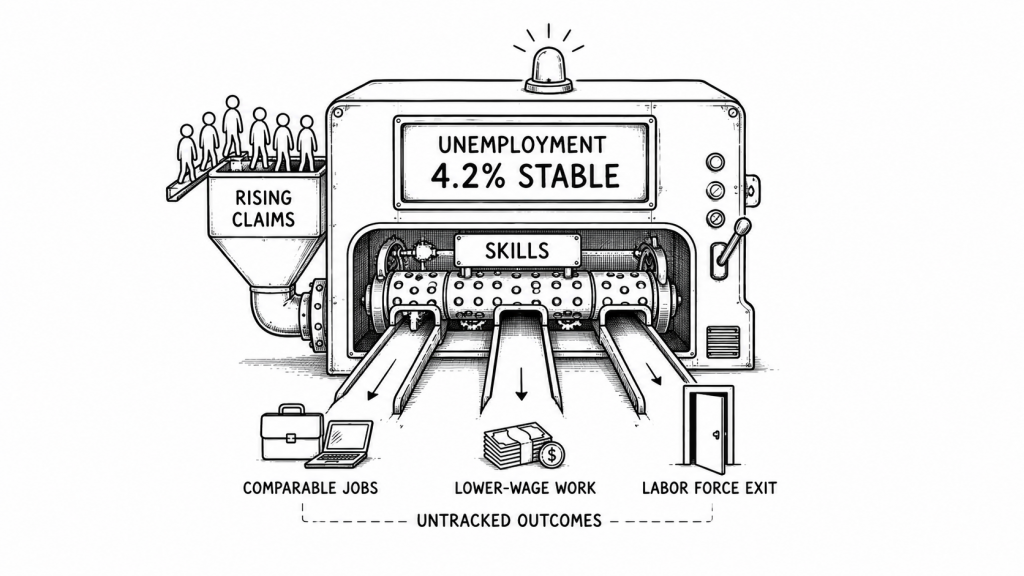
When jobless claims rise but the unemployment rate stays flat, it means one thing: people entering unemployment are flowing into different categories at different speeds. Some are finding new jobs quickly. Others are taking lower-wage work. Others are leaving the labor force entirely—exiting through retirement, disability filings, or simply giving up. The headline number (4.2% unemployment) captures none of this stratification. It just says the total is stable.
But the stratification is the actual story. Workers with specialized skills in high-demand fields—software engineers, healthcare specialists, data scientists—are keeping their positions or moving into comparable roles with minimal friction. Their transition time is short. Their wage expectations are realistic. They appear in labor statistics as temporarily unemployed before being recategorized as employed. Their contribution to jobless claims is visible but temporary.
Workers without specialized skills face a different reorganization. Manufacturing positions are automating. Administrative roles are consolidating. Retail and customer service are being optimized. These workers enter unemployment and face immediate wage cliffs. A factory worker earning $65,000 cannot become a software engineer. A retail manager earning $55,000 cannot transition into healthcare without years of training they can’t afford. So they either accept lower-wage work—moving from $55,000 to $35,000—or they leave the labor force entirely. The unemployment statistics capture the transition but not the outcome. A person who was earning $55,000 and is now earning $35,000 is no longer unemployed. They’re employed and invisible to the reorganization narrative.
This is the mechanism: the labor market isn’t failing to create jobs. It’s creating jobs in different categories than the ones being destroyed. The aggregate numbers stay stable. The people experiencing the reorganization face very different consequences depending on their skill level. Specialized workers get reorganized into comparable positions. Everyone else gets reorganized into lower-wage work or out of the labor force.
The jobless claims number rising while unemployment stays flat is a signal that this reorganization is accelerating. More people are entering unemployment. But the unemployment rate holds because they’re flowing out of unemployment into lower-wage categories or out of the labor force entirely. The headline number obscures the actual sorting.
What happens when that sorting continues for years? When workers without specialized skills have no pathway back to the wages they once earned? When the labor force fragments into those with options and those without? The unemployment rate can stay at 4.2% while the underlying fragmentation deepens. The labor market can appear stable while it’s actually reorganizing into a tiered system where your starting skill level determines your trajectory permanently.
This week’s claims data is just one week. But it’s the pattern emerging across months of data: claims rising, unemployment stable, and the gap between those two numbers growing. That gap is where labor force reorganization lives. And nobody’s tracking who ends up on which side of it.