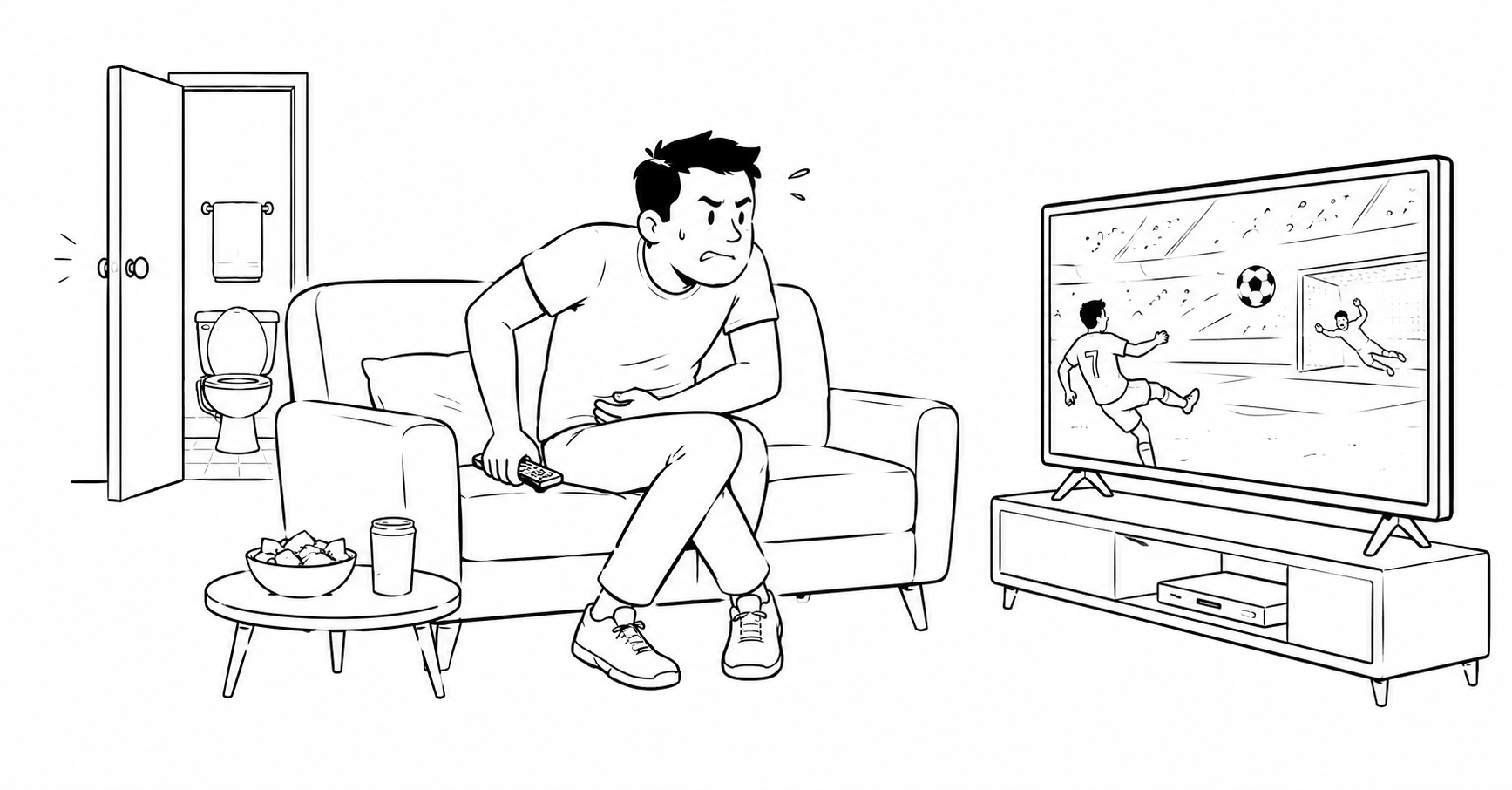
73 Percent of Men Say They’ll Hold It for the Game. That’s Not a Sports Story.
SSC News Desk
New research from TENA quantifies a behavior that physicians have tracked for decades — men overriding basic physical signals when the stakes feel high enough.
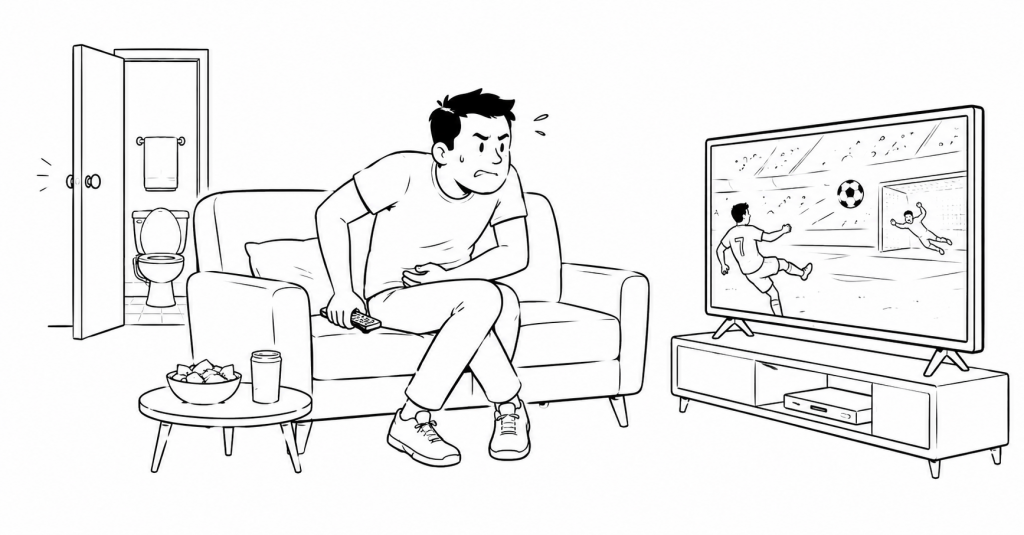
The survey question sounds mundane: have you ever delayed a bathroom break during a sporting event because you didn’t want to miss anything? According to new research from TENA, 73 percent of men said yes. They would rather sit through discomfort than miss a play.
That number belongs in a conversation well beyond sports fandom.
The findings, released July 22, arrive during what TENA describes as a packed sporting summer — long broadcasts, extended sit times, fans watching through meals and sleep windows without registering the physical cost. Alex Lee, a physiotherapist who consulted on the research, explains what the body is actually doing during a close game: fight-or-flight response engages, breathing shortens, heart rate rises, muscles tighten. TENA’s survey found 31 percent of fans experience a racing heartbeat during high-stakes moments, 27 percent hold their breath, and 24 percent notice muscle tension.
Overriding a bathroom signal once is a minor inconvenience. Doing it repeatedly, Matthew Grammer, a clinical counselor who also worked on the research, says, trains men to disconnect from their body’s warning system entirely. “Many men associate rest with weakness or inefficiency,” Grammer said. “But in reality, rest is essential for performance, resilience, and long-term health.” He flags the downstream effects: irritability, reduced focus, prolonged fatigue, shallow breathing, and the gradual erosion of the mental check-in that allows someone to notice they are burning out before they actually do.
This is the pattern that men’s health researchers have documented for decades in a different form. Men go to the doctor less frequently than women. They delay seeking care for symptoms longer. They are more likely to describe pain as manageable when it is not. The mechanism underneath each of these behaviors is the same one that shows up in a living room on a Sunday afternoon: a trained willingness to override physical signals when ignoring them feels like the stronger move.
Sports did not create that conditioning. But sports is where it is rehearsed, repeatedly, in front of an audience, with the emotional reward of team loyalty attached to the suppression. The man who holds it through the fourth quarter is not just watching a game. He is practicing something.
Hazel Villarreal, Marketing Director for TENA North America, framed the research this way: “We want to create a comfortable environment for men, and hope these insights help normalize listening to the body earlier, before small issues grow into larger concerns, encouraging more open conversations about well-being, self-care, and long-term health.” TENA is a hygiene and health brand — the research is, in part, marketing. That does not make the data wrong. It makes the question of why a hygiene brand had to conduct this research more interesting.
Lee’s clinical recommendations are modest on purpose: get up every 30 to 45 minutes, take bathroom breaks when the body requests them, stretch, breathe during tense moments, and run the mental check of am I tense, hungry, or tired? These are not complicated instructions. The difficulty is not procedural. It is that for a significant share of men, acknowledging that a body has needs that rank above the game requires a frame shift that no wellness campaign fully reaches.
The forward-looking question is whether sports culture — or the health systems trying to reach men through it — will take the behavioral data seriously as a clinical signal rather than a curiosity. Primary care physicians have noted for years that the men hardest to reach for preventive care are the same men who describe themselves as high-functioning. The 73 percent in TENA’s survey are not failing at health. They believe they are succeeding at it. That is the problem the data names, and the one that does not get solved by reminding men to stretch.