Japan Finally Got the Wage Growth It Wanted. Inflation Is Deciding Who Gets to Feel It.
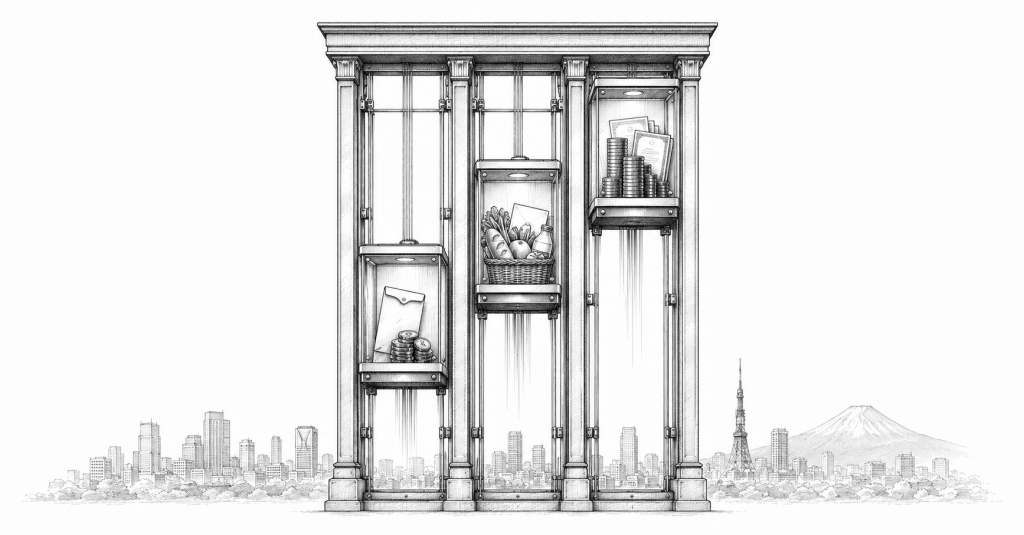
Japan spent decades trying to create the economic conditions it has now. Wages are rising. Companies are earning more. Stocks are near record territory. The Bank of Japan has raised interest rates to their highest level in more than three decades. Yet Japan’s Statistics Bureau reported that real consumption by households of two or more people fell 3.3% in June from a year earlier, even as workers were coming off five consecutive months of inflation-adjusted wage gains.
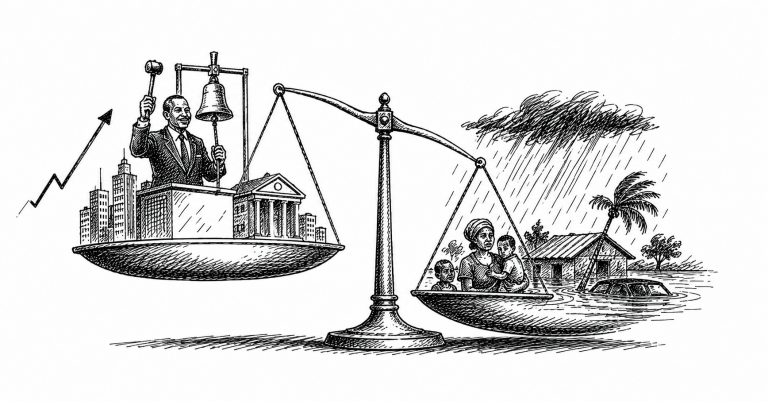
Japan’s return to inflation is creating distinct winners and losers across the economy. The divide runs through age, occupation, geography and, crucially, what people already own. Younger, educated workers in Tokyo are among those seeing wage growth strong enough to outrun inflation, while retirees and households living primarily on fixed income encounter the same price increases without an equivalent mechanism for raising what comes in.
Japan’s 2026 spring wage negotiations produced an average increase above 5% for the third consecutive year. Preliminary results from the Japanese Trade Union Confederation, Rengo, put the increase at 5.26%, including 5.05% among small and midsize employers in the early results. By May, average nominal cash earnings were up 3.2% from the previous year and regular base pay was up 3%. After adjusting for inflation, real wages still increased 1.4%, the fifth consecutive month of growth.
A raise only protects purchasing power if someone receives one. Retirees do not participate in annual employer wage negotiations. Workers at stronger companies can secure larger increases than those at weaker ones. Households experience inflation differently depending on what they buy. Energy, food, housing and imported goods do not move at the same rate as the overall consumer price index. Japan’s headline consumer inflation was 1.7% in June, but households were already anticipating significantly more price pressure ahead as a weak yen and higher energy and import costs worked through the economy.
Japan’s Nikkei 225 has risen nearly 70% over the past two years, propelled by stronger corporate earnings, governance reforms and enthusiasm around artificial intelligence. Someone whose income comes primarily from a paycheck experiences Japan’s recovery through a wage adjustment once or twice a year. Someone who owns appreciating equities can experience it continuously through rising asset values.
Bank of Japan data put household financial assets at roughly ¥2,386 trillion at the end of March 2026. About ¥1,000 trillion of household assets are held in deposits, while household debt is only around ¥400 trillion. Rising interest rates therefore benefit Japanese households in aggregate because they hold much more savings than debt. But an aggregate balance sheet cannot tell us whether the same household absorbing higher grocery and heating bills owns the stocks rising with corporate profits. Japan’s long preference for cash and deposits means many savers are watching inflation erode purchasing power while investors participate much more directly in the market boom.
The wage increases are real. The rise in corporate profits is real. The stock-market gains are real. So is the 3.3% decline in household consumption. None of those figures cancels the others. They describe different parts of the same transition from decades of deflation toward an economy where prices, wages, interest rates and asset values move again.
Whether it feels like progress depends heavily on where income comes from and what people owned before prices began rising. Japan spent years trying to make inflation return because deflation had become synonymous with economic stagnation. It succeeded. Now comes the harder part: whether the growth inflation helped unlock reaches people faster than the costs inflation imposes on them.