
ICE Wants AI to Make Billions of Investigative Records Searchable Like a Conversation
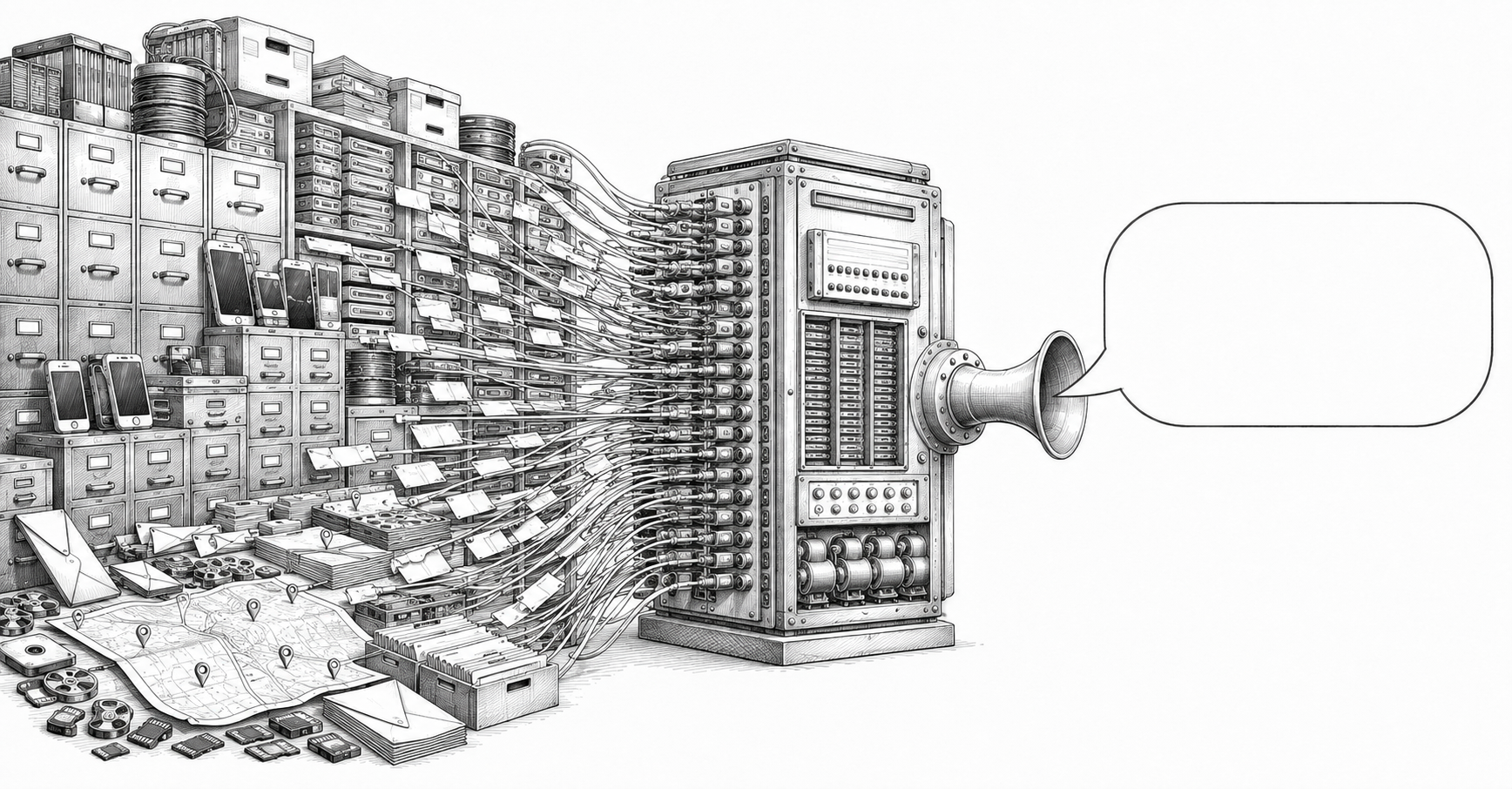
U.S. Immigration and Customs Enforcement is exploring an investigative platform capable of processing billions of communications records and at least 10 terabytes of data, then allowing Homeland Security Investigations agents to interrogate that information using ordinary language. An August 10 federal Request for Information describes a system combining communications, location information, financial transactions, social-media records and digital-forensic evidence under an AI-assisted analytical layer. The RFI is market research; ICE has not yet committed to buying the system.
The platform could handle authorized wiretaps, call-detail records, cellphone-tower information, GPS locations, web-browsing histories, emails, financial records and information obtained from services including Google, Microsoft, Snapchat, Instagram, Facebook, X and WhatsApp. Evidence extracted from mobile devices using digital-forensics platforms could enter the same environment.
Many of those records already exist within law-enforcement investigations. An investigator may traditionally need to query separate systems, identify relevant records and manually establish relationships among a phone number, financial transaction, location and online account. ICE is asking for the ability to generate maps, timelines, tables, relationship graphs and other outputs across those datasets, including geo-temporal mapping of communications and location information.
On top of the platform, ICE wants a generative-AI assistant connected through agency-controlled Microsoft Azure accounts. Investigators would be able to use natural-language prompts to search, filter, summarize, map and visualize complex information rather than constructing conventional database queries. The RFI also calls for AI-assisted translation, transcription and image tagging, and the system would support thousands of HSI users, including at least 500 simultaneous users across domestic and overseas offices.
Surveillance power is determined not only by how much information an institution can legally collect. It is also determined by how cheaply, quickly and comprehensively that information can be converted into knowledge about a person. A government may possess a location record in one database, transactions in another, communications somewhere else and information from a seized phone in a fourth. Fragmentation itself creates friction. Generative AI can substantially reduce it.
ICE’s RFI includes safeguards. Prompts, investigative data and AI outputs would not be used to train external public or commercial AI models, and AI interactions would have to be logged for auditing and traceability. The underlying surveillance described in the request would also remain subject to applicable legal authorization. These controls address how the system is operated rather than the underlying increase in analytical capacity the system would create.