
India’s Gig Economy Has Made the Road a Workplace Without Giving Workers Workplace Protections

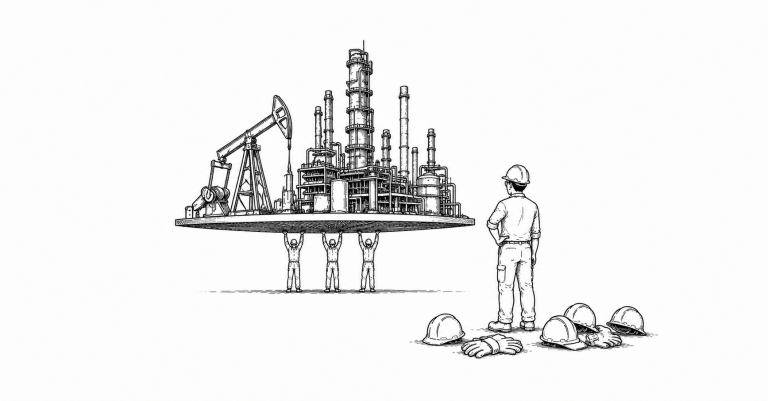
The gig economy changed where work happens faster than labor law changed its definition of a workplace.
India’s platform economy has turned the road into a workplace. Food couriers, ride-hailing drivers and delivery workers spend their shifts moving through traffic, heat, rain, customer doorsteps and public sidewalks. The protections attached to that work have not followed them there. A nationwide survey of 1,000 platform workers across 10 Indian cities found that 62.2 percent lacked health insurance, 44.2 percent lacked accident insurance and 59.3 percent received no safety training or resources from the platforms they worked through.
The gap matters because the risks are not incidental to the job. They are the job. A factory worker faces hazards inside a factory. A delivery worker faces them on the road, in extreme weather, under time pressure, with income tied to completing more trips. Among workers exposed to extreme weather, nearly all said heat affected their ability to work, and three-quarters reported moderate-to-severe effects on safety or productivity. More than 57 percent worked over 49 hours a week, and 23.4 percent worked more than 70.
The Workplace Moved. The Protections Did Not.
Traditional labor protection is built around a recognizable site of work. There is an employer, a facility, a schedule, a supervisor and a set of occupational hazards that can be inspected, regulated or insured against. Platform work breaks that model. The company coordinates the work through an app, but the worker’s physical risk is distributed across city streets, vehicles, weather systems, traffic patterns and customer locations.
Responsibility becomes harder to locate. When a worker is injured in traffic, overheated during a delivery rush or pushed into longer hours by incentive structures, the harm looks individual. The worker chose the road. The worker accepted the trip. The worker stayed logged in. That framing ignores how platform labor is organized. Apps shape route assignments, delivery expectations, ratings, penalties, incentives and availability — and in doing so, determine how much risk a worker absorbs.
Which is why the survey’s most structurally important recommendation is not more insurance or better registration, though both matter. It is the call to legally recognize roads and public spaces as workplaces when platform labor happens there. That changes the question from whether a worker was harmed outside the workplace to whether the platform economy has created a workplace labor law has not learned to see.
Heat, Traffic and Time Are Occupational Hazards
The exposure is broad. More than a quarter of workers in a related survey reported traffic accidents, and 62 percent reported near-misses while working. These are not marginal risks. They are predictable features of a business model that depends on large numbers of workers moving quickly through dense urban environments.
Heat adds another layer, and it does not fall evenly. An office worker experiences heat as discomfort between air-conditioned spaces. A delivery worker experiences it as a direct constraint on income, safety and stamina. When logging off means losing earnings, heat exposure becomes economically coerced even though no platform orders anyone to keep working.
Long hours deepen the problem. With more than half of surveyed workers above 49 hours a week and nearly a quarter above 70, exhaustion becomes a safety issue in itself. Fatigue affects reaction time, decision-making and physical resilience, and in platform work it compounds road danger. A tired worker on a motorcycle is not simply overworked. He is exposed.
Social Protection Is Still Catching Up
India has begun to recognize gig and platform workers within its social-protection framework. The Code on Social Security, 2020 includes them explicitly, and the government has pushed registration through the e-Shram database for unorganized workers. But the survey found about half of platform workers still unregistered in e-Shram, cutting them off from the programs that registration unlocks.
That administrative gap is not minor. Registration is the doorway through which benefits, identity recognition and future welfare schemes reach informal and semi-formal workers. A worker can be fully visible to the platform and invisible to the state — legible enough to be dispatched, not legible enough to be protected.
The scale is growing. NITI Aayog, the government think tank, projects India’s gig workforce could reach 23.5 million by 2029-30, and Reuters has reported that a parliamentary panel called for tighter protections as labor-code changes promise social-security coverage for platform workers.
Flexibility Has a Cost
Platform companies describe gig work through the language of flexibility. The flexibility is real for some workers. It also coexists with long hours, inadequate insurance and limited safety support. Flexibility does not answer who pays when a worker crashes, collapses from heat, loses income after an injury or cannot reach medical care.
That is the central labor question. The gig economy did not eliminate work. It reorganized it, taking tasks once managed through formal employment structures and scattering them across apps, roads and customer demand. The result is a workforce essential to urban convenience and precarious in the systems meant to protect it.
The road has become a place of employment. The law still treats it as a place workers pass through.
If India’s platform economy keeps expanding, workplace protection has to expand with it: insurance, safety training, heat protocols, accident support, grievance systems, social-security registration. It also requires a conceptual shift. When a company’s business depends on labor performed in public space, that public space is part of the workplace.
The gig economy redrew the map of work. The open question is whether policy will redraw the map of responsibility.