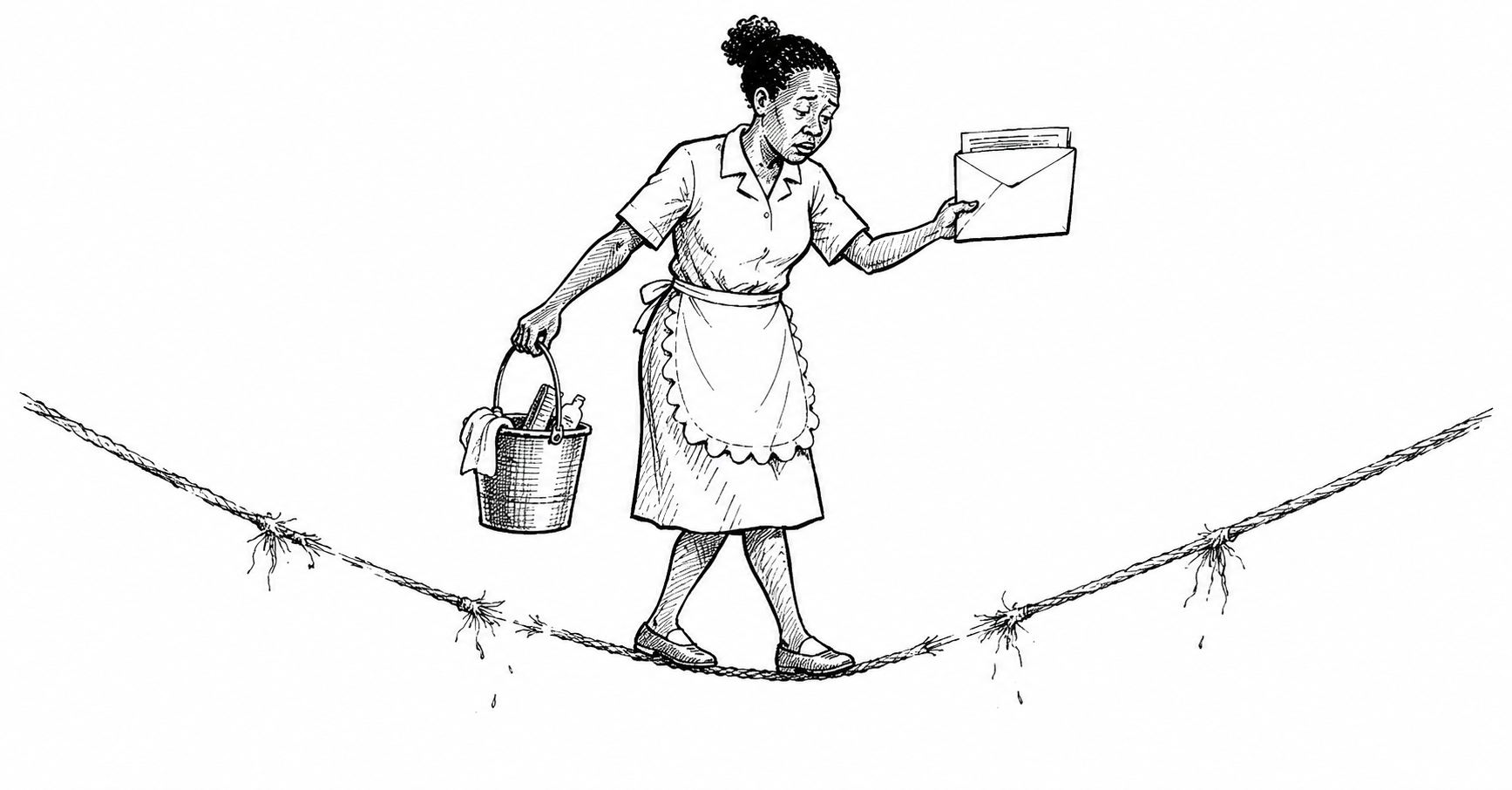
Zimbabwe’s Domestic Worker Wage Hike Reveals the Fragile Line Between Economic Recovery and Worker Precarity
When a government mandates wage increases for domestic workers, the structural question is not whether wages increased. It’s whether workers can actually sustain income when the economy cannot absorb those wage costs without contraction.
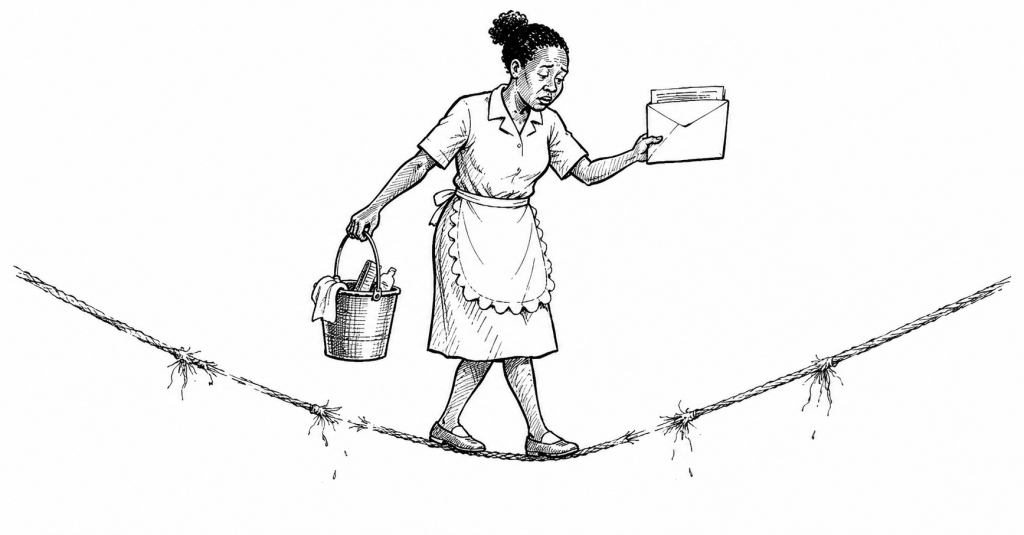
Zimbabwe’s government announced a significant wage hike for domestic workers—workers employed in private households to perform cleaning, childcare, cooking, and other domestic labor. The increase was substantial enough to be newsworthy in a country where inflation and currency instability have eroded worker purchasing power for years. On its surface, the policy represents a government intervention to protect one of the country’s most vulnerable and lowest-paid worker categories.
But the structural challenge reveals itself when you consider the economics households face. Zimbabwean households are experiencing inflationary pressure, currency volatility, and economic uncertainty. When household labor costs rise, households reduce labor demand. Some households stop hiring domestic workers. Some shift to part-time or irregular arrangements. Some renegotiate the scope of work without corresponding pay adjustments. Employers absorb the wage mandate by reducing hours, cutting benefits, or simply hiring fewer workers.
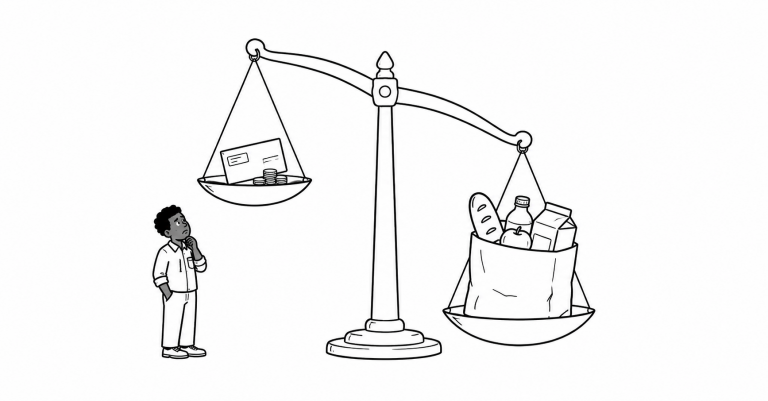
What that means is the wage increase—which looks like worker protection on paper—can produce worker precarity in practice. A worker who earned $100 per week at the old rate for full-time work, then sees the minimum jump to $150 per week, gains a 50% raise on paper. But if the household responds by cutting her to three days per week instead of five, she now earns $90 per week—less than before. The wage increased. Her income decreased.
That dynamic is particularly acute in countries with high informal employment and weak enforcement mechanisms. The wage mandate is written into law. But the ability of households to comply at current employment levels, or choose to comply versus reducing demand for domestic labor, is not controlled by law. Employers have discretion over how many workers they hire and how many hours they allocate. A wage mandate does not force them to maintain employment levels. It just changes the price of labor.
The structural fragility becomes visible in exactly this scenario. A government trying to protect workers from precarity increases wages. Households respond by reducing demand for labor. Workers end up with fewer total hours or jobs, even though hourly rates increased. The policy achieved wage protection but failed to achieve income stability—the more meaningful measure of whether workers are actually better off.
Zimbabwe’s economy is contracting in ways that make wage mandates particularly risky. Households have declining real income due to inflation and currency instability. When labor becomes more expensive, the rational household response is to reduce labor demand. The government’s wage mandate doesn’t change that rationality. It just means households adjust quantity rather than price to balance their own budget constraints.
What’s worth tracking is what actually happens to domestic worker employment and hours following the wage hike. If employment levels hold and workers maintain or expand hours at the new rate, the policy succeeds. If employers reduce demand for labor in ways that offset the wage gain, workers end up worse off despite higher hourly rates.
In high-income economies where households have discretionary income, wage increases often stick because employers absorb them or pass them to consumers. In low-income economies where households are already budget-constrained, wage increases often trigger demand reduction that leaves workers worse off overall.
Zimbabwe’s wage hike for domestic workers is an experiment in that dynamic. The outcome will reveal whether protection for workers in precarious positions is possible through wage mandate alone, or whether such protection requires additional mechanisms: income support for households, enforcement mechanisms that prevent hours reduction, or structural economic growth that expands household income and labor demand simultaneously.
Until that plays out, the wage increase exists in a fragile position between economic recovery policy and worker precarity risk.