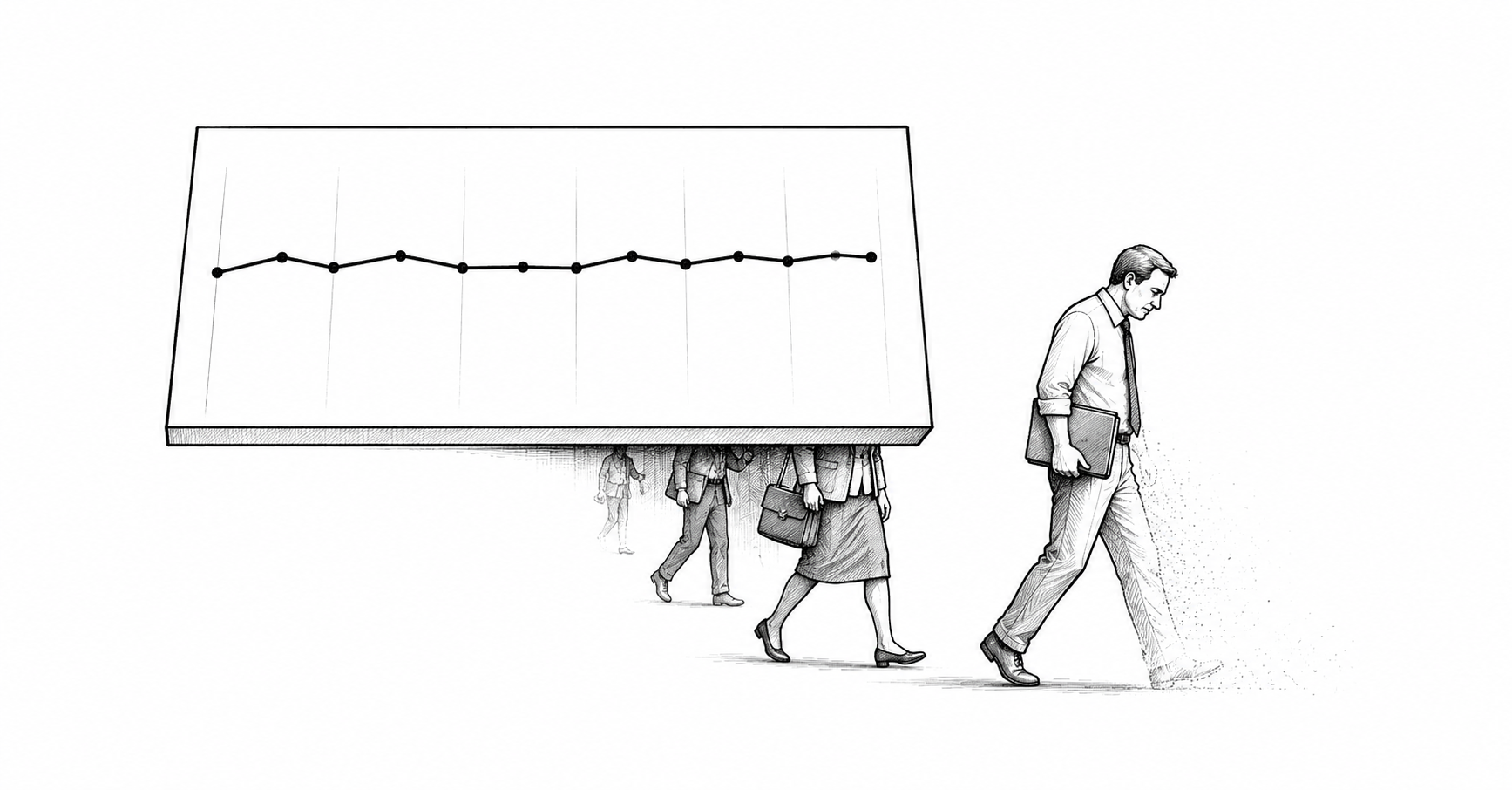
Data Gaps Hide Displacement
According to reporting from CNBC, Fortune, and the U.S. Bureau of Labor Statistics, labor force participation fell to 61.5% in June 2026—the lowest in fifty years outside the COVID era. Over one million workers exited the labor force in the preceding twelve months. The federal government shed roughly 256,000 to 400,000 employees between January 2025 and January 2026, according to the Government Accountability Office and Pew Research Center. Black workers were disproportionately affected: Black women lost 95,371 federal jobs in 2025, and Black unemployment climbed to 7.5% by December 2025, per reporting from The American Prospect and the Economic Hardship Reporting Project. When displaced workers find new jobs quickly, they keep unemployment statistics low. When they leave the labor force, they disappear from unemployment statistics. They become invisible to the economic narrative. The headline statistic obscures what’s actually happening.
Headline unemployment stayed stable while significant numbers of people stopped looking for work. The narrative that follows the unemployment statistic misses the real story. “Unemployment held steady this month” is accurate if people left the labor force. But the full story—that labor force participation declined, that displaced workers gave up—is not captured in the number that dominates news coverage.
In 2026, displaced workers in certain demographics were more likely to leave the labor force than find new work. Black men leaving federal employment couldn’t find comparable-wage work in the private sector. White men displaced from tech couldn’t accept the wage loss. Those departures are counted as labor force decline, invisible in headline unemployment numbers.
A 48-year-old Black federal employee earning $68,000 was laid off as part of federal cutbacks. He applied for private sector work and found positions paying $45,000 to $52,000. After 20 years with the federal government building expertise in his field, he was being offered jobs that paid 25-30% less. He stopped actively job searching. He was reclassified as “out of the labor force” in employment statistics. The unemployment rate didn’t reflect his departure.
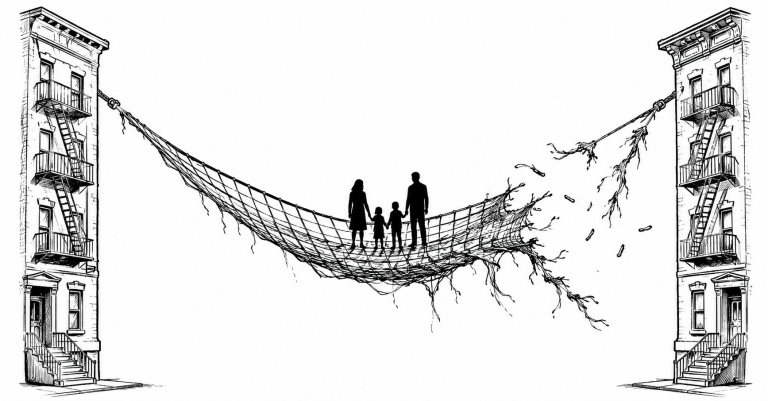
Federal employment has historically offered Black workers written rules, standardized pay, promotion procedures, benefits, pensions, and appeal rights that were often unavailable in the private sector. The displacement from federal work meant displacement from stability itself. The private sector jobs available didn’t offer comparable structure or security. They offered lower wages with less protection.
A manufacturing facility that automated in 2025 had displaced 160 workers. A federal office that consolidated in 2026 had displaced 200 workers. In both cases, workers over 45 years old who couldn’t find work at comparable wages left the labor force. The unemployment rate didn’t reflect either displacement. The statistics showed job losses in the first month of layoffs, then stability as people stopped searching.
What happens when displacement becomes invisible in headline statistics? The narrative says the economy is healthy. The underlying reality shows permanent exclusion of workers whose sectors or agencies disappeared. The gap between narrative and reality widens. Policy makers making decisions based on headline statistics miss what’s actually happening. The next shock will hit a labor force that has already been reorganized by invisible displacement.