Boards Keep Reaching for the Familiar Name. Spencer Stuart’s Own Research Says That’s the Risk.
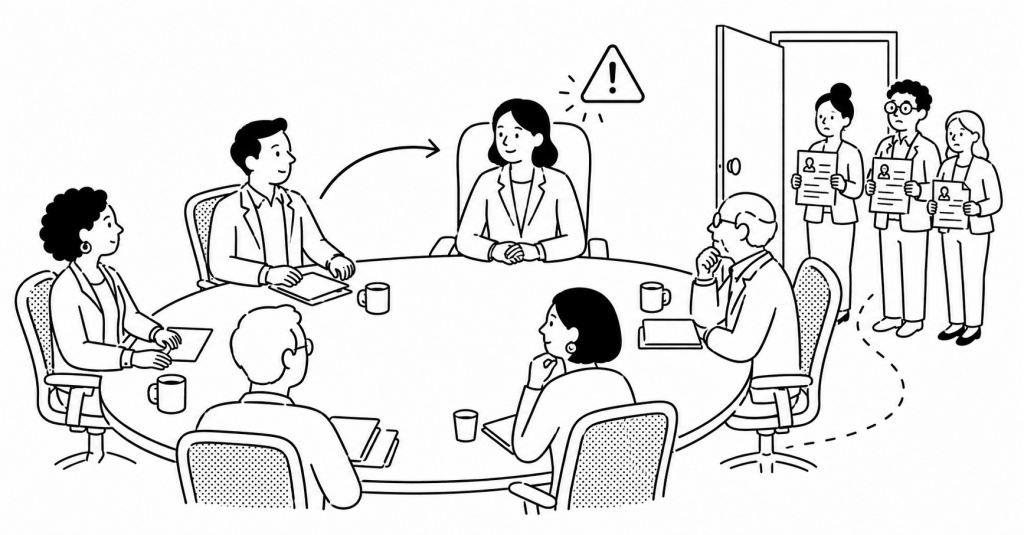
19 of 2025’s new S&P 1500 CEOs came directly from their own boards. The executive search firm advising those boards just published a warning about exactly that decision.
Part of Society, Economy & Wellness — examining how economic pressure reshapes labor, access, and everyday life.
NEWS DESK | SOCIAL STORYTELLERS COLLECTIVE
Claudius Hildebrand is a CEO advisor at Spencer Stuart — the firm that conducts more board-level executive searches than any other in the world. This week he posted a warning on LinkedIn that sits in direct tension with what his own firm’s data shows boards are doing. The warning is worth taking seriously precisely because of where it comes from.
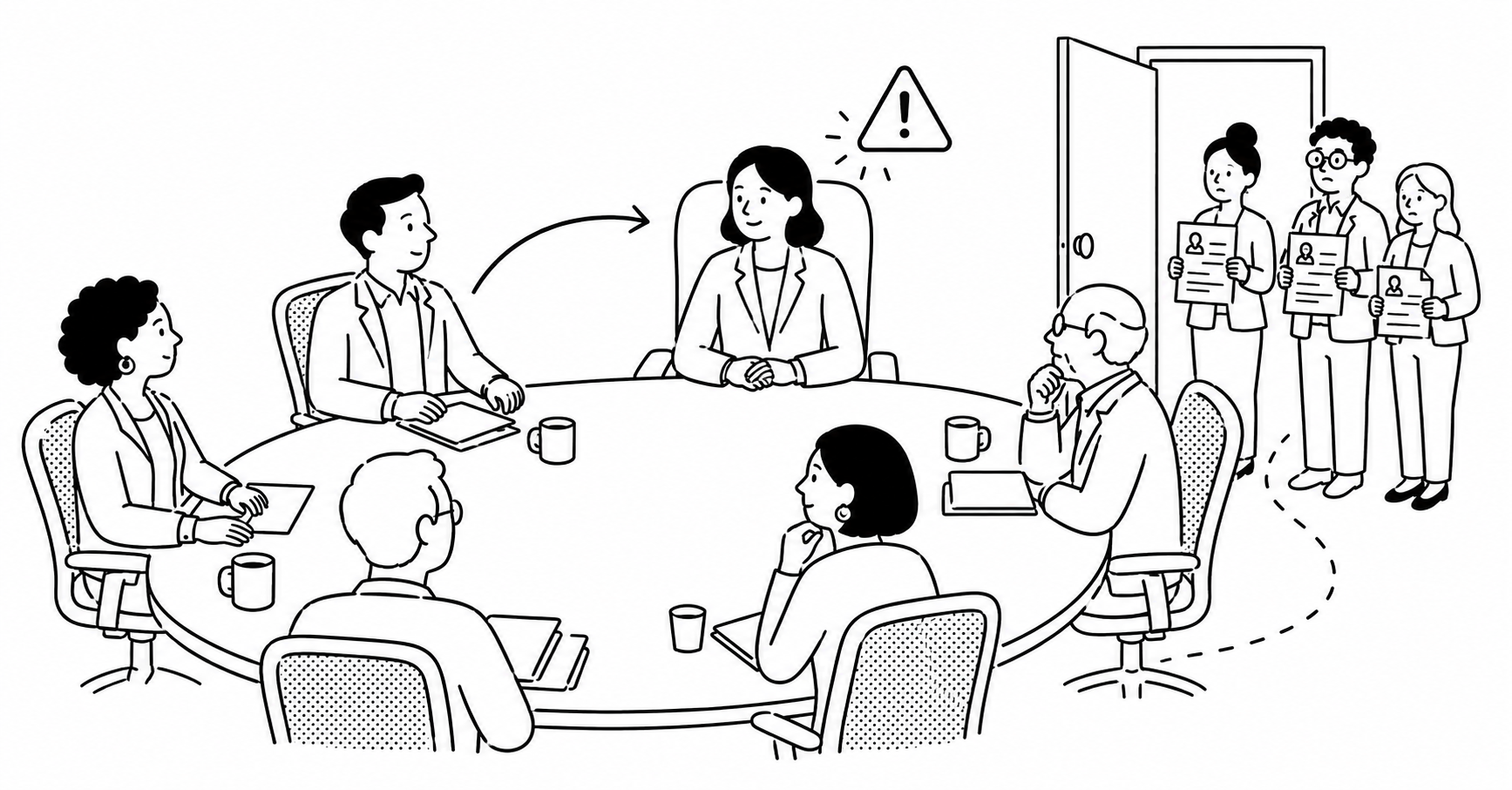
Spencer Stuart’s research, published in the Wall Street Journal, shows that 19 of the 168 new S&P 1500 chief executives appointed in 2025 were drawn directly from their own company’s boards — the most since 2020. That number is rising against a backdrop of elevated CEO churn: departures in the S&P 500 reached roughly 13% in 2025, leaving boards to manage performance pressure and succession gaps at the same time. When a board is under pressure and needs someone who already knows the company, the director in the room is a tempting answer. The résumé is known. The relationships are established. The risk feels lower than it is.
Hildebrand’s point is that the familiarity is precisely where the risk hides. “Experience alone isn’t the guarantee boards think it is,” he wrote. “It’s a gift, but only when the new context still rewards the old instincts. The real risk for any board is hiring the résumé, not the fit. And the deepest risk isn’t lack of skill, but overconfidence in a playbook that already worked once.” The question he puts to boards before they reach for the familiar name: what does this person need to unlearn to succeed here?
That question has a specific weight in the current environment. The companies cycling through CEO transitions in 2025 and 2026 are doing so during a period of compounded disruption — AI reorganizing operating models, DEI rollbacks reshaping talent strategy, tariff and trade pressure hitting supply chains, and a labor market in structural transition. The instincts a retired CEO built in a previous era of a different company may not map onto any of those conditions. A playbook that worked once is not evidence of a playbook that will work again. It is evidence that the person executing it was right about one context at one moment — and contexts change faster than résumés do.
The board-to-CEO pipeline examples confirm the pattern is real and growing. Verizon appointed Dan Schulman — a board member since 2018 — as CEO in October 2025. Constellation Brands named Nicholas Fink, a director since 2021, as CEO effective April 2026. Match Group elevated director Spencer Rascoff to the top job in early 2025. SAIC made James Reagan permanent CEO in February 2026 after he joined the board in January 2023. None of these are emergency appointments. They are deliberate choices by boards that decided the person already in the room was the right answer. Whether that judgment holds will depend entirely on whether the context those directors know is the context the company is actually operating in — and that is the question Hildebrand is saying boards are not asking carefully enough.
As SSC covered in The Boardroom Diversity Numbers Look Fine. The Boardroom Is Already Moving Backward., the shift toward recruiting former and current CEOs as the preferred board candidate profile is already reshaping who gets appointed to S&P 500 boards. The same preference that drives board-to-CEO appointments also drives the construction of the candidate pool from which future board members are drawn. The preference compounds in both directions — toward a specific kind of executive experience, from a specific kind of background, with a specific kind of instinct about how organizations should run. Hildebrand’s warning is directed at the CEO appointment decision specifically. The structural version of that warning applies to every layer of the leadership pipeline it is reshaping.
Why This Matters
Boards reaching for familiar names under pressure is not a new pattern. What is new is the scale at which it is happening, and the specific conditions it is happening into. A retired CEO who succeeded in a stable operating environment brings a playbook built for that environment. The companies making these appointments in 2025 and 2026 are not operating in stable environments. The question Hildebrand is asking — what does this person need to unlearn — is the one most boards skip because unlearning is harder to assess in an interview than experience is to list on a résumé. The résumé gets hired. The unlearning requirement surfaces later, when the cost of skipping the question has already been paid.