America’s Safest Bet May No Longer Be a Bachelor’s Degree. It May Be a Nursing License.
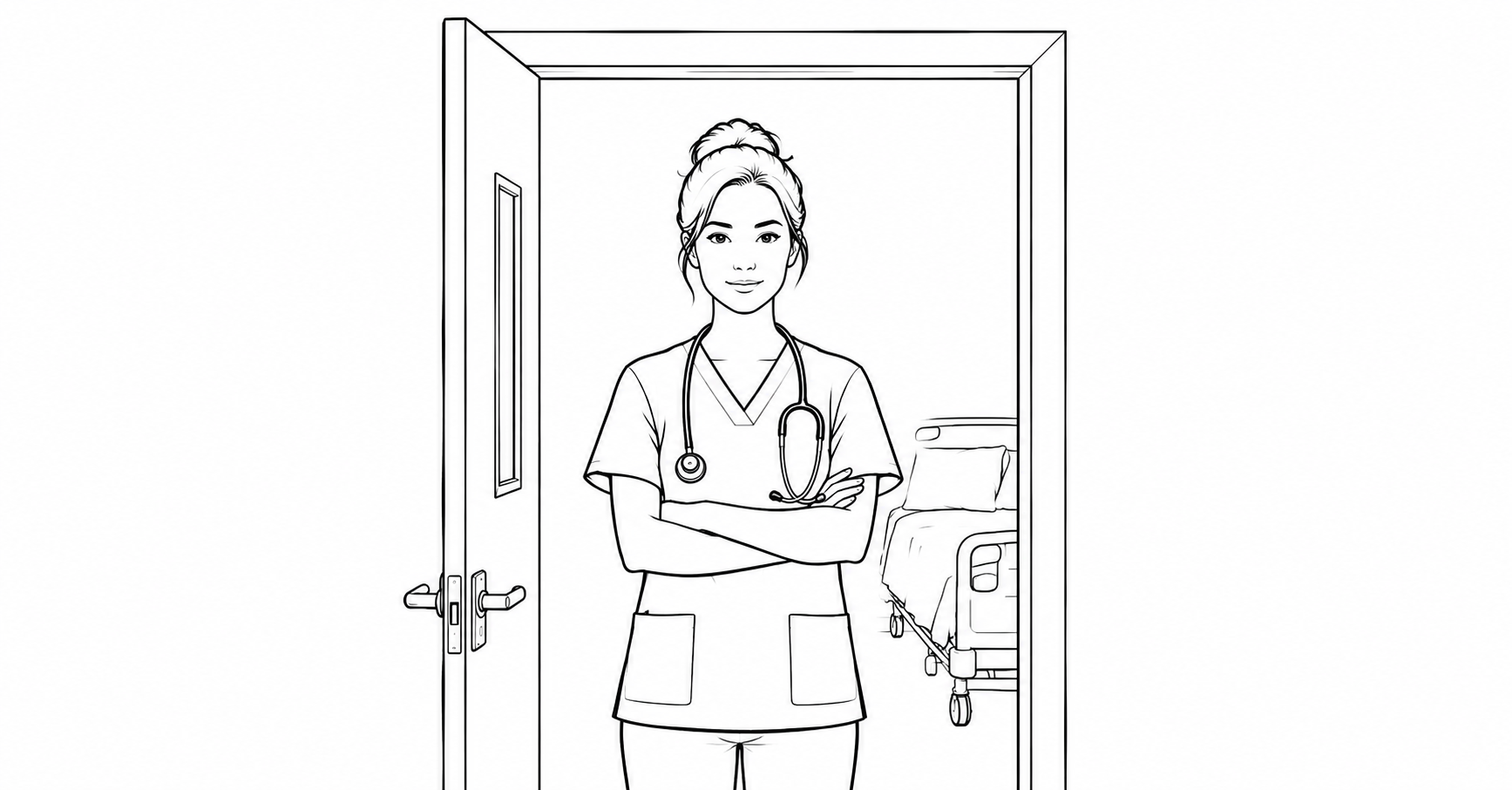
The Wall Street Journal reported in April 2026 that nursing has become what it called the surefire new path to American prosperity — a credential offering stability, plentiful openings, and for some, six-figure earnings, at a moment when automation, globalized manufacturing, and AI are narrowing other paths into the middle class.
The median annual wage for registered nurses is $93,600, according to the U.S. Bureau of Labor Statistics, compared with $49,500 for all occupations. For nurse practitioners and others with advanced degrees, the median reaches $132,050. Those numbers are real. What they describe, structurally, is not a lucky industry. It is one protected by features that automation cannot yet replicate.
Nursing is automation-resistant because it requires licensed, credentialed, in-person human judgment applied to a specific patient in a specific physical environment. The work cannot be offshored. The judgment cannot be fully standardized. The interaction cannot be deferred to asynchronous processing. Those are structural features, not cultural ones, and they are the same features that have shielded nursing from the displacement pressures now hitting manufacturing, clerical work, mid-level finance, and entry-level knowledge roles.
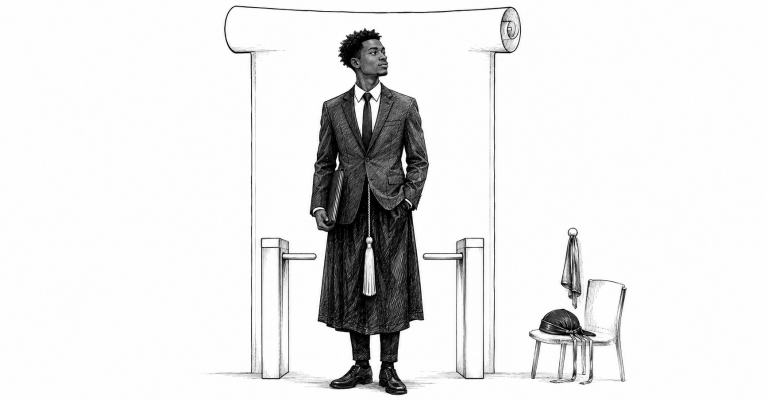
The credential structure also matters. Becoming a registered nurse requires a two- or four-year degree and a national licensing exam. Becoming a nurse practitioner requires a master’s degree and often a doctoral credential. That is a different entry architecture than the general bachelor’s degree, whose labor market protection is weakening. The unemployment rate for recent college graduates reached 5.7% in the first quarter of 2026, higher than the national average, with underemployment near 41.5%. Nursing credential holders are not inside that deterioration.
The WSJ framing carries one tension worth naming directly. A nurse practitioner with a doctoral degree practicing in a lower-cost Midwest market is not the same economic position as an entry-level registered nurse in a major metro carrying significant student debt. Nursing as a path to prosperity is real across a portion of the profession. The credential does not guarantee it uniformly across license types, specialties, or geographies.
Power inside the credential economy is shifting toward licensed, physically grounded, human-judgment-intensive work at the same moment it shifts away from knowledge work that can be digitized. Healthcare is the largest and fastest-growing employment sector in the United States. The question the nursing story opens is whether the rest of the credential economy eventually closes the gap — or whether stable middle-class work keeps narrowing toward jobs that require a body in a specific room.