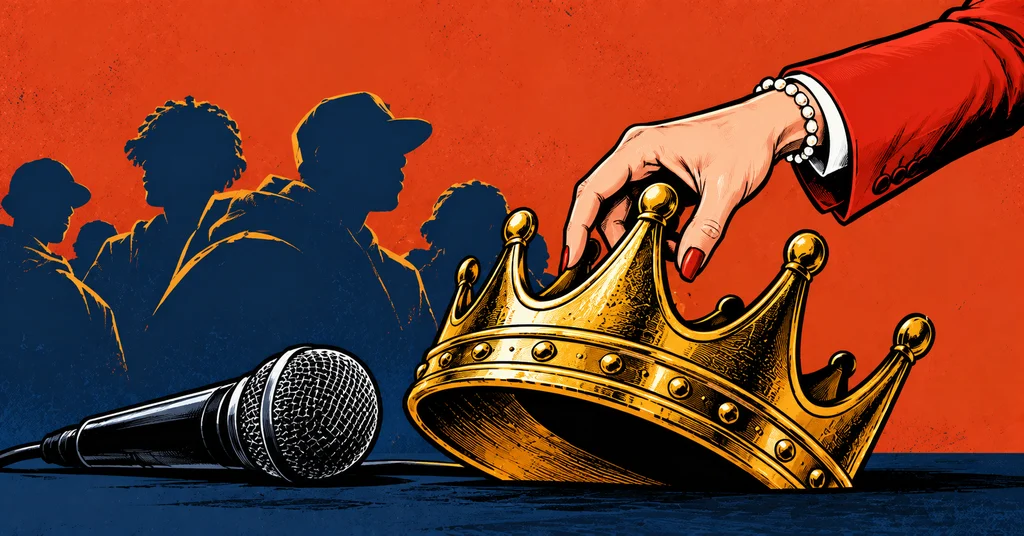
The Tennessee Republican says the AI-generated recreation of Lamar’s Super Bowl performance was just fun. Her record on hip-hop, her push for AI protections for artists and questions about permission have made the 12-second clip a much bigger conversation.
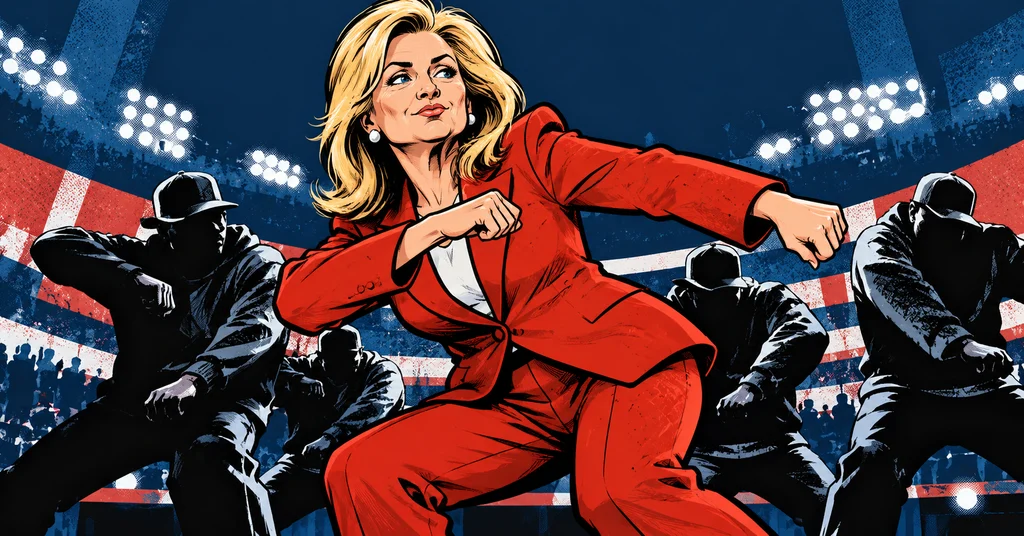
Sen. Marsha Blackburn wanted Tennessee voters to know she was ready for early voting. On October 13, the Republican candidate for governor posted a 12-second video on X with four words: “Tomorrow. Ready to roll.” What followed was an AI-generated recreation of Kendrick Lamar’s 2025 Super Bowl halftime show, with Blackburn at center stage performing “Not Like Us.” Backing her up were fellow Tennessee Republicans: Sen. Bill Hagerty, Rep. Tim Burchett, state Sen. Brent Taylor and Knox County Mayor Glenn Jacobs, dressed as Kane, the character he played as a WWE wrestler.
The clip got attention, though not the kind most campaigns want. The jokes about AI dancing came quickly. Then critics started looking at Blackburn’s history with hip-hop, her work on AI protections for artists and the meaning of the performance she borrowed. A campaign post became a conversation about who gets to use Black cultural expression, and with whose permission.
Blackburn’s record is part of why the video hit a nerve. At a 2007 House hearing on stereotypes in entertainment, she addressed rappers David Banner and Master P directly. “Where and how did society fail you to the point that you would choose to write such filth,” she asked, according to the official hearing transcript. Nearly two decades later, she put herself inside a digital recreation of one of hip-hop’s most celebrated modern performances. That performance also carried its own message. Lamar’s halftime show included a human American flag and Samuel L. Jackson as Uncle Sam, commenting on what’s expected of Black performers, and some conservative commentators criticized it at the time. “Not Like Us” started as a diss track aimed at Drake, but the Super Bowl turned it into something much bigger.
Blackburn says no offense was meant. She told reporters her campaign didn’t make the video. A county commissioner did, and Burchett reposted it before her team shared it. “There would never be any action that was intended to offend,” she said, according to Nashville Public Radio. She also called it “a funsie” and urged people to vote. That explains where the video came from. It doesn’t explain the decision to post it from her official campaign account.
Her Democratic opponent, Jerri Green, used the moment to make a point about AI in politics. “When I say please stop using AI to support our campaign, this is what I mean,” she wrote on X. The video also pulled in races beyond the governor’s. Taylor is running for a redrawn Memphis seat, where his Democratic opponent, state Rep. Justin J. Pearson, has criticized the clip.
There’s also a legal question, and it’s an awkward one for Blackburn. She’s been one of Congress’s leading voices for protecting artists from AI copies of their work. On September 30, she asked the Senate to pass the NO FAKES Act, a federal bill aimed at unauthorized digital replicas, by unanimous consent. Sen. Ted Cruz blocked it. Tennessee’s own law, the ELVIS Act, which took effect in July 2024, protects musicians’ voices and likenesses from certain unauthorized uses, including AI-generated ones. Nashville entertainment attorney Kaley Bonett told WKRN that because the clip functions as a campaign ad, clearing the rights to Lamar’s music and choreography matters. The law also protects parody and satire covered by the First Amendment, and whether the video falls on either side of that line would depend on how it was made and shared. WKRN reached out to Lamar’s representatives and didn’t hear back. No lawsuit or formal complaint has been filed.
Campaigns have borrowed popular music for decades, and artists have objected for just as long. Politicians courting hip-hop’s audience isn’t new, either. Donald Trump’s alliance with Nicki Minaj is playing out on the campaign trail right now. What AI changes is how easy it is. A campaign can now put its candidates inside an artist’s performance without the artist involved at all.
That’s what troubles some critics most. Cultural consultant Cecilia Olusola Tribble told Nashville Public Radio that removing the Black artist at the center of the performance and replacing him with politicians amounts to erasure. “Colonization is dependent on erasure,” she said. It echoes a longer argument about how Black music gets separated from the people who made it, the same history behind Nas’s claim that Black music’s greats were “stolen from.” Others see the clip as an obvious joke whose absurdity is the point. Both can be true. A video can be meant as fun and still raise real questions about ownership, representation and political messaging.
Blackburn says it was a joke. Her critics see a pattern. What’s still unanswered is whether anyone asked Lamar, and whether anyone will make an issue of it. Either way, the clip shows how easily a campaign can borrow the power of an artist whose work it didn’t create, and whose genre its candidate once called filth.