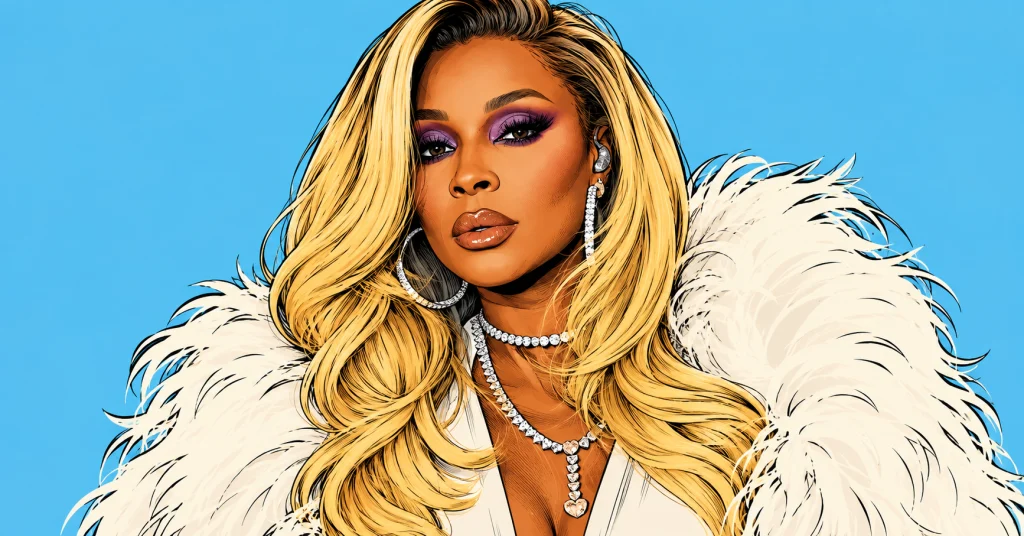
The Queen of Hip-Hop Soul’s new catalog deal raises a question bigger than royalties: who protects the music, memories and cultural history that helped define generations of Black Americans?
Some songs become hits. Others become part of people’s lives. Mary J. Blige made the second kind. Her music played through breakups, celebrations, family cookouts, long drives and the private moments when people needed someone to say what they were feeling. For many Black Americans who came of age in the 1990s and early 2000s, her catalog is more than a run of successful records. It’s an emotional record of a time when hip-hop and R&B were reshaping popular music, and artists like Blige were giving voice to lives mainstream entertainment had mostly ignored.
Now some of the rights to that music have a new partner. Blige has struck a deal with Primary Wave, a music publishing and management company known for buying into the catalogs of established artists. The deal covers the compositions and recordings from her 15 studio albums, including What’s the 411?, My Life and The Breakthrough, along with songs like “Family Affair,” “Be Without You” and “Real Love.” Variety reported that Blige sold undisclosed shares of her publishing and recorded music. Financial terms weren’t released, and the announcement doesn’t say how much Blige gave up or what decisions still need her sign-off.
To be clear: Blige deserves to profit from what she created. Black artists have spent generations fighting for control of their own work, and as SSC has reported, Nas argues that Black music’s greats were “stolen from”, and the history backs him up. After more than 30 years, nine Grammys and more than 50 million records sold, turning some of that success into lasting financial security is a legitimate business decision. Primary Wave also brings marketing muscle and licensing relationships that could introduce her music to listeners who’ve never heard it. The question isn’t whether she should sell. It’s whether the companies buying into culturally significant music understand that its value goes beyond royalties.
The terms matter because music rights aren’t one thing. Publishing covers the songs themselves. Masters cover specific recordings. An artist’s name, image and likeness is a separate category entirely. Primary Wave has bought likeness rights in other deals, but its Blige announcement doesn’t mention them, so it would be wrong to say the company now controls her image. What it does gain is influence over where her songs appear, which brands they’re tied to and how they’re presented. A song written from personal pain can end up soundtracking an ad. A recording that meant something to one community can be repackaged for an audience that doesn’t know where it came from.
That context is the heart of Blige’s legacy. Coming out of Yonkers in the early 1990s, she fused the emotional depth of soul with the rhythms, language and attitude of hip-hop. She didn’t sell an idealized version of life. She sang about the real one, and her vulnerability became her signature. My Life was so significant that the Library of Congress added it to the National Recording Registry in 2025. That’s exactly why the catalog is still worth so much more than 30 years later.
New listeners discovering Blige through a film, a series or even a commercial isn’t a problem. Music has always traveled beyond where it started. The concern is when decisions treat culturally significant recordings as interchangeable background noise, cut off from what they meant. That’s an old story in Black American music. Blues, jazz, gospel, rock and roll, soul, R&B and hip-hop all grew out of Black communities and became hugely valuable, and the people who created them didn’t always share in the reward or the recognition. It’s a pattern SSC has been tracking all month, from how R&B lost the industry machine that made superstars to why labeling AI songs is easier than paying the artists behind them. Just this week, Sen. Marsha Blackburn’s AI recreation of Kendrick Lamar’s Super Bowl show raised the same question from a different angle: who gets to use Black cultural expression, and with whose permission?
The same tension runs through Black media. Publications built to document Black life are businesses, but they’re also keepers of cultural memory, and their owners shape what gets preserved and covered. The Root passed through several corporate owners before Ashley Allison’s Watering Hole Media bought it in 2025, returning it to Black ownership. Essence came back under Black ownership when Richelieu Dennis acquired it in 2018. Ownership alone doesn’t guarantee good stewardship. That shows up in editorial choices, investment in journalism and how an institution treats its audience, a point that came up in SSC’s coverage of the debate over who Essence Festival is supposed to serve. A catalog investor has less direct control than a magazine owner, but the principle holds: the asset is valuable because of its relationship with a community.
Protecting that history shouldn’t mean limiting what artists can do with their own work. The better conversation is about the protections that get negotiated when culturally significant music changes hands: approval rights, limits on licensing, credit and how recordings can be altered or reused. Primary Wave’s portfolio already includes music tied to Whitney Houston, Prince, Bob Marley, James Brown and Ray Charles, which puts it in a powerful position over how some of the most important music in history circulates. There’s no evidence Blige’s music has been misused, and suggesting otherwise would be premature. We simply don’t know enough yet about what protections exist or how much say she kept.
Blige’s deal may turn out to be a model for how an artist can grow her financial future while keeping real influence over her work. That will depend on the terms and on the choices that follow. Either way, it starts a conversation bigger than one singer or one company.
You can buy the rights to a song. You can’t buy the memories and history that made it matter. When music becomes part of a community’s story, protecting that story should still matter long after the deal is signed.