
America Has 7.3 Million Open Jobs. Workers Still Aren’t Moving.

The labor market is avoiding mass layoffs, but hiring and quitting are both subdued. That produces a different kind of slowdown: one in which workers keep their jobs because finding a better one has gotten harder.
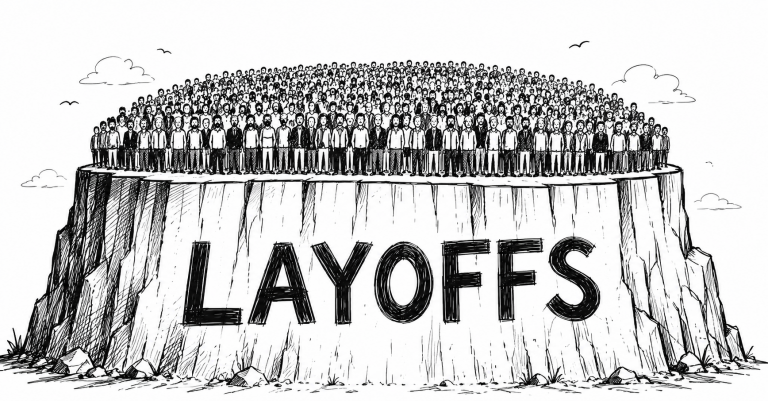
American employers had 7.3 million job openings in July, according to Labor Department data released Tuesday. They hired 5.1 million people, while 3.1 million workers quit voluntarily. Layoffs and discharges totaled 1.7 million. None of those figures moved much from June.
That sounds like stability. It is also evidence of a labor market that has grown less dynamic.
Unemployment remains relatively low at 4.1 percent, layoffs are restrained, and businesses are not shedding workers at anything like recession scale. But employers have turned cautious about adding people. Hiring fell from about 5.3 million in June to 5.1 million in July, and job creation has averaged roughly 61,000 positions a month so far this year.
The Missing Movement
The more revealing number is quits.
The Bureau of Labor Statistics treats voluntary quitting as a measure of workers’ willingness or ability to leave their jobs. July’s quits rate was 1.9 percent, or about 3.1 million departures.
Workers rarely quit without something else lined up. Voluntary turnover usually reflects confidence: the belief that another employer will hire them, that a better opportunity exists, that the risk of leaving is manageable.
When quits weaken while layoffs stay low, the labor market lands in an unusual condition. Most people remain employed. Fewer feel able to move.
That distinction matters because unemployment measures only one kind of labor-market stress. A worker who stays put for fear of not finding anything else is still counted as securely employed. So is someone who has stopped applying because openings are producing fewer interviews, and someone who accepts flat pay because changing employers feels too risky.
The headline unemployment rate captures none of that.
Companies Are Holding, Not Expanding
Employers are behaving the same way, retaining the workers they have while hesitating to add more.
Professional and business services recorded 188,000 fewer hires in July, according to the BLS. Job openings in durable-goods manufacturing rose by 76,000 over the same period, a reminder that advertised demand and actual hiring can move in opposite directions.
Higher borrowing costs, geopolitical uncertainty and elevated business expenses all give companies reason to wait. None of that requires layoffs. A business can cut labor demand by leaving vacancies unfilled, delaying expansion or replacing departures more selectively.
For workers, the effect is quieter than a recession and still consequential. Advancement usually depends on movement: changing employers, negotiating against a competing offer, stepping into a newly created role. When hiring slows, that leverage weakens even for people whose own jobs are secure.
The current labor market is better understood through circulation than through collapse.
There are still millions of openings. Most companies are still holding onto their people. Unemployment is still relatively low. But fewer workers are leaving, fewer employers are hiring, and the distance between having a job and being able to find a better one keeps widening.
A labor market does not have to lose millions of jobs to turn against workers. Sometimes it simply stops moving.