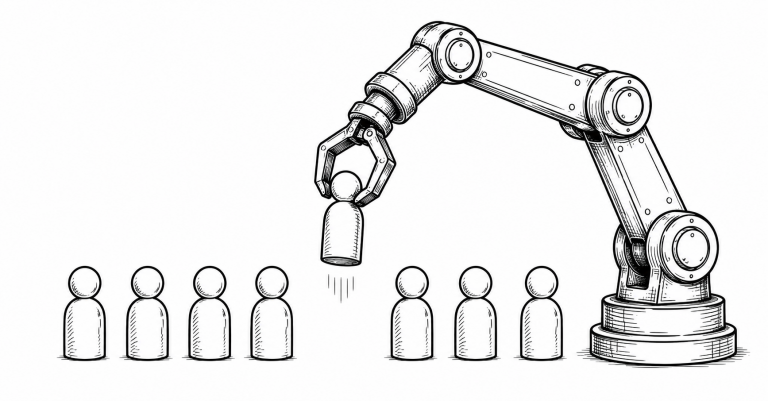
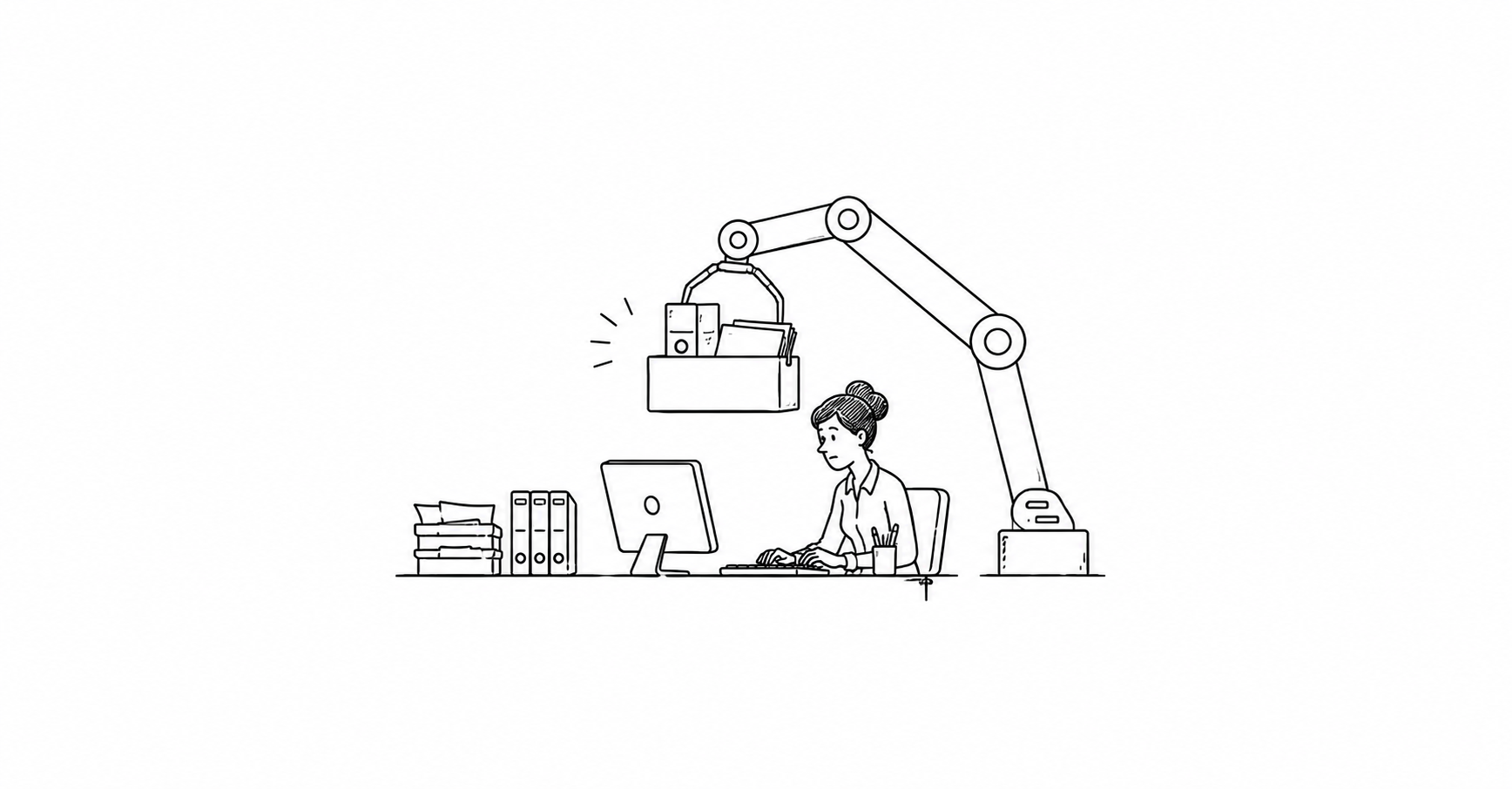
79% of Employed Women in the U.S. Work in Jobs at High Risk of AI Automation
That figure comes from a 2026 SHRM study that has not generated policy responses proportional to what it describes. The workers most exposed to displacement are the least visible in the AI conversation.
SHRM published its full report on automation, generative AI, and job displacement risk in U.S. employment in 2026 with a figure that has not received coverage proportional to its implications: 79% of employed women in the United States work in jobs identified as at high risk of AI automation. The comparable figure for men is 58%. The gap between those two numbers is a gendered distribution of displacement risk that the current policy conversation around AI has not named or addressed as such.
The jobs most exposed are not abstract future-of-work categories. They are the jobs that absorbed the majority of women’s employment gains over the past three decades: administrative support, customer service, data entry, bookkeeping, paralegal work, medical billing, and healthcare support roles. These are the jobs that were created as organizations built out the operational infrastructure of the knowledge economy. They are also, by design, the jobs most amenable to replacement by large language models, robotic process automation, and AI-assisted workflow tools that can handle structured information tasks at scale.
SHRM’s data indicates that AI-cited job cuts accounted for 12.7% of total U.S. layoffs in the first quarter of 2026, up from 4.5% in 2025. The rate of increase is not flat. The rate of increase is accelerating. The workers in the 79% category are not watching this from a safe position. They are in the jobs being cut now, with the scale of cuts expanding quarter over quarter.
The policy response designed for “AI-displaced workers” has generally been framed around reskilling, credential programs, and pathways into technology-adjacent roles. That framing contains a structural mismatch that the SHRM data makes visible. The workers most at risk of displacement are disproportionately women in lower-wage administrative and support roles. The jobs being created in AI deployment, development, and management are skewing heavily male and highly credentialed. A reskilling program designed for the average displaced worker is not designed for the worker statistically most exposed to displacement. It is designed for a composite that doesn’t represent the concentration of risk.
The gender dimension of AI automation risk has been present in the research for several years. McKinsey Global Institute, World Economic Forum, and multiple academic labor economists have published findings consistent with SHRM’s 2026 numbers. The coverage of AI job risk has absorbed those findings and then continued to discuss automation primarily as a general labor market concern — not as a structural challenge that lands disproportionately on women in lower-wage service and support roles.
That framing gap is consequential. Policy is designed for the problems that are named. Workforce retraining programs, unemployment insurance reform proposals, and AI deployment guidelines are being written in a conversation that has not centered the worker most exposed. By the time displacement at scale registers as a policy emergency, the workers who needed intervention years earlier will have already absorbed the loss.
The 79% figure from SHRM is not a projection. It is a count of where employed women already are. The jobs they are in are the jobs now being automated. The time between the data and the policy response is the space in which displacement becomes permanent.