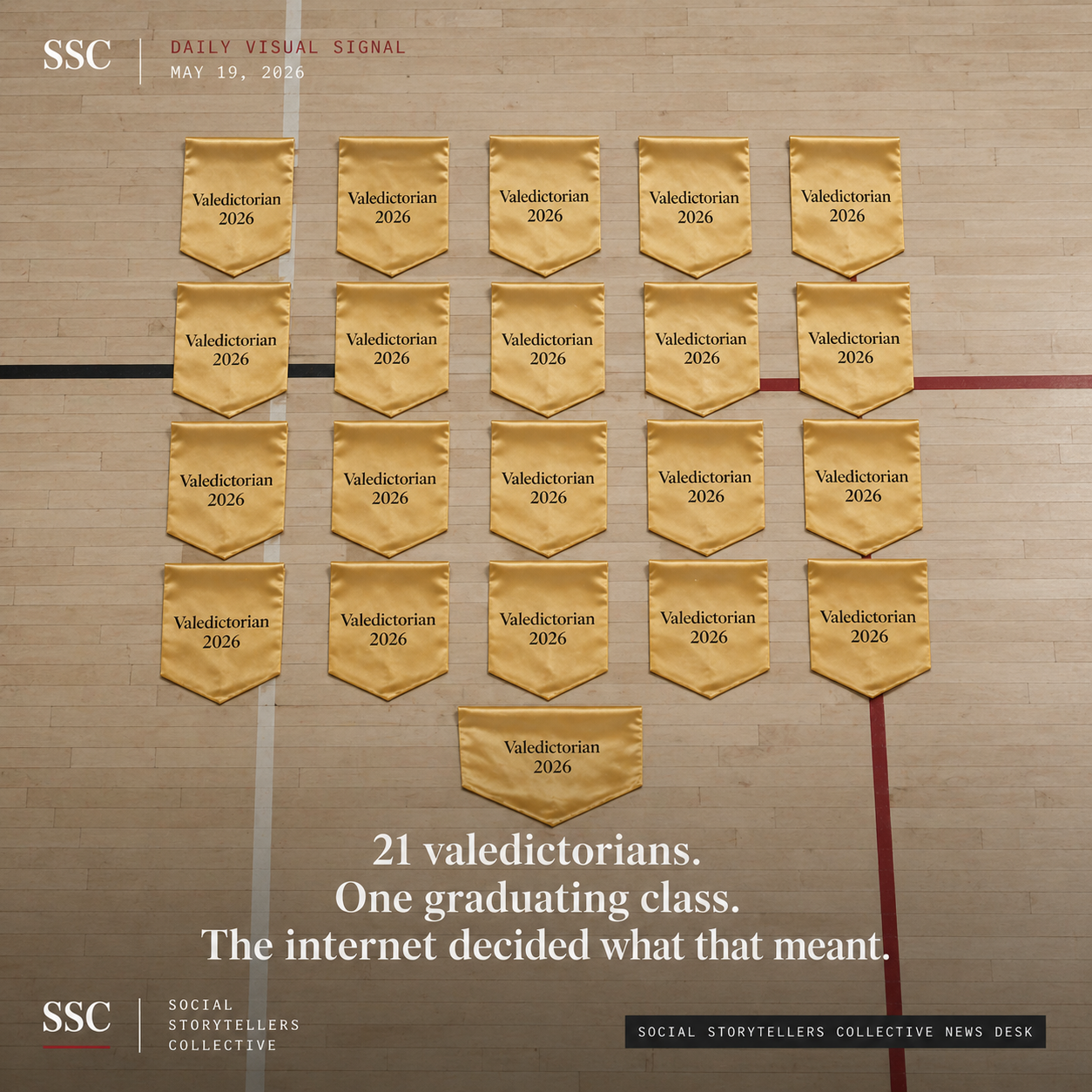
A Long Island high school made national news after announcing it had 21 valedictorians in a single graduating class. Days earlier, CNN spotlighted the “Spelman Seven” — seven Black women graduating together as co-valedictorians at Spelman College. On the surface, the stories appear disconnected. Together they reveal something the coverage of both largely avoided naming.
Look at the Jericho High School valedictorian grid. Twenty-one students. Straight A-plusses in every class for four years. And the student body that produced them is overwhelmingly Asian American — a fact the NY Post’s coverage did not address, but the comment section did immediately. The top reply, pulling thousands of impressions, suggested the students wouldn’t get into college “because they’re not Black” — a reference to affirmative action’s repeal framed as a punchline. That comment tells you more about the national conversation around academic achievement than the story itself did.
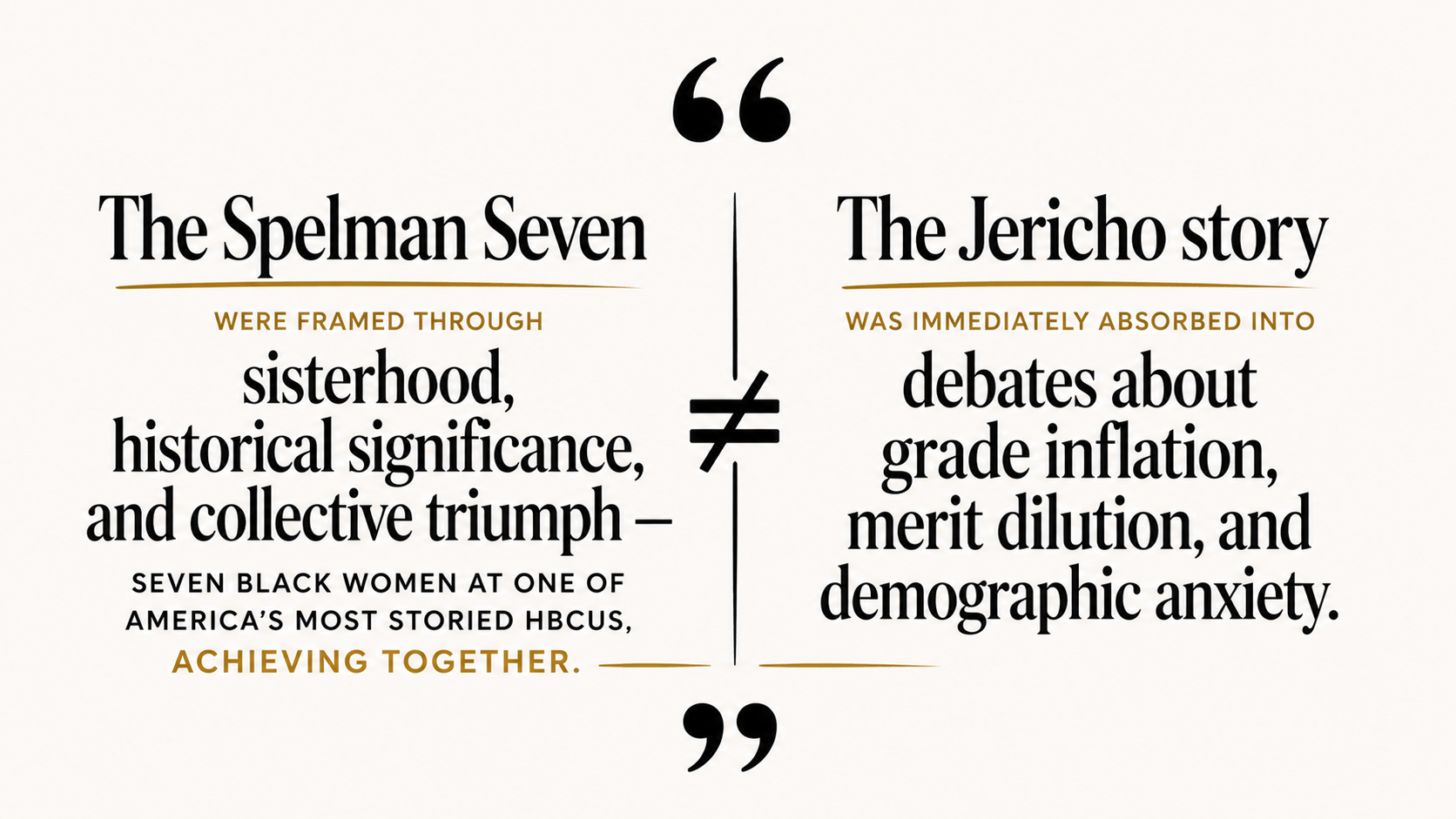
The contrast between how these two stories landed is the whole argument. The Spelman Seven were framed through sisterhood, historical significance, and collective triumph — seven Black women at one of America’s most storied HBCUs, achieving together. The Jericho story was immediately absorbed into debates about grade inflation, merit dilution, and demographic anxiety. The question underneath that debate — whether Asian American academic achievement is being read as a problem rather than an accomplishment in the post-affirmative action moment — went largely unasked in the mainstream coverage.
For decades, the valedictorian functioned as an individual symbol — one student elevated above all others through a system designed to rank, sort, and distinguish. But schools are increasingly confronting what happens when large numbers of students optimize for academic perfection simultaneously. Advanced placement inflation, weighted GPAs, competitive admissions pressure, and hyper-structured achievement cultures have produced environments where excellence is no longer rare enough to isolate neatly into a single person. Jericho grades on a letter system — a 97 or higher earns an A-plus. Twenty-one students hit that mark across every class for four years. That is not a grading failure. That is a cohort that worked.
The modern education system increasingly rewards optimization as much as raw intelligence. Students are building résumés, stacking AP courses, managing extracurricular portfolios, and treating academic performance like a long-term strategic campaign beginning years before college applications are submitted. The result is not less achievement. It is achievement at industrial scale. The valedictorian list gets longer because the system designed to produce one person produced twenty-one instead. The institution then has to decide what that means — and in Jericho’s case, the answer was a video instead of speeches, and sashes that say valedictorian 2026.
The deeper tension these two stories expose is about who gets to own the narrative of their own excellence. The Spelman Seven were celebrated. The Jericho twenty-one were immediately subjected to a demographic read — their achievement filtered through the post-affirmative action anxiety that now colors every conversation about who deserves what in American education. The students are seventeen and eighteen years old. They earned straight A-plusses for four years. The internet decided what that meant before the graduation ceremony was scheduled.
The valedictorian is becoming a category. The question is who gets to inhabit it without their achievement being converted into someone else’s argument.
This visual serves as our Daily Visual Signal for today.