The Middle Manager Is Becoming Software
The work of coordination is being automated. What’s disappearing with it isn’t overhead — it’s the apprenticeship that used to build leaders.
Part of Society, Economy & Wellness — examining how economic pressure reshapes labor, access, and everyday life.
NEWS DESK | SOCIAL STORYTELLERS COLLECTIVE
There’s a specific kind of meeting that has defined corporate life for decades: the status update. Someone senior wants to know where a project stands. Someone junior prepares slides. A manager sits in the middle, translating between the two, interpreting context, smoothing over friction, assigning follow-ups, and sending a recap email that summarizes what everyone already knows. Then everyone goes back to work until the next one.
For years, critics of corporate culture pointed to this meeting as evidence of organizational bloat — an artifact of hierarchies that had grown too tall and too slow. What they didn’t anticipate was that the meeting wouldn’t be cut from the calendar. It would just be automated.
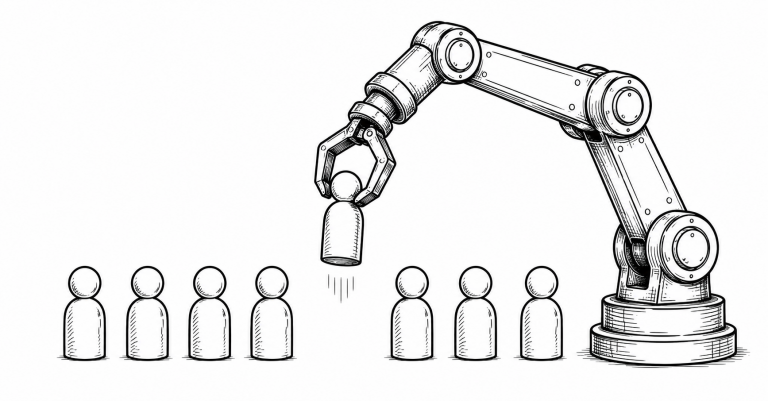
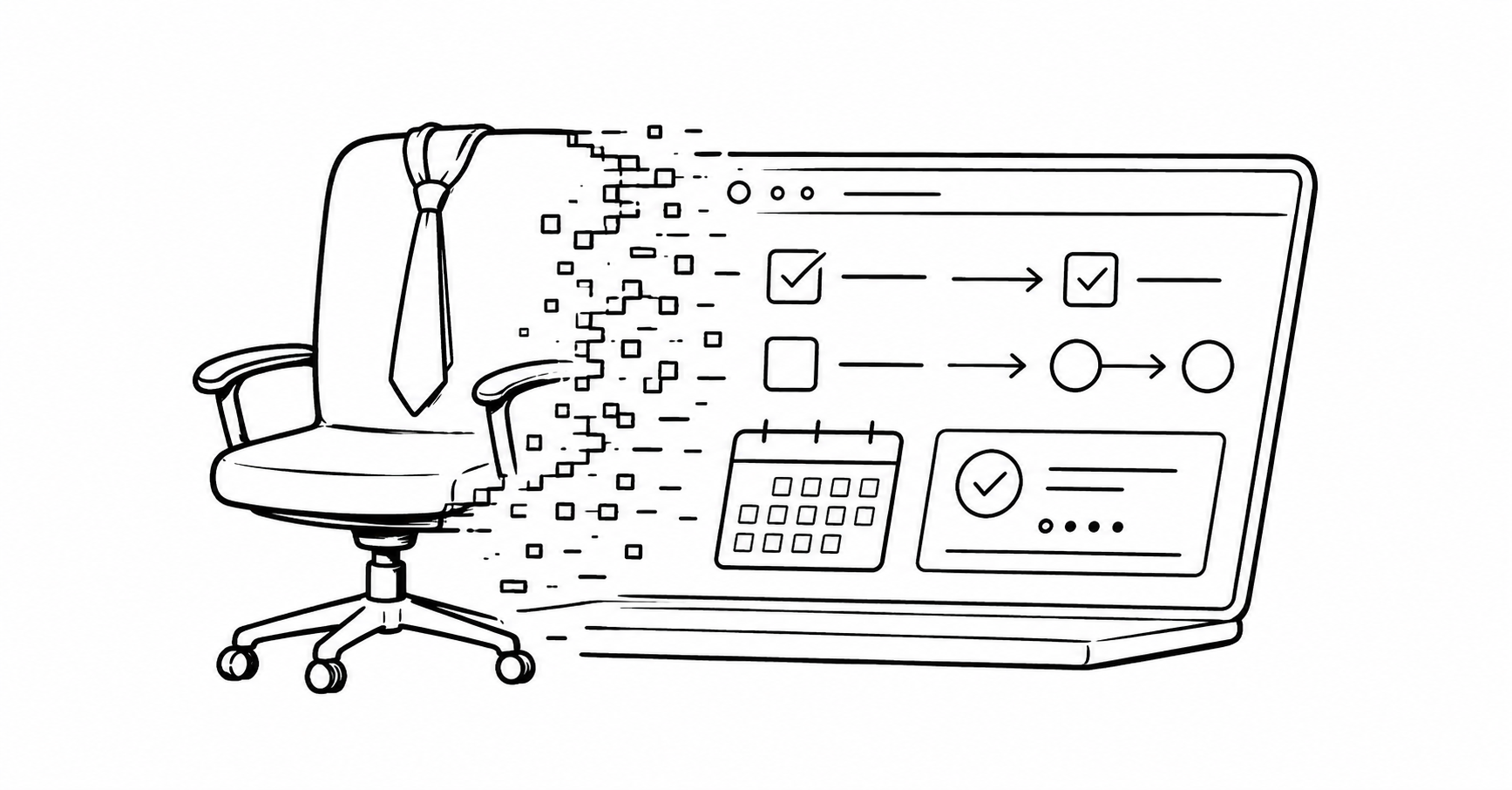
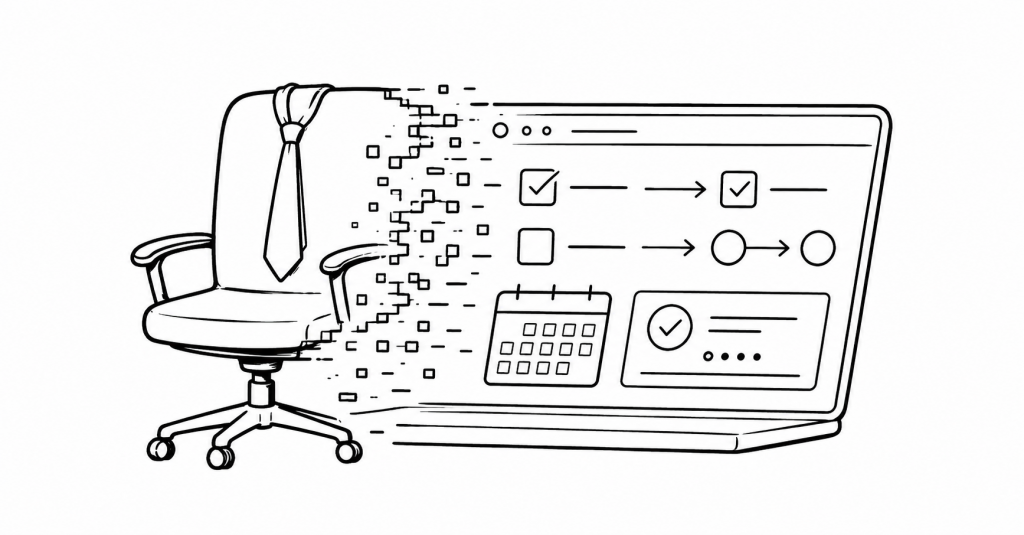
AI tools are now doing exactly what middle managers have always done: summarizing, routing, prioritizing, and following up. Tools built into enterprise software can attend meetings, transcribe them, pull out action items, assign ownership, and send reminders when deadlines slip. They can surface which tasks are blocked, flag when a project is behind, and draft status updates without anyone having to ask. The work of coordination — which is, if you strip it down, most of what middle management does — is becoming a software feature. MIT Sloan’s 2026 AI research shows that in companies deploying agentic AI at scale, the span of control has expanded from the historical norm of seven reports per manager to as high as fifteen in some divisions. The layer isn’t being eliminated through announcement. It’s being thinned through arithmetic.
The numbers behind this shift are now large enough to see the pattern clearly. Bureau of Labor Statistics data shows that managerial positions declined 6.1% between May 2022 and May 2025 — not a temporary fluctuation but a structural reduction in management headcount across the economy, driven by a combination of layoffs, attrition without replacement, and organizational restructuring. Middle management’s share of total layoffs jumped from 20% in 2019 to 32% in 2023 — a 60% increase — reflecting a deliberate strategy by companies to reduce overhead by eliminating management roles. And the market for those roles has not recovered: middle management job openings remain 42% below their April 2022 peak, meaning managers who lose their positions face a significantly tighter market than any of the headline unemployment figures would suggest.
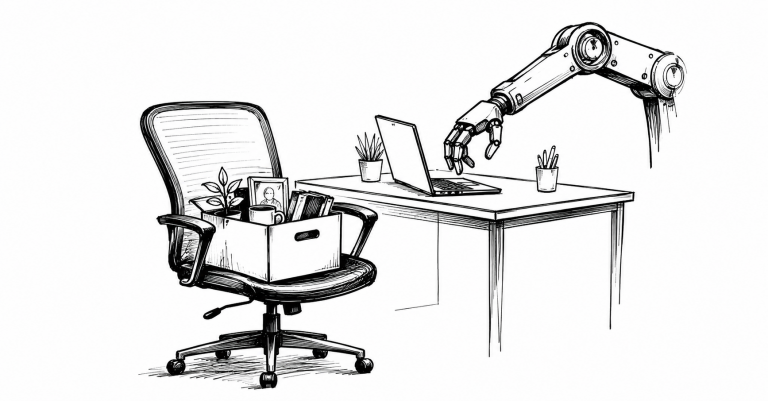
This isn’t happening through dramatic restructuring announcements. It’s happening quietly, as companies add AI coordination tools and then quietly stop backfilling the people who used to do the same work. A manager retires, and instead of hiring a replacement, the team uses the dashboard. An approval process that once required three signatures gets embedded in a workflow that routes itself. Amazon eliminated about 14,000 corporate jobs in late 2025 as it flattened management layers and pushed for faster decision-making, explicitly citing AI-enabled efficiency as the mechanism. Amazon hit its target of increasing the ratio of individual contributors to managers by at least 15% by the end of the first quarter of 2025, largely by combining teams and reassigning managers rather than through mass layoffs — a reminder that flattening often reshapes titles quietly rather than through a single headline-grabbing cut.
Gartner has projected that through 2026, one in five organizations will use AI to flatten their structure and eliminate more than half of their current middle-management positions. That projection is not speculative. It describes a process already underway, at scale, in real organizations that are running the calculus and finding that the tool is cheaper than the person.
The corporate middle has always been vulnerable to this critique because its value is genuinely hard to see. Coordination looks like overhead. The meetings look like inefficiency. The emails look like bureaucracy. And in many organizations, they are. But they’re also how organizations actually function — how information moves, how trust gets built, how priorities get negotiated, how people who are stuck get unstuck. AI can route the task. It cannot tell you that the person it’s being routed to is quietly burning out, or that two teams have been quietly competing for the same initiative for six months, or that the reason the project is behind is because no one ever resolved a disagreement that happened in a parking lot after a meeting two years ago.
The structural problem is that organizations are very good at measuring the parts of management that are annoying — the emails, the check-ins, the approvals — and very bad at measuring the parts that hold things together. So when software can demonstrably replace the annoying parts, the calculus looks easy. As SSC documented in AI Didn’t Replace Those Workers. It Just Made Eliminating Them Sound Like a Strategy., AI attribution is doing work that the technology itself is not yet fully doing — supplying the justification, the timing, and the investor tolerance for cuts that the underlying economics were already demanding. The middle management story is the same dynamic, applied to a specific layer of the workforce that was already under structural pressure before the AI tools arrived.
What’s actually happening isn’t that AI is making organizations smarter. It’s that AI is making the case for flatter structures that critics have been making for decades — except now the argument doesn’t require proving the layer was useless. It only requires showing that the tool is cheaper. That’s a different kind of argument. And for the people in that layer, it’s also a faster one.
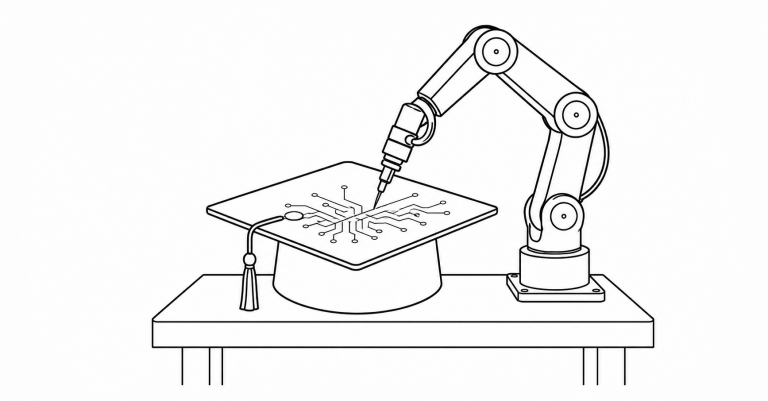
The irony is structural and significant. The executives who survive this shift — the people who set direction, manage culture, absorb ambiguity — need management skills more than ever. But the pathway that used to develop those skills is disappearing. You learned to be a VP by first being a manager, by reading rooms and building relationships and navigating organizational politics at a scale where the consequences of failure were recoverable. That apprenticeship is being automated away. McKinsey’s November 2025 report found that demand for AI fluency — the ability to use and manage AI tools — grew sevenfold in job postings between 2023 and 2025, faster than any other skill. The organizations eliminating the management development pipeline are simultaneously demanding that the leaders who emerge from it arrive already capable of managing in an AI-enabled environment. The math on that doesn’t work.
Why This Matters
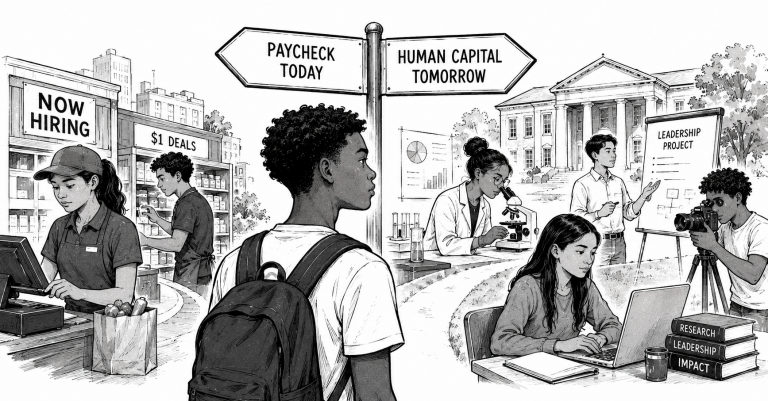
The question isn’t whether AI can coordinate work. It clearly can, in limited and improving ways. The question is what happens when the layer of the organization that knew why the work mattered — not just who was doing it and when — is no longer there to ask. As SSC covered in The Job Market Isn’t Crashing. It’s Closing., the structural compression hitting the entry-level labor market removes the first rung of the professional ladder. The middle management compression removes the second. The people most affected are not just the managers being displaced. They are the people who would have become managers — who would have learned in that middle layer what no dashboard can teach — and who now have no clear path to the senior roles that the organizations cutting those layers still need to fill.