The Government Found a Fraud Statute That Works on DEI
Deloitte’s $21.5 million settlement is the second of its kind. The mechanism matters more than the money.
Deloitte agreed this week to pay $21.5 million to resolve Justice Department allegations that its diversity practices violated federal anti-discrimination obligations attached to its government contracts. The firm denied wrongdoing and said it settled to avoid protracted litigation.
The dollar figure is not the story. For a firm of Deloitte’s size, $21.5 million is a rounding error. The story is the statute the government used to get it.
The False Claims Act Is a Fraud Law
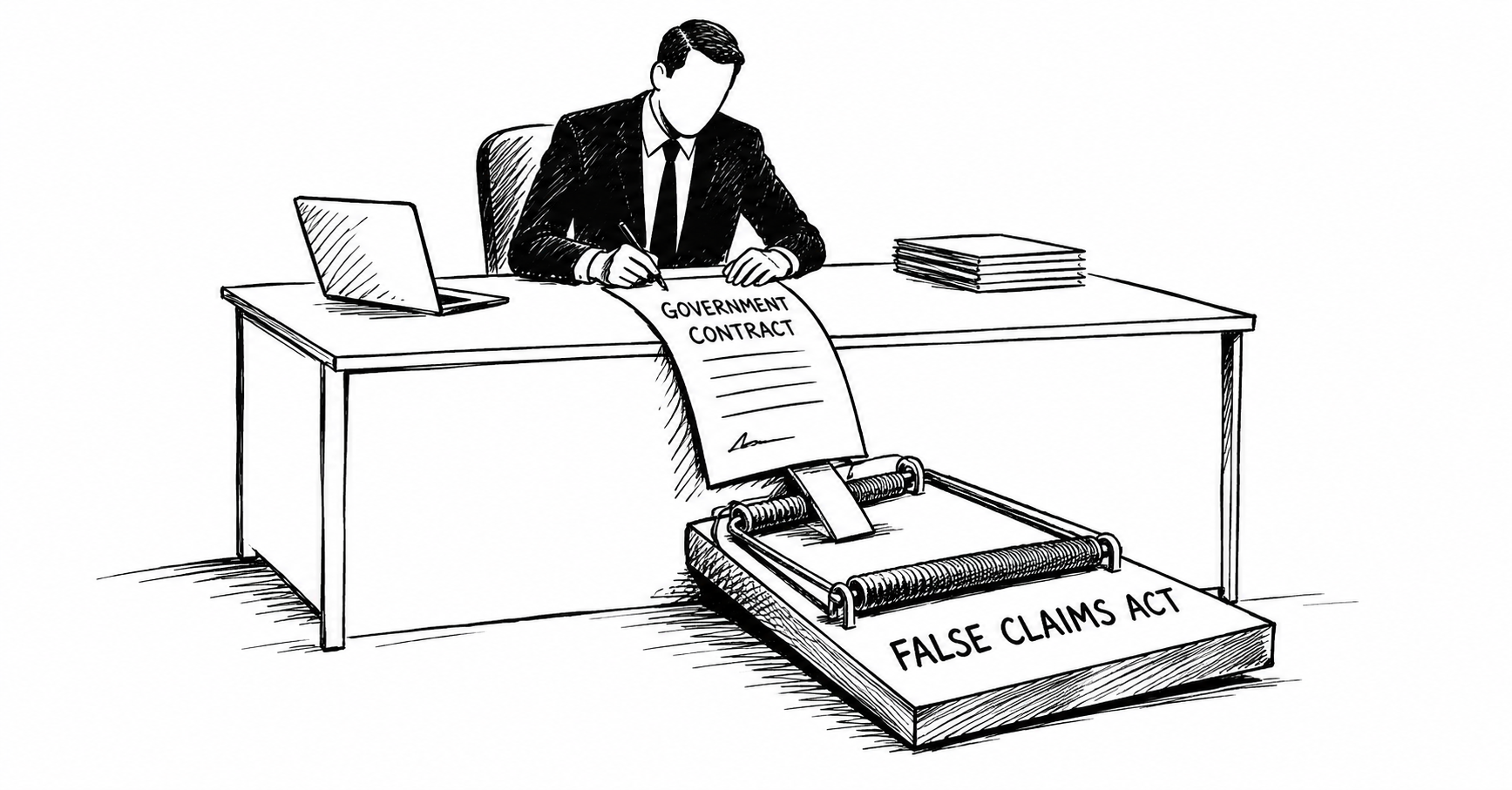
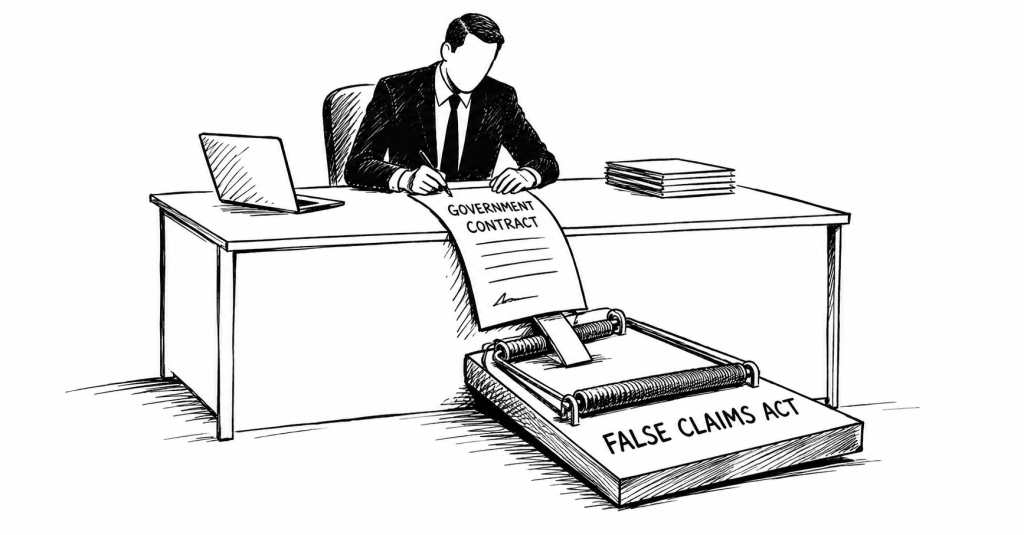
The Justice Department did not bring a civil rights case. It brought a fraud case.
The False Claims Act is the government’s primary tool against contractors who bill it dishonestly — inflated invoices, undelivered goods, falsified certifications. It carries treble damages and per-claim penalties, which is why it produces settlements rather than trials.
The theory in the Deloitte matter runs like this: federal contractors must certify that they do not discriminate on the basis of race or sex. DOJ alleged that Deloitte’s business units received monthly summaries tracking progress against demographic goals, and that roughly 150 senior partners, principals and managing directors had part of their compensation tied to meeting those targets, with some standing to lose tens of thousands of dollars a year. If those practices constituted discrimination, the government argued, then the anti-discrimination certification was false — and every invoice submitted under the contract became a false claim. DOJ further contended that the cost of those practices was passed along to the government in higher fees.
That is the pivot. A dispute that would traditionally run through Title VII, the EEOC, or the OFCCP — with their own procedures, standards of proof and remedies — becomes a fraud claim instead.
Why the Route Matters
Employment discrimination law developed a specific architecture over sixty years: administrative exhaustion, defined burdens of proof, individual claimants, established doctrine about what disparate treatment means.
Fraud law developed a different one. It asks whether a representation to the government was false, whether the falsity was material to payment, and whether the contractor knew. It permits whistleblower suits by private parties who share in the recovery. And its damages provisions are severe enough that most defendants settle regardless of the merits.
Reclassifying a category of conduct from one framework into the other changes the outcome without changing the underlying law. Nothing in the False Claims Act was amended. What changed is which practices the government treats as a false certification.
DOJ formalized this in May 2025 with the Civil Rights Fraud Initiative, a joint effort of the Civil Rights Division and the Civil Division’s Fraud Section directing FCA investigations against recipients of federal funds the government believes have violated civil rights laws. A subsequent executive order required agencies to insert DEI-related clauses into covered contracts and tied noncompliance explicitly to FCA liability, contract termination and debarment.
IBM settled the first case under the initiative in April for $17 million. Deloitte is the second. The Wall Street Journal reported in December 2025 that DOJ was examining companies across telecommunications, technology, automotive, pharmaceutical, defense and utilities.
Two settlements do not make a trend by themselves. But two settlements in four months, from companies with the resources to fight, establish that the theory works — which is the point of the first cases in any enforcement campaign.
The Contested Ground
The administration’s position is that anti-discrimination law is symmetrical. If a program sets demographic targets and attaches compensation consequences to hitting them, it has created a race- or sex-conscious employment practice, and calling it diversity work does not change what it is. Attorney General Todd Blanche framed the IBM settlement in those terms, arguing that contractors cannot evade discrimination law by relabeling it.
The counterargument is that this collapses a distinction courts have long maintained between preferences in individual employment decisions and aggregate goals used to measure recruitment and retention efforts — and that treating the latter as fraud stretches a statute meant for billing dishonesty into an area it was never built for.
Neither position gets tested when cases settle. Both IBM and Deloitte denied wrongdoing. No court has ruled on whether demographic goals tied to partner compensation constitute discrimination under Title VII, or whether an anti-discrimination certification is material to payment in the way the FCA requires. The theory has produced $38.5 million and no precedent.
That is not unusual. It is how FCA enforcement generally works, and it is also why the statute is effective: a defendant facing treble damages and debarment has strong reasons to pay before finding out.
What Federal Contractors Are Actually Doing
The practical effect is already visible in what law firms are telling clients. The advisories following the IBM settlement carry a consistent message: assess your DEI-related employment practices, training programs and compensation structures now, and be prepared to defend anything you keep.
That advice is being given because the boundary is unclear. There is no published standard separating a lawful diversity program from one that generates FCA exposure. In that environment, the rational response for a general counsel is not to litigate the boundary but to move well clear of it.
Which means the enforcement campaign’s largest effect will not be measured in settlements. It will be measured in the programs that quietly end at companies that were never investigated — a familiar dynamic wherever compliance risk is high and legal clarity is low.
Deloitte’s Position Is Its Own Complication
There is a particular irony in the defendant. Deloitte is one of the largest advisory firms in the world, and diversity consulting has been part of what it sells. A firm that advises other organizations on workforce strategy has now paid to resolve allegations about its own.
Roughly $4.3 million of the settlement goes to the American Alliance for Equal Rights, the organization founded by Edward Blum, who brought the litigation that ended race-conscious college admissions. That allocation is worth noting on its own: it routes a portion of a federal fraud recovery to a private advocacy organization aligned with the policy the enforcement advances.
The Larger Pattern
Strip away the subject matter and a familiar structure appears. A government wants to change institutional behavior. Direct regulation is slow and contestable. So it locates an existing enforcement mechanism built for something else — one with severe penalties, favorable procedure and a high settlement rate — and applies it to the new target.
The mechanism does the work that legislation or rulemaking would otherwise have to do, and it does it faster, because the pressure lands on the compliance decision rather than in a courtroom.
That is a durable tool, and it does not belong to any one administration. A statute repurposed once can be repurposed again, by whoever holds the enforcement apparatus next, against whatever practices they consider a false certification.
The $21.5 million is the headline. The precedent is the asset.