GLP-1 Drugs Are a Class Benefit Now. Bank of America Just Made That Plain.
SSC News Desk
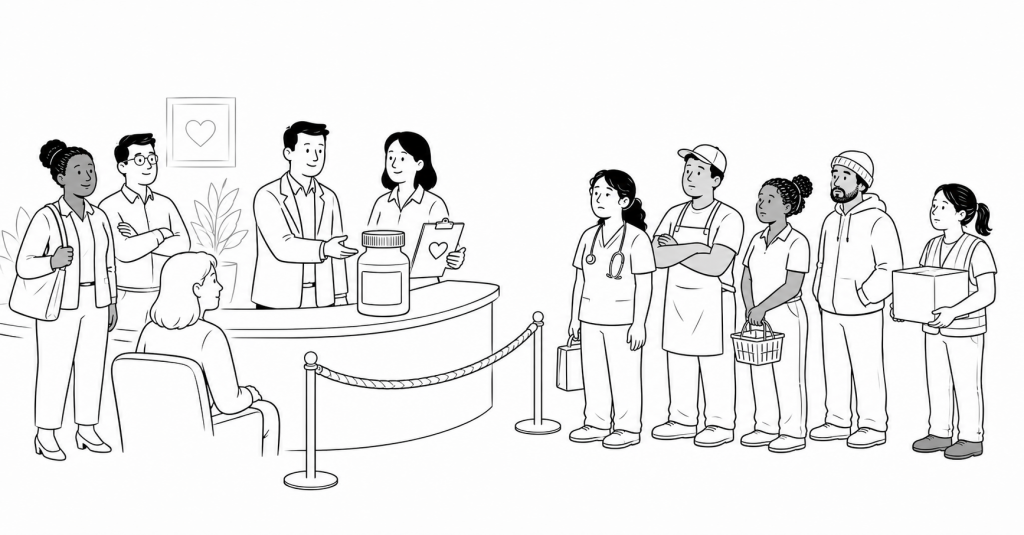
Bank of America spends $250 million a year covering Ozempic and Wegovy for its employees and calls it a good investment. Sixty percent of US employers still only cover the drugs for diabetes. The gap between those two sentences is the story.
Bank of America spends more than $250 million annually covering GLP-1 drugs — medications like Ozempic and Wegovy — for its 211,000 employees. That figure represents 13 percent of the bank’s total $2 billion annual healthcare spend. CEO Brian Moynihan told CNBC this week that the investment is worth it. “We see a great impact on the employees,” he said. “It’s lowering near-term incidents of heart issues for people taking, even if they don’t have all the attributes. That’s the payback.”
Moynihan went further. He acknowledged that some employees on GLP-1s may not see the full health benefits until years after they’ve left the company — and said the bank is covering them anyway. “It’s the right thing to do for your teammates,” he said. The bank pairs drug coverage with health coaching and behavioral monitoring. It is also actively pressuring drugmakers and pharmacy benefits managers to lower prices.
That is what $2 billion in annual healthcare spend buys. It buys access to medications that most workers in the United States cannot get through their employer, leverage to negotiate pricing with the largest pharmaceutical companies in the world, and a benefits package that 30 percent of workers say they would switch jobs to access.
Most workers cannot switch into that situation. Sixty percent of US employer health plans cover GLP-1 drugs for diabetes only — not for weight loss, not for the broader metabolic conditions the drugs address. Only 36 percent of plans cover both, a number that has not moved since 2025. And the direction is tightening, not expanding. More than 25 percent of large corporations are narrowing their GLP-1 coverage criteria in 2026 or 2027. PwC stopped covering the drugs for weight management, citing “rapidly rising costs.” Cigna stopped covering Wegovy and Zepbound for its own employees in July. HCA Healthcare — which employs hundreds of thousands of workers in its hospitals — cut weight-loss coverage in January after employee use of GLP-1s jumped 90 percent in 2025 alone.
The price trajectory makes this harder to explain as a pure cost decision. When Wegovy launched in 2021, a monthly dose cost $1,600. A starting dose now runs $149 a month. Amazon One Medical offers insured access for $25 a month. GLP-1s have gone from experimental to widely available to genuinely affordable in the span of four years. The companies pulling back are not pulling back because the drugs became more expensive. They are pulling back because uptake exceeded what their plans were designed to absorb.
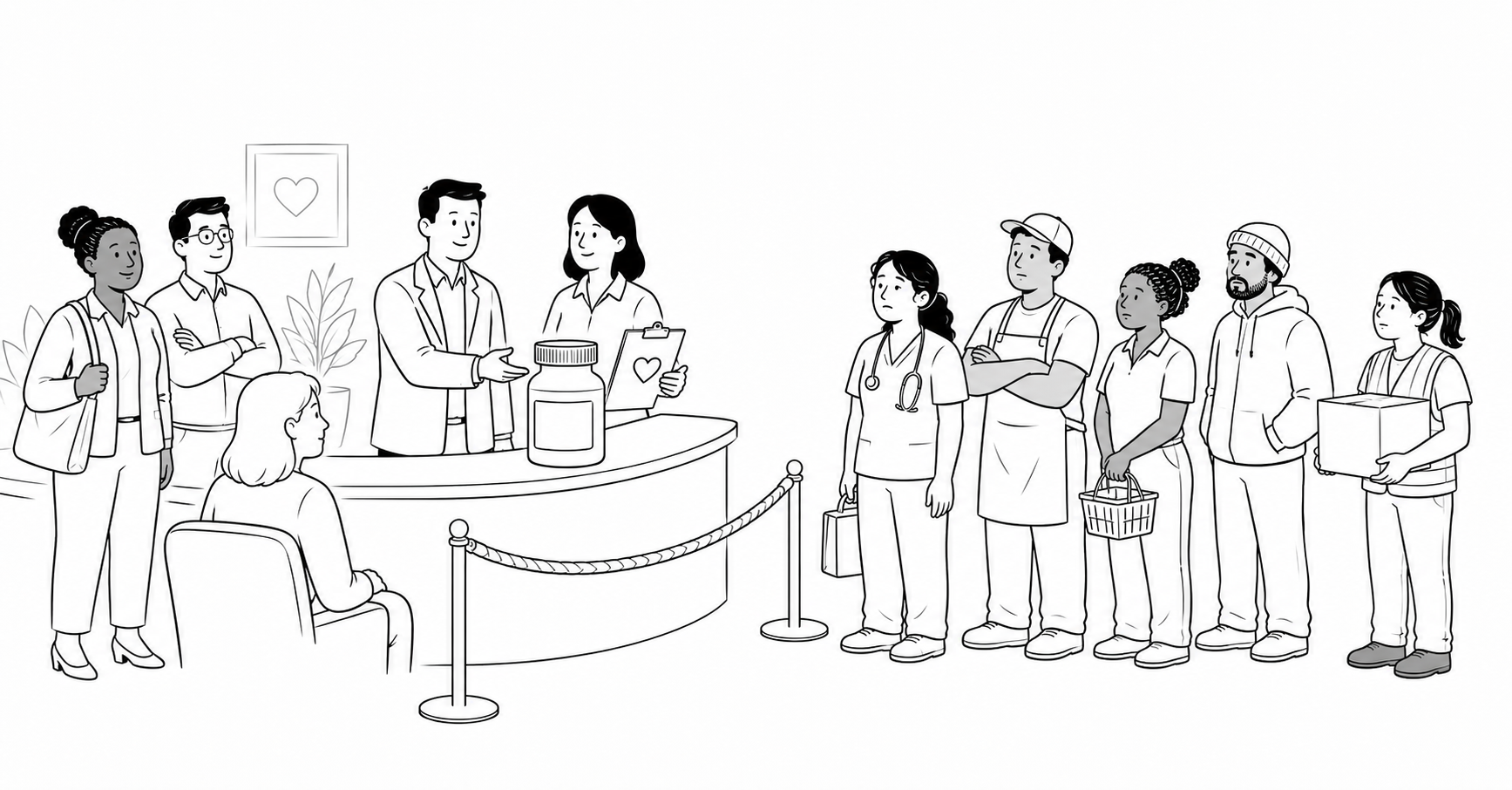
The result is a tiered healthcare system organized around employer size and financial capacity. Bank of America can spend $250 million on GLP-1s because it has $2 billion to spend on healthcare. It can pressure manufacturers because it controls a large enough book of business to matter in that negotiation. It can pair drugs with coaching because it has the infrastructure to build that program. Smaller employers cannot replicate any of those conditions. The workers who need GLP-1 coverage most — those in physically demanding jobs, with higher rates of metabolic disease, in lower-wage industries — are the least likely to be employed by an organization with the scale to offer it.
Approximately 11 percent of US adults now take GLP-1 medications for weight loss, up from 3 percent two years ago. The drugs have moved from niche to mainstream in the same period that employer coverage decisions have moved from expansion to consolidation. The workers arriving at that medication at scale are arriving at a benefits market that is sorting by employer capacity. Bank of America called its $250 million spend a good investment. For the companies that cannot make that investment, the workers on the other side of that line are making a different calculation — and frequently arriving at no coverage at all.