Marion Has Paid More Than $4 Million for a Raid Nobody Was Charged Over
The criminal system cleared the officers who searched a newsroom. Municipal liability is doing the accountability work instead.
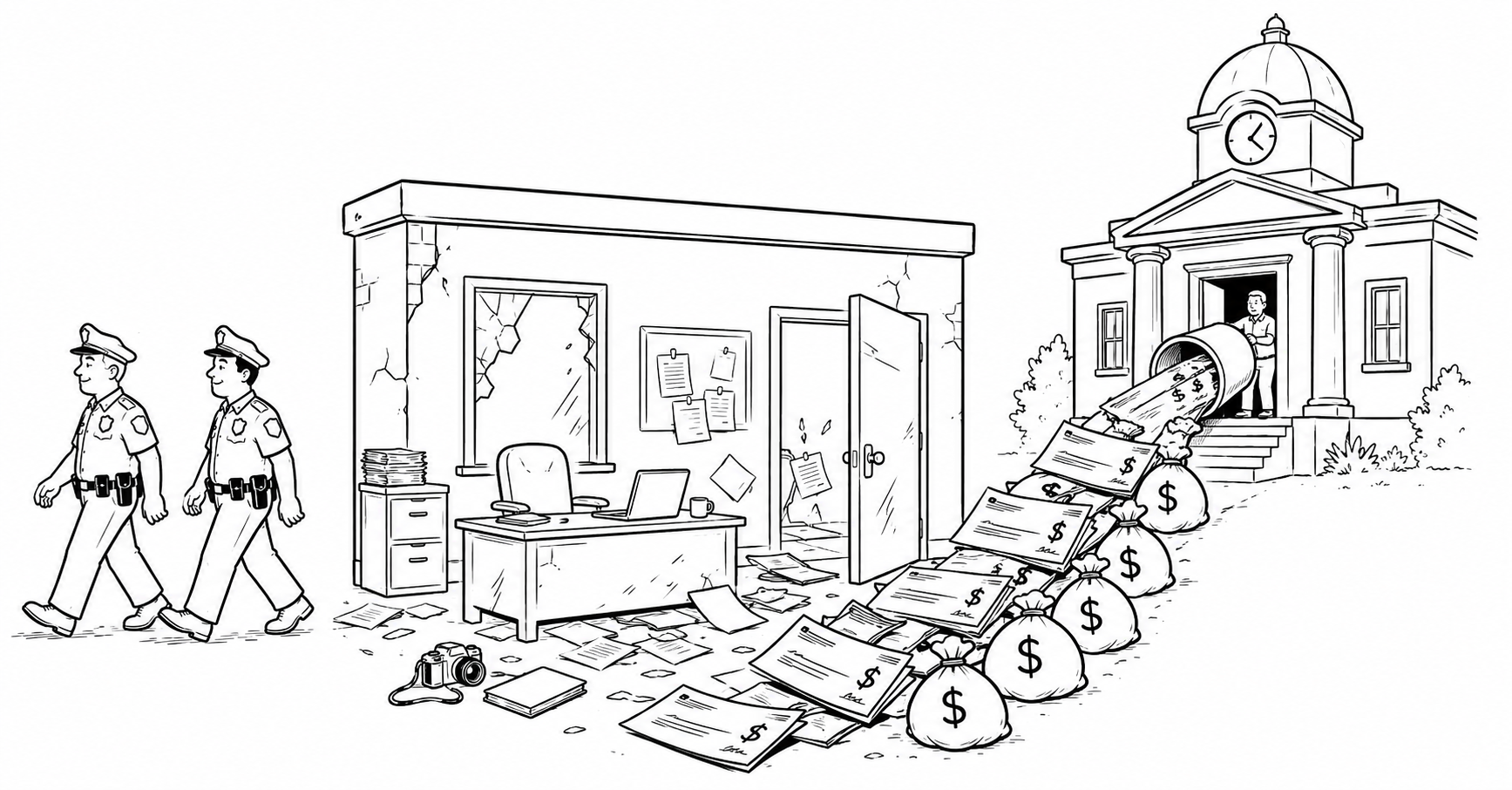
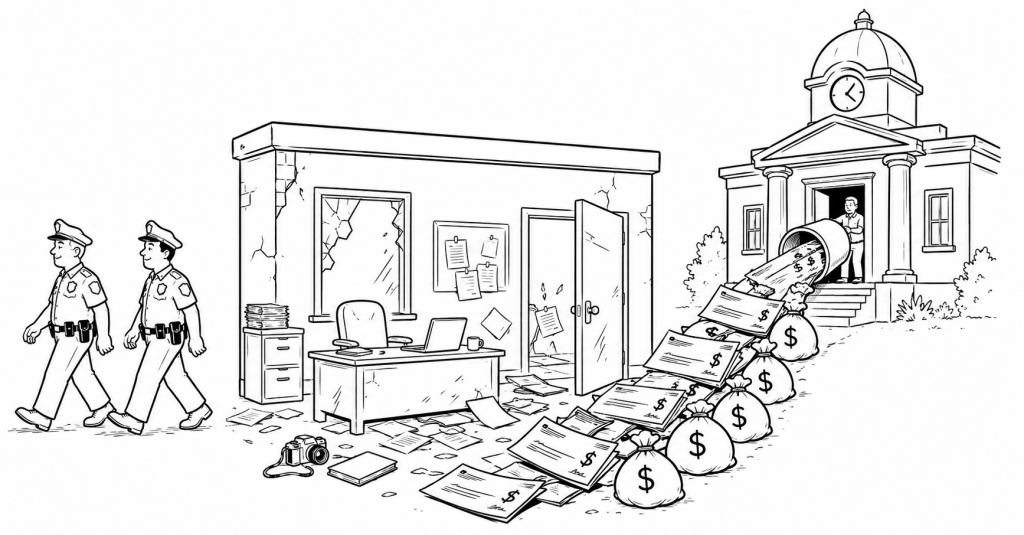
Sherman Smith reported for Kansas Reflector on August 11 that the city of Marion, Kansas will pay $850,000 to former Marion County Record reporter Phyllis Zorn, settling her federal lawsuit exactly three years after police raided the newspaper’s office and the homes of its publisher and a city councilwoman. Zorn had already received $600,000 from Marion County, part of roughly $3 million the county paid last fall to settle five lawsuits. Former reporter Deb Gruver settled with the city for $235,000 in 2024. Suits from publisher Eric Meyer and former Councilwoman Ruth Herbel remain unresolved, which means the running total will exceed four million dollars before the city is finished.
The Criminal Case Covered Everything Except the Raid
Special prosecutors Marc Bennett and Barry Wilkerson cleared then-Police Chief Gideon Cody and the other officers of wrongdoing in executing the searches. The single charge they brought against Cody is a misdemeanor obstruction count for asking Newell to delete their text messages after the fact — a charge about the relationship, not the raid. His trial was postponed after his attorneys withdrew from the case, and he has since moved to Hawaii.
U.S. District Judge Daniel Crabtree found in a March 2025 preliminary ruling that police had no reasonable basis to believe Zorn or anyone at the paper had committed a crime. That finding lives in a civil docket. The judgment that seizing a newsroom’s phones and reading unpublished reporting was legally baseless arrived through a liability claim against a municipality, and the money to satisfy it comes from the city’s insurer and its taxpayers rather than from anyone who decided to send officers through the door.
The Remedy Required an Audience
Zorn’s own account of why the case went the way it did is the part local newsrooms should sit with. She has said the officials involved assumed a small rural town could absorb this quietly, and that what defeated them was the paper’s capacity to summon national attention within hours. Kansas Reflector broke the story, the wires carried it, press freedom organizations mobilized, and a documentary about the raid premiered at Sundance in January.
Zorn also describes a cost the settlements do not reverse: tonic-clonic seizures that returned after the raid and now require two and a half times her previous medication. She retired and moved. Gruver left. Two reporters at a weekly paper are gone from the profession, and the town that drove them out has been made to pay for it only in dollars.
What Actually Constrains the Next Raid
The deterrent produced here runs through insurance underwriting rather than criminal law. Small-city liability coverage is priced on claims history, and a four-million-dollar loss in a town this size is the kind of event that reshapes premiums, retention requirements and coverage conditions across a state’s municipal risk pool. Expect the next meaningful constraint on police action against a newsroom to arrive as a policy exclusion or a warrant-review requirement written by an insurer, not as a statute or a published opinion.
That leaves press protection contingent on two things a shrinking local newsroom controls less each year: whether a raid can generate enough attention to make litigation viable, and whether the town’s insurer decides the risk is worth carrying. Marion’s paper had a national audience available to it in August 2023. The weeklies losing their production staff this month will have fewer people to make the call, fewer hours to make it in, and no guarantee anyone picks up.