
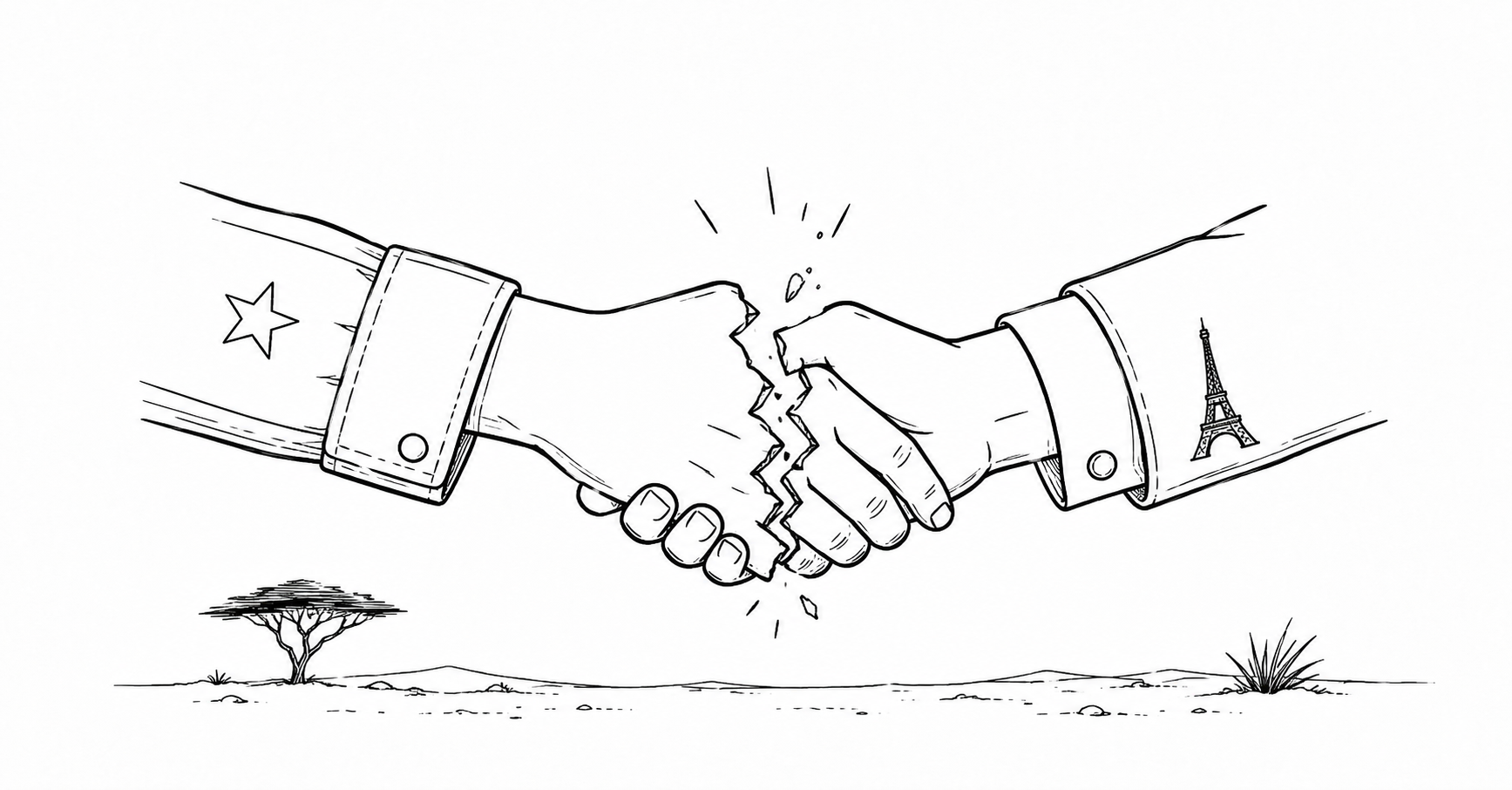
Burkina Faso’s Break With France Is the New Sahel Order
The diplomatic rupture is not just anti-French politics. It shows how security failure, sovereignty politics and postcolonial realignment are remaking West Africa.
Burkina Faso has severed diplomatic ties with France, ending another formal channel between Paris and one of its former West African colonies. The military government announced the break after years of deteriorating relations, accusing France of supporting subversive networks and terrorists. France rejected the claims, expressed regret and said it was considering reciprocal measures.
The rupture is larger than one bilateral dispute. Burkina Faso has been under military rule since a 2022 coup and remains engulfed by a severe Islamist insurgency that has killed thousands and displaced communities across the Sahel. France was once a central security partner in the region. But the promise of French-backed counterterrorism did not produce stability at the scale citizens were told to expect. That failure created the political opening for juntas to recast sovereignty as distance from Paris.
This is the structural pattern SSC should name: when security partnerships fail in practice, they lose legitimacy even if they remain useful on paper. France’s role in West Africa was built on military cooperation, diplomatic familiarity, aid, language and elite networks. But those assets now read differently in countries where insecurity deepened under the old arrangement. What Paris sees as partnership, military governments can reframe as dependency. What Western governments call a strategic vacuum, juntas describe as reclaimed authority.
Burkina Faso’s decision follows a regional pattern. Mali, Niger and Burkina Faso have all moved away from France while elevating sovereignty language and seeking alternative partners. The shift is not simply ideological. It reflects a market for protection. Governments facing insurgency, public anger and legitimacy deficits will shop for alliances that provide weapons, political cover and a narrative of independence. The result is a geopolitical opening for Russia and other actors willing to operate with fewer governance conditions.
The cost falls heavily on civilians. Diplomatic breaks can satisfy nationalist politics without improving security. Rights groups have reported abuses by Burkinabe forces even as insurgent violence persists. Cutting ties with France may consolidate the junta’s domestic message, but it does not by itself build schools, restore markets, protect villages or return displaced families home. Sovereignty as rhetoric is easier than sovereignty as state capacity.
The bigger story is the end of the default. For decades, France could assume that former colonies would remain inside its diplomatic and security orbit even when resentment was visible. Burkina Faso’s break says that assumption no longer holds. The new Sahel order is not necessarily more democratic, more stable or more accountable. But it is less automatic. The question now is not whether France still has influence. It is whether influence without trusted outcomes can survive.