Household Debt Fell Last Quarter. The Expensive Kind Went Up.
The aggregate dropped $13 billion. Underneath it, borrowing migrated from secured to unsecured.
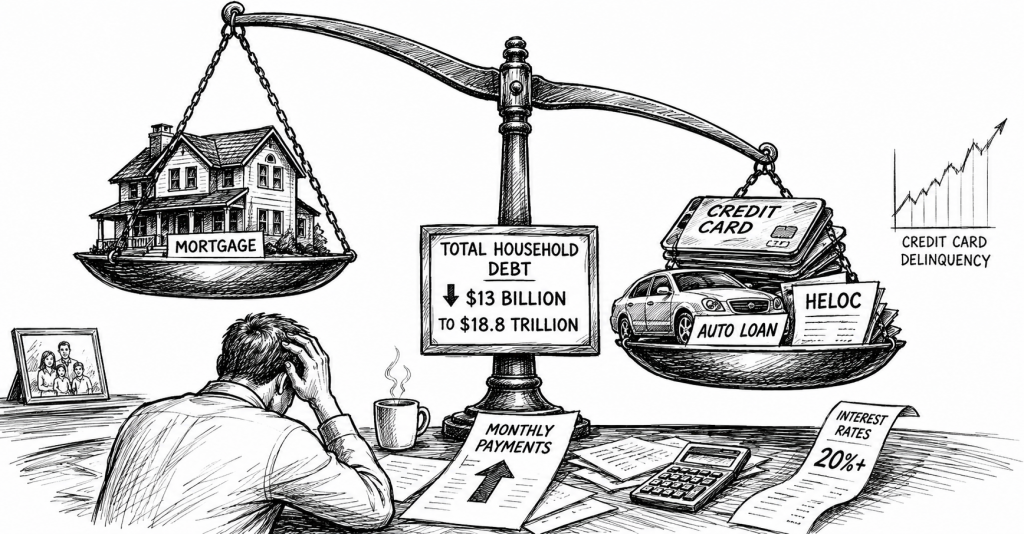
The Federal Reserve Bank of New York reported Tuesday that total US household debt decreased by $13 billion in the second quarter to $18.8 trillion, and that aggregate delinquency improved slightly, with 4.7 percent of outstanding balances in some stage of delinquency. Coverage has largely run the opposite headline. What deserves attention is not the total, which barely moved, but the composition, which moved considerably.
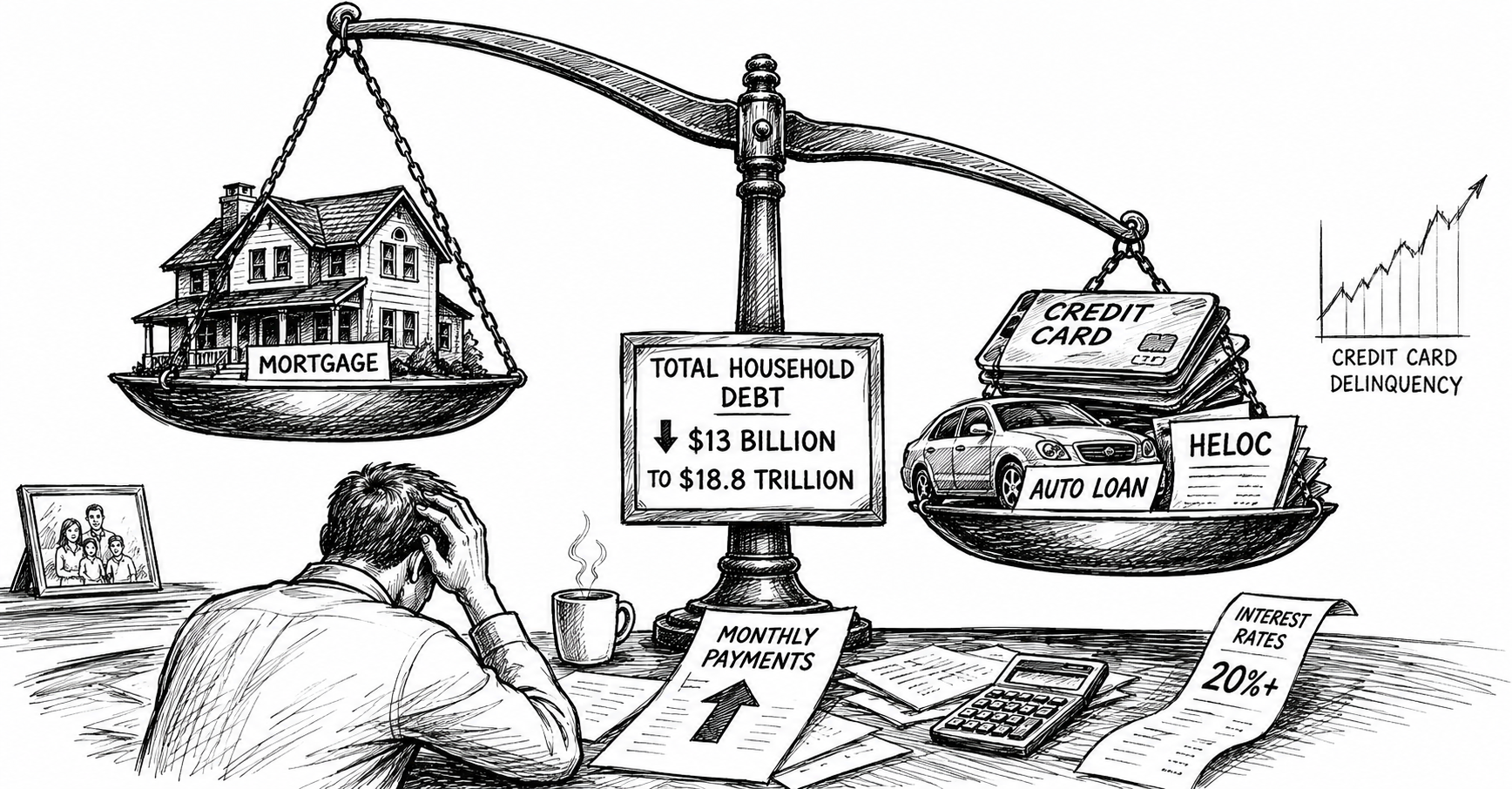
Mortgage balances fell $74 billion to $13.1 trillion. Credit card balances rose $21 billion to $1.26 trillion, within striking distance of the $1.28 trillion record set in the fourth quarter of last year. Auto loans rose $28 billion to $1.71 trillion, a record, on $211 billion in new originations. Home equity lines of credit climbed $13 billion to $459 billion, now $142 billion above the low they reached in early 2022.
Read together, those movements describe households retiring the cheapest debt they hold and adding the most expensive. A mortgage is collateralized, fixed for most borrowers, and priced in single digits. A revolving card balance is unsecured, variable, and priced above twenty percent. The aggregate can fall while the monthly cost of servicing what remains rises, and that is roughly what happened.
The Alarming Number Is a Rear-View Mirror
The figure driving most of the coverage is the share of card balances in late-stage delinquency, more than ninety days past due, which climbed from 7.6 percent in late 2022 to 12.8 percent by early this year. The New York Fed addressed it directly on a press call, describing it as a lagging indicator reflecting past charge-offs that remain on credit reports rather than fresh distress.
The number that actually measures current strain is the transition rate, and it held steady, with roughly 6.97 percent of card balances entering delinquency over the past year. Joelle Scally, economic policy advisor at the New York Fed, said delinquency rates across most products have been stable for two years while new delinquencies on cards and auto loans remain elevated. Stable and elevated are both accurate, and the reporting has generally picked one.
Where the Strain Is Concentrated
The New York Fed’s own framing is a K-shaped economy, with researchers noting that a large share of households live paycheck to paycheck and need only one adverse event to fall behind. About 175 million Americans hold credit cards and roughly 60 percent carry a revolving balance rather than paying in full.
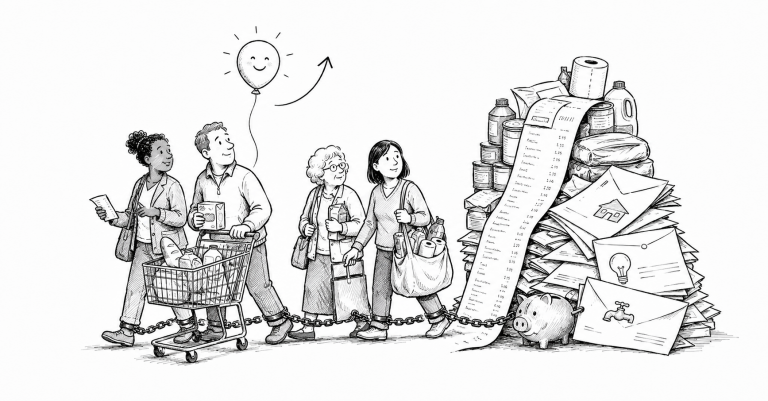
That split is why aggregate improvement and household deterioration coexist without contradiction. For the 40 percent who clear their balance monthly, the interest rate is irrelevant and a card is a payment instrument. For the 60 percent who revolve, the same card is a credit facility charging compounding interest on groceries, insurance premiums and utility bills. A national delinquency rate averages those two populations into a single number that describes neither.
What to Watch
Today’s producer price report showed wholesale inflation flat in July, and Wednesday’s consumer print came in subdued. Both will be read as relief arriving. Neither repairs a balance sheet. Prices leveling off at a higher plateau leaves the accumulated borrowing from the climb exactly where it is, at rates that do not fall when inflation does.
Watch the composition rather than the total in the third-quarter report. If mortgage balances keep declining while card, auto and HELOC balances keep rising, the household sector is not deleveraging — it is refinancing itself into more expensive instruments while the headline number gets quieter. The transition rate is the figure that will register that first, and it is the one currently being crowded out by a lagging statistic the Fed has already asked people to stop reading as news.