Extreme Heat Is Turning Public Space Into Survival Infrastructure
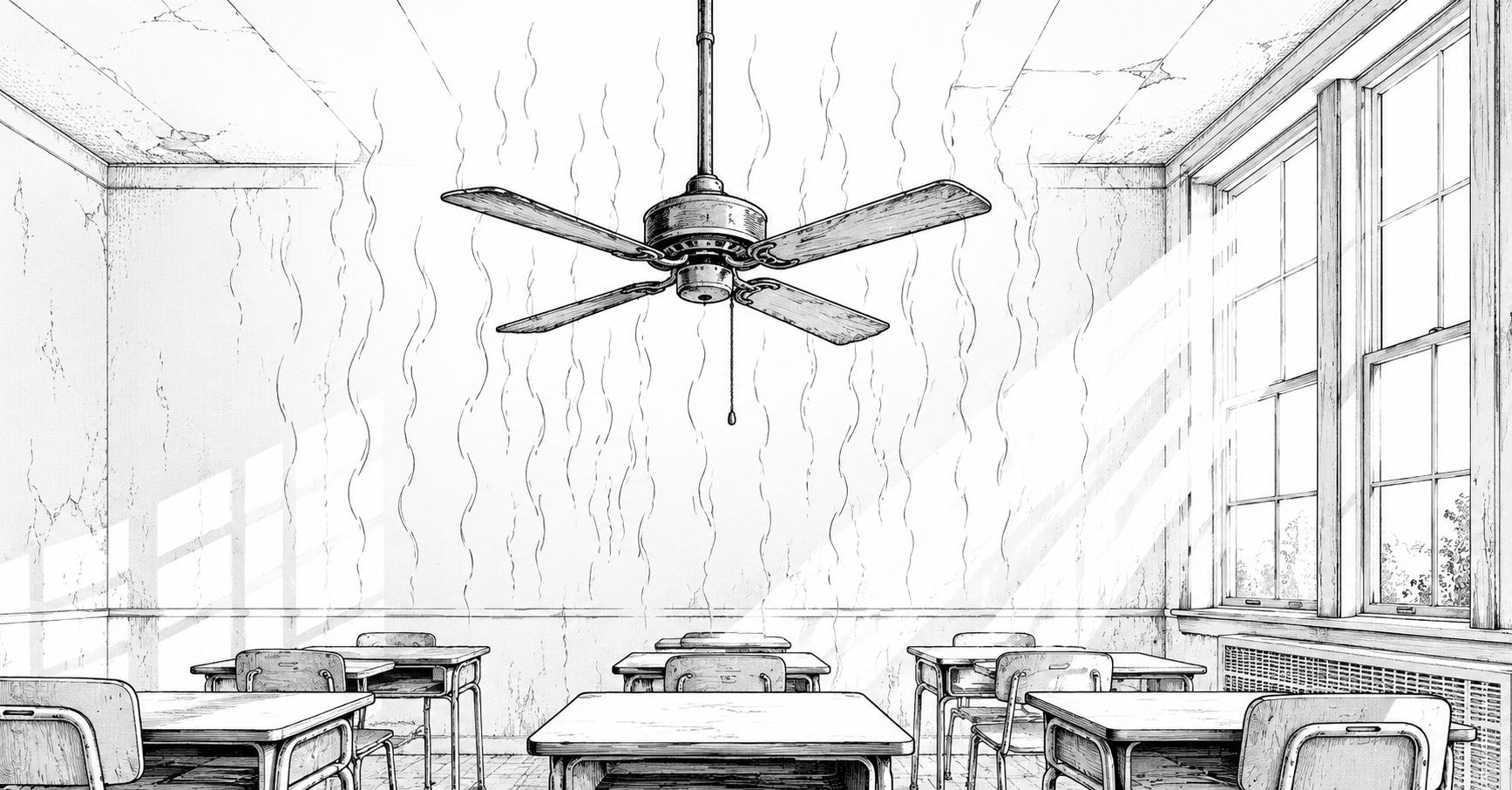
The Guardian reported this week that the UK recorded a provisional June temperature record of 36.4 degrees Celsius, while Switzerland hit 38 degrees in Basel and France closed more than 3,500 schools after classrooms reached temperatures as high as 40 degrees. Teachers’ unions warned the conditions were physically dangerous for students and staff. Hospitals in England declared critical incidents as heat-related equipment failures accumulated — radiotherapy machines, MRI scanners, IT servers, and cooling systems all reported problems within the same period. What the heatwave is revealing is not only that extreme temperatures are arriving more frequently, but that the public systems communities depend on were not built to absorb them.
Climate adaptation is often discussed in terms of energy transition and emissions targets — long-horizon policy arguments about what the world should look like in 2035 or 2050. The European heatwave is a different kind of argument. It is about whether the institutions people use today can still function when the temperature breaks the assumptions embedded in their original design. Hospital infrastructure built for a different climate. School buildings without adequate ventilation. Transit systems that lose functionality in heat. Emergency services strained by simultaneous demand across multiple systems. These are not future problems. They are present failures.
The access dimension matters here. Heat does not arrive equally. People with air-conditioned homes, flexible schedules, private transportation, and stable healthcare have more options when a heat event begins. People in poorly insulated housing, crowded schools, outdoor jobs, under-resourced hospitals, or transit-dependent neighborhoods have fewer. The Guardian noted that Paris authorities responded by opening parks around the clock and designating air-conditioned public buildings as cooling centers — reframing libraries, museums, and civic spaces as emergency infrastructure rather than amenities.
That reframing is the adjustment this moment requires. A park is not just quality of life. A library is not just a civic building. A school’s ventilation system is not just a maintenance issue. In a hotter world, each of those things is part of the infrastructure that determines whether people survive the conditions they cannot leave.