
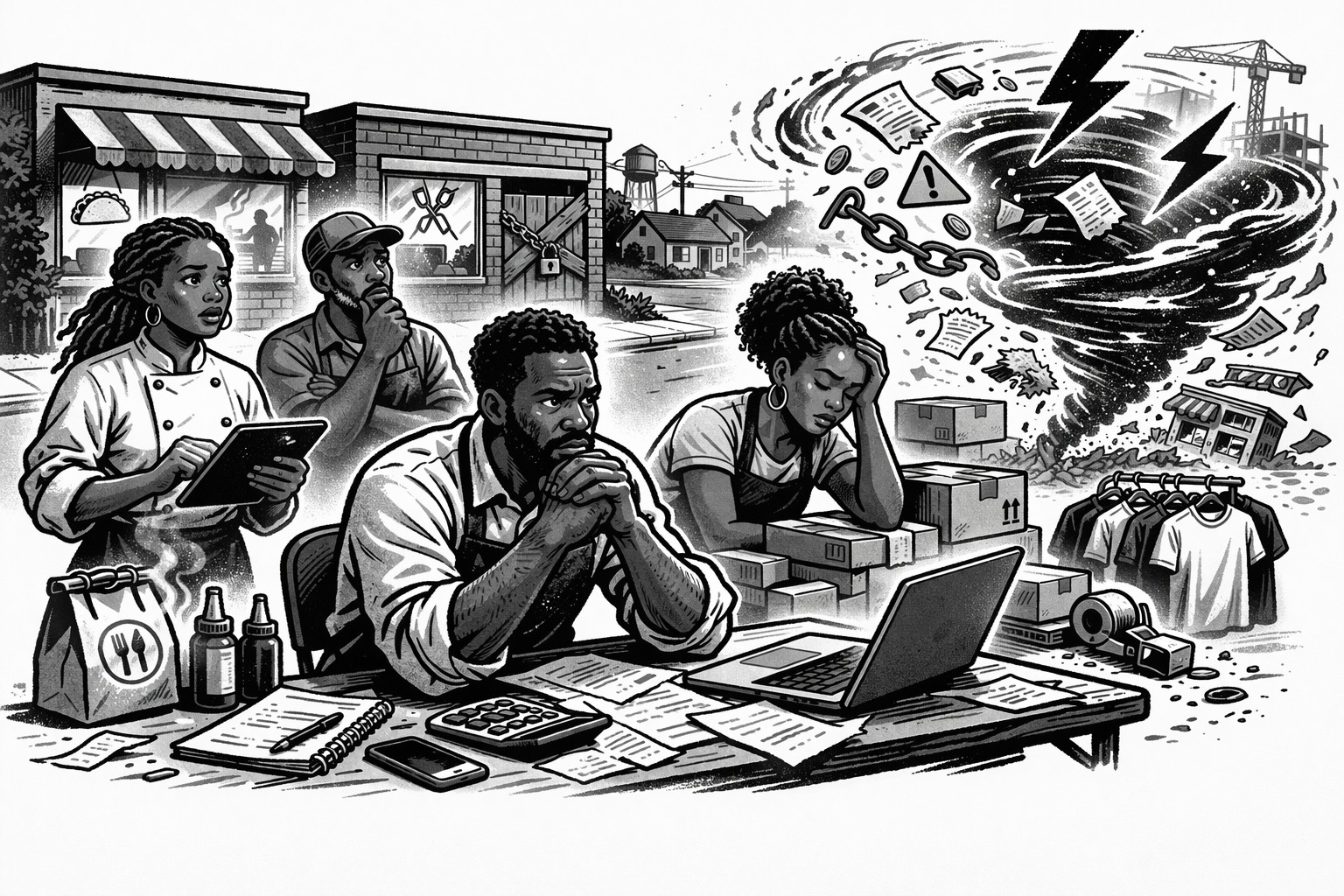
Part of The Access Shift — an ongoing series examining how access is being quietly reshaped across American life. New stories every Wednesday at 12:00pm CDT.
The lines that once divided opportunity in America were easy to see. They were drawn on maps, reinforced through policy, and enforced through lending practices that made clear who could access wealth and who could not. Today, those lines have not disappeared — they have evolved. What was once visible is now embedded, written into algorithms, network infrastructure, and platform design rather than ink.
Digital redlining describes this shift — the practice of limiting access to information, services, and opportunity through systems that appear neutral but produce uneven outcomes. According to the ACLU, digital platforms have enabled discrimination in housing and employment by allowing advertisers to exclude users based on demographic traits. What makes this form of exclusion harder to confront is not just its scale, but its invisibility. The system does not announce itself. It simply delivers different realities to different people.
The consequences are subtle but cumulative. A job posting that never appears. A housing listing never shown. A credit offer that never arrives. Each instance feels insignificant. Over time, they compound into structural gaps in income, mobility, and stability. As The AI Resume Screen Won’t See You Coming documented, algorithmic systems are already shaping who gets considered for opportunities before a human ever enters the process — trained on historical data that reflects decades of inequality. Bias does not disappear in code. It is often optimized.
Traditional redlining was explicit enough to be mapped and eventually legislated against. Digital redlining operates without clear boundaries — dynamic, personalized, and constantly adjusting. As When the Economy Slows, Some Communities Feel It First documented, the communities with the least structural cushion absorb the earliest effects of any system under pressure. A system that quietly filters opportunity by demographic data is pressure that never announces itself.
The red lines have not disappeared. They have become harder to see, easier to scale, and more deeply embedded in the systems people rely on every day.
The gradual redefinition of who systems are designed to serve.
Across sectors—from public infrastructure to healthcare to everyday spaces—access is no longer assumed. As costs rise and systems face increasing pressure, services once built for broad reach are becoming more selective, more conditional, and less universal. The Access Shift explores how these changes are unfolding in real time—and what they reveal about who is included, who is left out, and how the structure of everyday life is quietly being reshaped.