
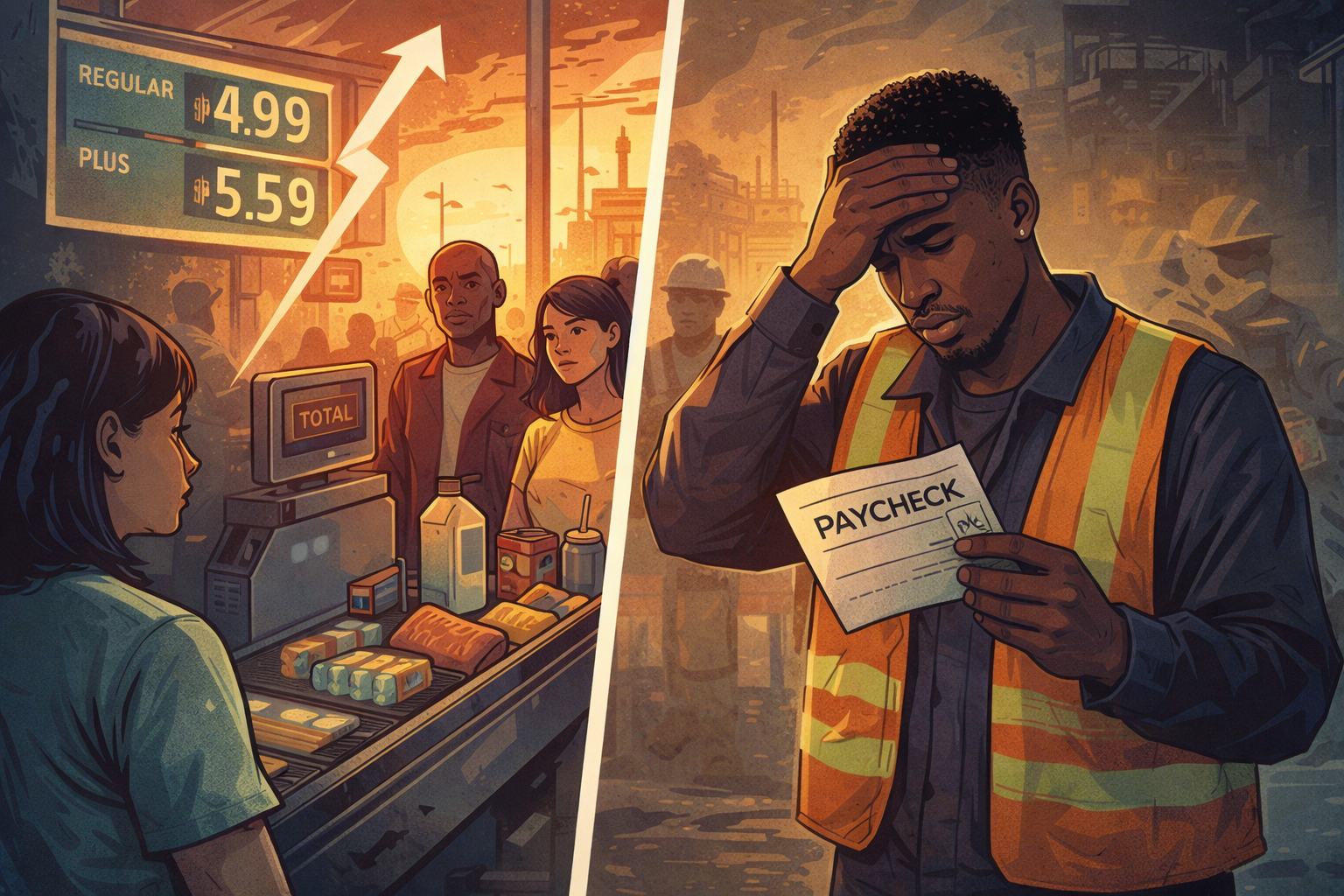
Recent economic data suggests the U.S. economy may be losing momentum. According to new government estimates, economic growth slowed to 0.7 percent in the final quarter of last year, a sharp decline from the previous quarter’s pace. At the same time, job losses have begun to tick upward, consumer confidence has weakened, and global tensions are pushing energy prices higher.
For economists, these signals point to an economy entering a fragile period. Growth has slowed while inflation pressures remain, creating uncertainty about what comes next. But for many households, economic shifts rarely begin with GDP reports or market forecasts. They appear first in everyday life—at the gas pump, in the grocery aisle, or in the quiet anxiety of workplace rumors about layoffs.
Historically, when economic conditions begin to weaken, Black Americans often feel the effects earlier and more intensely than the broader population. Labor market data shows that unemployment among Black workers has risen in recent months, reaching roughly 7 to 8 percent in some reports, noticeably higher than the national unemployment rate.
Economists have long noted this pattern. For decades, the unemployment rate for Black Americans has typically remained about twice the rate of white workers, a gap that tends to widen during economic downturns.
Several structural factors contribute to this dynamic. Black workers are more likely to be concentrated in industries that are vulnerable during economic contractions, including service, hospitality, transportation, and hourly wage sectors. When companies begin cutting costs, these roles are often among the first affected.
Economic vulnerability is also shaped by differences in household wealth. Federal Reserve data shows that the median wealth of white households is several times higher than that of Black households, giving many families a larger financial cushion when economic conditions shift. For households with fewer financial reserves, even short disruptions—reduced hours, layoffs, or rising prices—can create immediate pressure.
The current economic signals illustrate how delicate that balance can be. Layoffs have begun to rise modestly while employers remain cautious about hiring. Consumer spending continues for now, but confidence surveys suggest Americans are becoming increasingly uneasy about the months ahead.
Meanwhile, geopolitical tensions have pushed oil prices higher, raising concerns that inflation could climb again through higher transportation and energy costs. For many households already navigating tight budgets, these increases are often the first visible sign that economic conditions are shifting.
Economic slowdowns eventually reach every corner of the country. But history shows that the earliest warning signs rarely appear everywhere at once. They tend to surface first in communities already navigating narrower financial margins—where even small shifts in employment or prices can quickly reshape everyday life.