
Part of The Access Shift — an ongoing series examining how access is being quietly reshaped across American life.
There is a difference between removing a system and making it harder to access.
As federal education functions begin to move across agencies, the most immediate impact may not be the elimination of programs, but a shift in how reachable they are. Student loans will still exist. Relief programs may still exist. Protections written into law will still exist.
But access to them may begin to change.
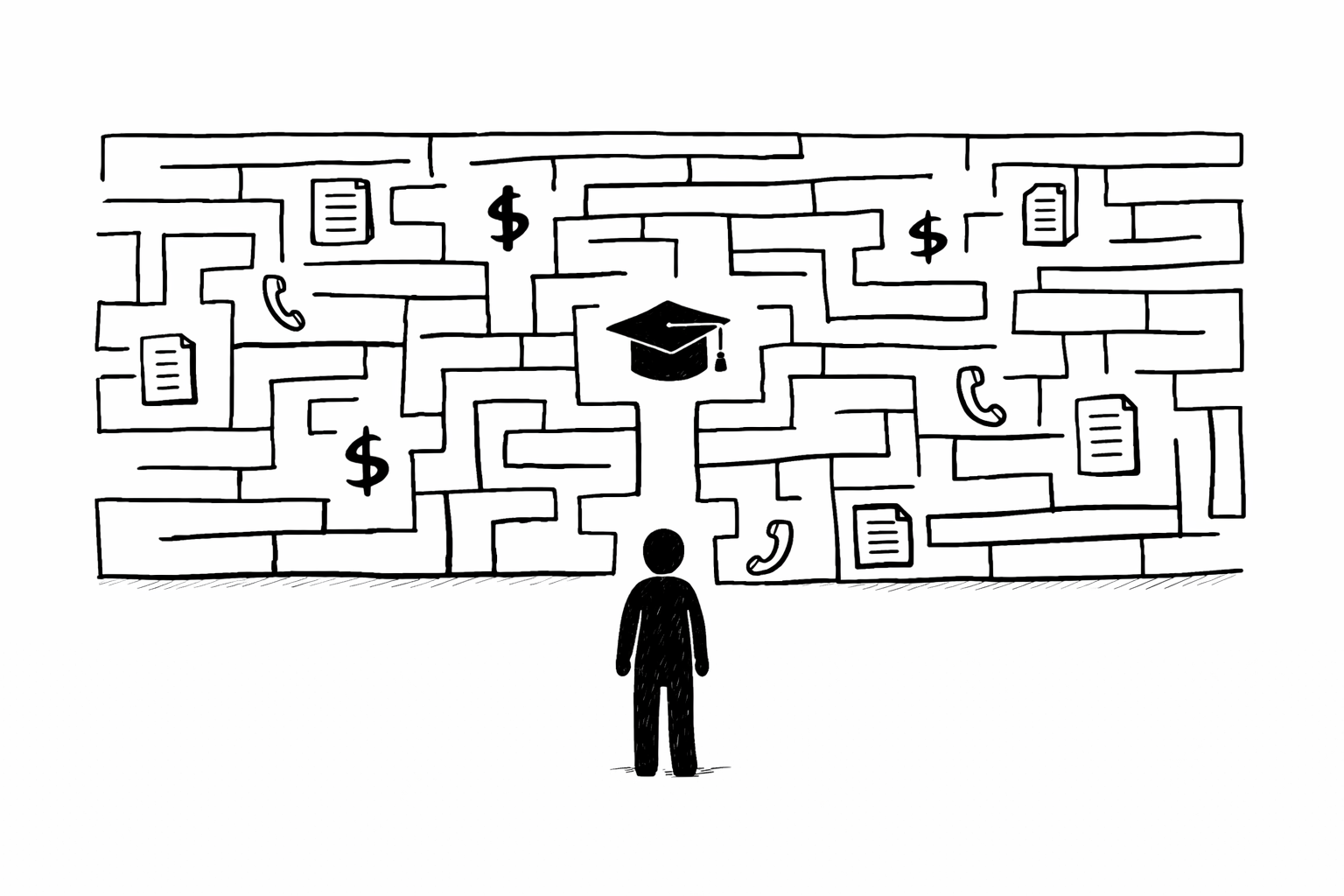
This is what an access shift looks like. It does not announce itself through a single policy decision. Instead, it emerges through friction—longer wait times, unclear points of contact, delayed processing, and systems that no longer feel centralized.
For borrowers, this means the burden of navigation increases. What was once handled within a single department may now require moving across multiple agencies, each with its own processes, timelines, and priorities. The experience becomes less about eligibility and more about persistence.
As a borrower, this is where the story becomes real. You’re not just watching policy changes—you’re watching how difficult it becomes to get a clear answer. Who do you call when something is wrong? Which agency is responsible? What happens when timelines slip or information conflicts? The system doesn’t need to disappear to feel different. It only needs to become harder to move through.
There is already some precedent for this kind of strain. In recent years, federal data has shown rising complaints tied to student loan servicing, particularly around payment processing, communication breakdowns, and access to relief programs. Even within a centralized system, complexity has created friction. Expanding that system across multiple agencies risks amplifying those same challenges.
When access changes, outcomes begin to shift with it. Those with time, resources, and familiarity with the system are more likely to navigate the added complexity, while those without may fall behind—not because support no longer exists, but because it becomes harder to secure. Over time, this creates a quiet divide, not between those who qualify and those who do not, but between those who can successfully access the system and those who cannot. The structure of education policy may be shifting, but the deeper story is about access—and who is able to hold onto it as the system evolves
FOR BORROWERS
What This Shift Could Mean for People With Student Loans
For borrowers, this isn’t an abstract policy change—it has the potential to reshape how repayment, relief, and support actually function day to day.
If the federal student loan portfolio moves to the Treasury Department, the system you interact with may start to feel different, even if the balance itself doesn’t change. The risk is not immediate loss of programs, but disruption in how those programs are delivered.
In practical terms, that could show up in a few ways.
Servicing could become less consistent. Today, borrowers already navigate a mix of federal oversight and private loan servicers. A transition between agencies introduces another layer of coordination, which can lead to delays, conflicting information, or changes in who manages your account.
Relief programs could become harder to access. Programs tied to income-driven repayment, forgiveness, or hardship relief rely on clear guidelines and administrative follow-through. When responsibility shifts, even temporarily, execution often lags behind policy—meaning borrowers may qualify for relief but struggle to actually receive it.
Accountability could become less visible. When one agency oversees loans, there is a clearer line of responsibility. When multiple agencies share that role, it becomes harder to determine where problems originate—and harder for borrowers to know who to contact when something goes wrong.
Processing times may increase. Whether it’s applications, disputes, or payment adjustments, transitions of this scale tend to slow systems down before they stabilize.
⸻
WHAT TO PAY ATTENTION TO
If you have student loans, the most important thing right now is not to panic—but to stay aware.
Watch for any changes to your loan servicer or account communications.
Pay attention to updates around repayment plans or forgiveness programs.
Keep records of payments, correspondence, and account status.
And most importantly, don’t assume silence means stability—systems can shift before messaging catches up.
The Access Shift
The gradual redefinition of who systems are designed to serve.
Across sectors—from public infrastructure to healthcare to everyday spaces—access is no longer assumed. As costs rise and systems face increasing pressure, services once built for broad reach are becoming more selective, more conditional, and less universal. The Access Shift explores how these changes are unfolding in real time—and what they reveal about who is included, who is left out, and how the structure of everyday life is quietly being reshaped.