Get The End of Day Closing Note
The news tells you what happened. We explain what changed.
- Free. Delivered every evening.

Explore all past issues, only on Beehiiv.
Quick Reads
Fast, useful stories that explain what changed, how it works, who it affects and what to know next.
In Case You Missed It · Page 8
Quick Reads
Tupac’s Murder Finally Has a Sentence. Hip-Hop Has Been Living With the Case for 30 Years.
Duane “Keffe D” Davis was sentenced to 40 years to life for orchestrating the 1996 killing.…
By Will Davison Jr. · October 14, 2026
Quick Reads
MIT Is Paying a Tenured Professor Not to Teach. The Fight Is About Who Controls Academic Freedom.
Michel DeGraff remains employed at MIT but has been removed from its linguistics section and says…
By Will Davison Jr. · October 14, 2026
Quick Reads
Inflation Rose to 3.7% in September. The Pressure Is Spreading Beyond Gas.
Prices accelerated again in September, with higher energy costs adding to broader increases across the economy…
By Brandon Crenshaw · October 14, 2026
Quick Reads
New York Is Preparing to End a 150-Year Carriage Tradition in Central Park.
New York City is moving toward banning horse-drawn carriage rides in Central Park by 2028, potentially ending…
By Social Storytellers Collective News Desk · October 14, 2026
Quick Reads
Americans Are Using Buy Now, Pay Later for Groceries. That Changes What the Product Means.
Americans used buy now, pay later services to finance nearly $157 billion in purchases in 2025, according…
By Social Storytellers Collective News Desk · October 14, 2026
Quick Reads
Nine Universities Face Federal Scrutiny Over Exchange-Visitor Visas
Federal investigators are examining whether nine U.S. universities improperly used J-1 exchange-visitor visas for international researchers…
By Social Storytellers Collective News Desk · October 12, 2026
Quick Reads
Researchers Examine Whether Short AI Use Changes Persistence
A University of California, Berkeley research team is drawing attention to the possibility that brief reliance…
By Social Storytellers Collective News Desk · October 12, 2026
Quick Reads
Las Vegas Is Building a Pipeline for Mariachi Teachers
The University of Nevada, Las Vegas is preparing students to teach mariachi through an academic minor…
By Social Storytellers Collective News Desk · October 12, 2026
Quick Reads
After a School Shooting, Therapy Dogs Become Part of Daily Recovery
At Evergreen High School in Colorado, two trained support dogs are now part of the daily…
By Social Storytellers Collective News Desk · October 12, 2026
Quick Reads
Data Centers Are Becoming a Water and Energy Policy Fight
The global expansion of data centers is prompting governments to consider stricter rules for electricity use,…
By Social Storytellers Collective News Desk · October 12, 2026
Quick Reads
Congressional Push Could Restrict Research Ties With More Chinese Universities
A U.S. House lawmaker has urged the Defense Department to expand restrictions on research ties with…
By Social Storytellers Collective News Desk · October 12, 2026
Quick Reads
Luxury Brands Are Discovering That Even Wealth Has Limits
Softening American demand and China's tax crackdown are exposing the vulnerability of a market built on…
By Social Storytellers Collective News Desk · October 12, 2026
Chicago is moving to make its Smart Streets camera-enforcement program permanent and expand it citywide after a downtown pilot produced nearly $4.5 million in fines for vehicles blocking bus lanes, bike lanes and bus stops. Cameras mounted on CTA buses and city vehicles document violations, allowing tickets to be issued without an enforcement officer standing on the street. City data show that roughly $2.6 million from those citations has actually been collected. Supporters argue that blocked lanes slow buses, force cyclists into traffic and make infrastructure ineffective even after taxpayers pay to build it. Critics of automated enforcement often focus on whether cameras become another revenue-generating system that disproportionately penalizes drivers. Chicago’s expansion pushes that debate into a broader question: if a city builds dedicated space for transit and bicycles but drivers routinely occupy it, how much enforcement is necessary before the infrastructure works as designed?
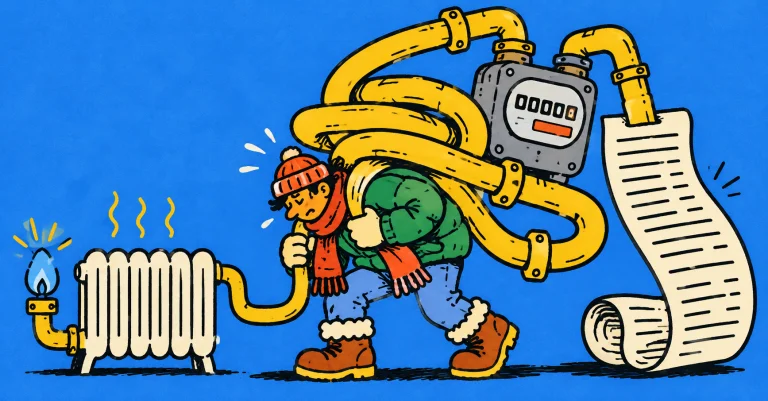
About 1.2 million National Grid customers in Brooklyn, Queens and Staten Island are expected to spend an average of $87 more on natural gas between November and March than they did last winter. The increase is not primarily coming from the commodity price of natural gas. Gothamist reports that gas prices themselves are expected to be lower, while delivery charges are projected to rise by about $211 over the five-month period under rates approved by New York regulators in 2024. Actual household bills will still depend on weather and consumption. The numbers illustrate why falling energy prices do not automatically produce falling utility bills: customers are paying both for the fuel and for the infrastructure, labor and financing required to deliver it. For households already budgeting around rent, food and transportation, the delivery side of an energy bill can erase savings that appear to exist in the underlying commodity market.
U.S. stocks recorded their worst trading day since July on October 14 as accelerating inflation renewed expectations that the Federal Reserve could raise interest rates again. The S&P 500 declined 1.1% to 7,718.94, while the Nasdaq Composite fell 1.9% to 26,692.87, according to the Associated Press. The Dow Jones Industrial Average slipped 0.1%, and the Russell 2000 index of smaller companies also declined 1.9%. The selloff followed inflation data showing consumer prices had risen 3.7% over the previous year, increasing concern about tighter monetary policy. Higher financing costs can affect business expansion, corporate investment and hiring decisions, particularly for companies dependent on borrowed capital. However, a single trading session does not establish that employers will reduce hiring or that economic growth will slow. The more consequential development is the return of uncertainty around the cost of financing future growth. For businesses already evaluating whether to invest, expand or preserve cash, that uncertainty may become more important than the stock market's daily movements.
Britain's economy expanded by just 0.1% in August, slowing from 0.4% growth in July, according to figures released October 15 by the Office for National Statistics. Production increased 0.8% during August, while services recorded no growth and construction declined 0.2%. The broader three-month picture was stronger, with GDP growing 0.7% in the three months through August and services output increasing 0.9%. Those figures show an economy that is expanding but not consistently across industries or time periods. The August slowdown also illustrates why a positive headline GDP figure does not necessarily indicate that businesses throughout the economy are experiencing similar conditions. For workers and consumers, the next question is whether continued growth translates into stronger employment, real earnings and household purchasing power. Britain's economic performance will depend not only on whether output keeps increasing but also on how broadly the benefits of that expansion are distributed.
Scammers allegedly used a lookalike email domain to impersonate a legitimate vendor and redirect a real city payment. The case shows how payment fraud can exploit routine administrative trust without breaching an organization’s internal systems.
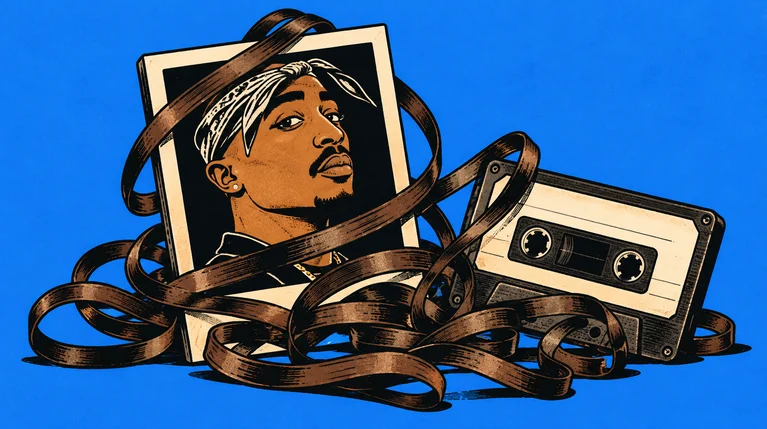
Duane “Keffe D” Davis was sentenced to 40 years to life for orchestrating the 1996 killing. The legal case is finally reaching an endpoint. The cultural story has been unfolding for three decades.
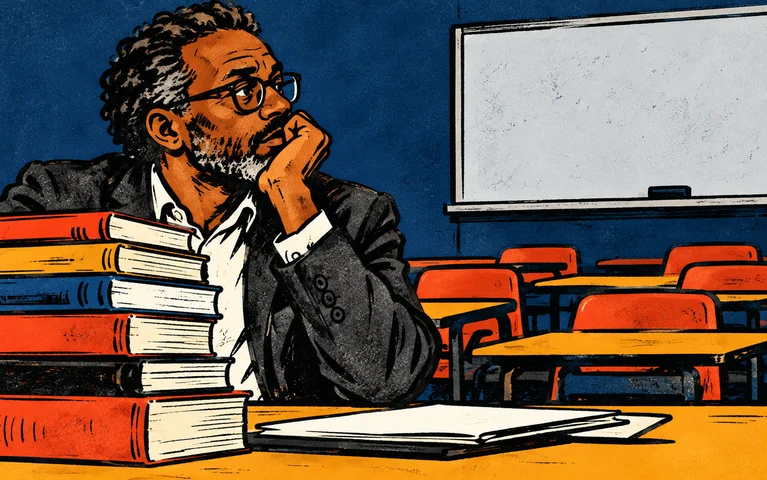
Michel DeGraff remains employed at MIT but has been removed from its linguistics section and says he is spending a third consecutive fall semester without a class.
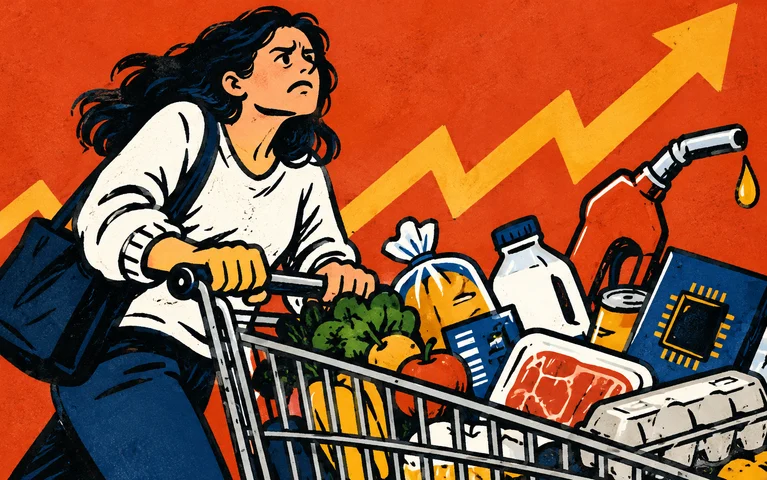
Prices accelerated again in September, with higher energy costs adding to broader increases across the economy just weeks before the midterm elections.
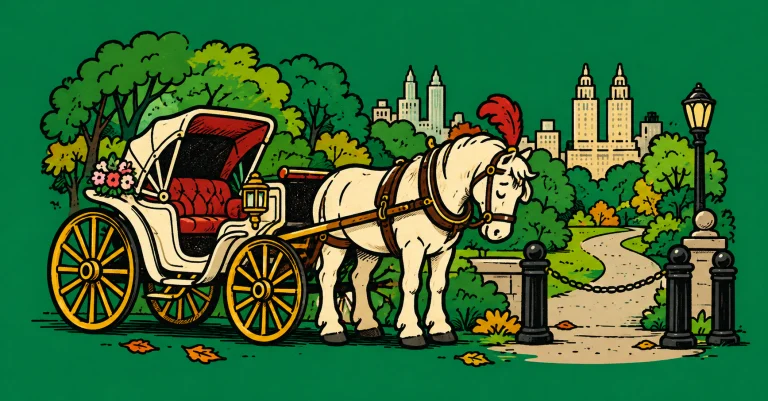
New York City is moving toward banning horse-drawn carriage rides in Central Park by 2028, potentially ending a tourist tradition that has operated in the city for more than 150 years. The latest push followed the death of 18-year-old Romanch Mahajan, an Indian tourist who was fatally injured after a carriage horse bolted in Central Park this summer. Animal-welfare advocates and city leaders argue that horse-drawn carriages no longer belong in a crowded modern park where pedestrians, cyclists, vehicles and tourists compete for space. The carriage industry and its union say a ban would eliminate the livelihoods of workers, many of them immigrants, and argue that stronger safety rules would be preferable to eliminating the trade. The proposed legislation includes a transition plan for affected workers and requirements governing what happens to the horses after the industry closes. New York has debated this question for years, but the argument is now larger than whether carriage rides are charming or outdated: it is about what happens when a city’s cultural traditions collide with changing standards for safety, labor and animal welfare.

Federal investigators are examining whether nine U.S. universities improperly used J-1 exchange-visitor visas for international researchers and scholars. The institutions identified in reporting include Harvard, Yale, Stanford, MIT, Caltech, Brown, Arizona State, the University of Pittsburgh and UC Davis. Officials allege that some institutions may have used the program to reduce labor costs; those claims remain allegations while the investigations proceed. The inquiries arrive as universities are already navigating tighter immigration rules and uncertainty over federal research support. The stakes extend beyond individual visa holders: international research collaborations often depend on the ability to recruit specialists and maintain predictable employment pathways. The Indian Express reported the investigations and universities' responses.
A University of California, Berkeley research team is drawing attention to the possibility that brief reliance on an AI assistant can change how people approach difficult work. A peer-reviewed study highlighted by EurekAlert on October 9 reports that as little as 10 minutes of AI assistance was associated with reduced persistence on challenging tasks under the study's conditions. The finding should not be read as proof that everyday AI use permanently reduces motivation or learning; the result concerns a particular experimental setting. Still, it points to a practical question for educators and employers adopting AI tools: whether convenience changes people's willingness to work through uncertainty before asking a system for an answer. EurekAlert summarized the Berkeley research.