Get The End of Day Closing Note
The news tells you what happened. We explain what changed.
- Free. Delivered every evening.

Explore all past issues, only on Beehiiv.
Quick Reads
Fast, useful stories that explain what changed, how it works, who it affects and what to know next.
In Case You Missed It · Page 4
Quick Reads
Janet Jackson’s Latest Viral Moment Is a Reminder of How Much Pop Music Owes Her
At 60, Janet Jackson continues to draw admiration for her style and presence. But renewed attention…
By Social Storytellers Collective News Desk · October 20, 2026
Quick Reads
Democrats Spent $163 Million Mentioning Trump in Campaign Ads. Republicans Spent $11 Million.
Since September, Donald Trump has appeared far more often in Democratic campaign ads than Republican ones.…
By Social Storytellers Collective News Desk · October 20, 2026
Quick Reads
Harvard’s Professors Have AI Clones. Who’s Really Teaching the Students?
Harvard Business School and Imperial College London are experimenting with digital replicas of professors that can…
By Will Davison Jr. · October 20, 2026
Quick Reads
The Supreme Court Is Revisiting Race in School Admissions. This Time, the Students Are in Middle School.
Imagine your child spends years earning strong grades, excelling on tests, and preparing for a competitive…
By Social Storytellers Collective News Desk · October 20, 2026
Quick Reads
Harris County Just Broke an Early Voting Record. I Was One of the 104,201.
I stood in line to vote Monday, Oct. 19, surrounded by other Harris County residents who…
By Will Davison Jr. · October 20, 2026
Quick Reads
They Earn More Than $500,000 a Year and Still Live Paycheck to Paycheck. Where Does the Money Go?
A Goldman Sachs survey finds that more than one-third of America's highest-income households struggle to make…
By Brandon Crenshaw · October 20, 2026
Quick Reads
France Is Burning, but the Anger Began Long Before the Fires
Thousands of arrests, burned public buildings and violent clashes have overshadowed protests over living costs and…
By Will Davison Jr. · October 20, 2026
Quick Reads
Trump’s Approval Hit 31%. The Midterms Will Test Whether That Number Votes.
Donald Trump’s approval rating has fallen to a record low in a new Reuters/Ipsos poll. On…
By Brandon Crenshaw · October 20, 2026
Quick Reads
Ghana’s Banks Are Lending More. Three Sectors Still Get Most of the Money.
Bank lending increased 34.6%, but the distribution of credit raises questions about which businesses are benefiting.
By Social Storytellers Collective News Desk · October 19, 2026
Quick Reads
Nigeria Says Fuel Subsidies Are Not Coming Back. Households Are Still Paying the Price.
The government is defending its economic reforms despite continued pressure from fuel prices and the cost…
By Social Storytellers Collective News Desk · October 19, 2026
Quick Reads
Cardi B’s NPR Tiny Desk Concert Premieres Today at Noon ET
The Grammy-winning rapper brings her music to NPR's intimate performance series, giving fans an opportunity to…
By Leena Alridge · October 19, 2026
Quick Reads
Kenya Promised Housing to Families Displaced by Rail Construction. Hundreds Are Still Waiting.
Kenya Railways alleges that public housing units have been occupied and sublet while intended beneficiaries remain…
By Social Storytellers Collective News Desk · October 18, 2026
Fuel costs from the Iran war have pushed Thanksgiving fares up 31% and Christmas fares up 23%, and airline executives say wealthier travelers are barely pushing back.
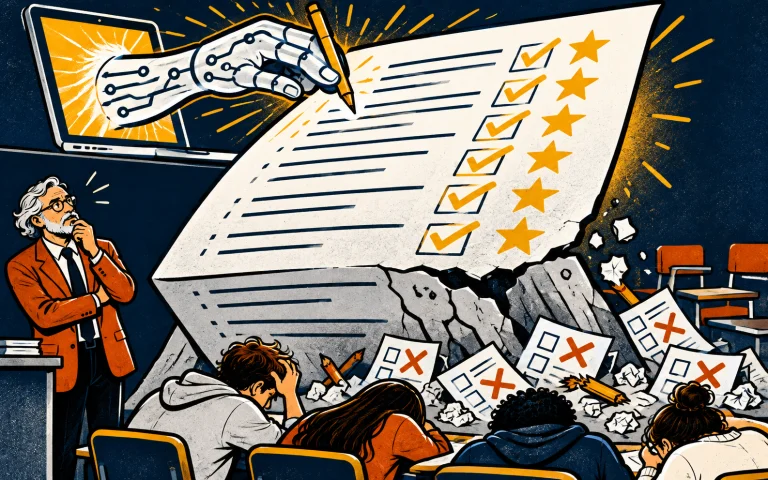
Imagine grading a college exam and discovering that nearly half the students earned perfect scores. For a professor, that might ordinarily be cause for celebration. But at Brown University, economics professor Roberto Serrano became suspicious when 40 students scored 100 on a take-home midterm in his advanced mathematical economics course. Some answers closely resembled responses generated by ChatGPT, prompting concerns about widespread AI-assisted cheating. According to EL PAÍS, Serrano believes at least 50 students cheated. When he required an in-person final exam, the class average plunged from 96 to 48, and 22 students who had previously earned perfect midterm scores did not show up. The results raise troubling questions about how much students are actually learning when artificial intelligence can complete increasingly sophisticated academic work.
The justices left in place a lower-court order that keeps hormone therapy and other gender-related care going in federal prisons, with Justices Alito and Thomas saying they would have let the administration’s restrictions take effect.

After seven years helping shape the NFL’s biggest musical stage, the Roc Nation founder may finally be stepping onto it himself. The reported decision raises a question worth asking: what happens when the person choosing the talent becomes the talent?

Two people are completing the same kind of online task, but their circumstances could hardly be more different. One woman works from her car, navigating paperwork and a smartphone screen outside a public library. Another person sits comfortably at home with a laptop and reliable broadband. Both are connected, yet their ability to participate in the digital economy is unequal. Pew Research Center reports that 91% of American adults own smartphones, but 16% depend on them without a home broadband subscription. The illustration captures a widening definition of digital inequality: owning technology does not guarantee equal opportunity to use it.

At 60, Janet Jackson continues to draw admiration for her style and presence. But renewed attention to her appearance reveals how Black women in entertainment are still judged by their looks, even when their cultural achievements have reshaped entire industries.

Since September, Donald Trump has appeared far more often in Democratic campaign ads than Republican ones. The gap shows two approaches to the midterms: one party is making Trump central to its argument, while the other is focusing on issues and its own candidates.

Harvard Business School and Imperial College London are experimenting with digital replicas of professors that can answer questions around the clock. The technology promises greater access to education, but raises concerns about accuracy, ownership, and accountability.
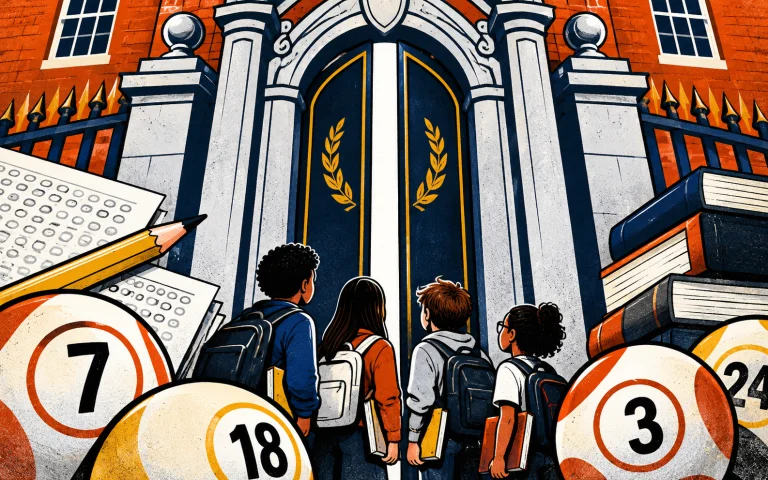
Imagine your child spends years earning strong grades, excelling on tests, and preparing for a competitive magnet school, only to discover that academic achievement alone may not secure a seat. For families in Montgomery County, Maryland, that uncertainty has become a legal battle headed to the U.S. Supreme Court. The justices agreed to hear a challenge involving four selective middle school programs, where a lottery-based admissions system evaluates students partly against classmates at their own schools. The Association for Education Fairness argues that the changes were designed to increase Black and Latino enrollment at the expense of Asian American students. The school district maintains that its policy does not explicitly consider race.
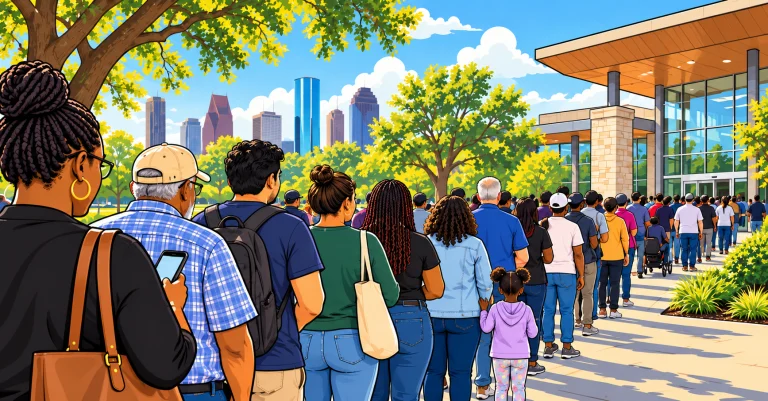
I stood in line to vote Monday, Oct. 19, surrounded by other Harris County residents who had made the same decision: rather than wait until Election Day, we were going to cast our ballots early. I took a photo of the line while I waited, not knowing that we were part of what would become a record-breaking opening day for early voting.

A Goldman Sachs survey finds that more than one-third of America's highest-income households struggle to make progress on long-term financial goals. Rising expenses, family obligations and lifestyle expectations are changing what financial security looks like.

Thousands of arrests, burned public buildings and violent clashes have overshadowed protests over living costs and failing schools. France's unrest shows what happens when economic frustration, political distrust and public safety collide.