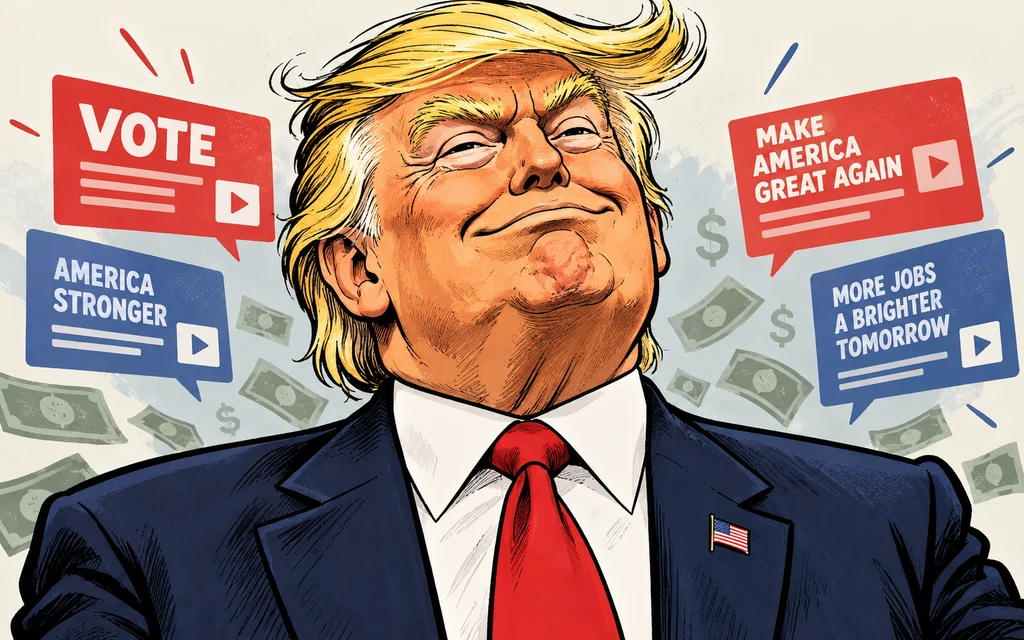
Turn on a television in a competitive congressional district this fall and you may hear Donald Trump’s name even though he is not on the ballot. One candidate talks about grocery prices, another about health care and a third about decisions made in Washington, and before the ad ends Trump has become part of the argument. Those messages are coming overwhelmingly from Democrats, while Republican advertisers have spent comparatively little time mentioning the leader of their own party.
An Associated Press analysis of AdImpact data published Oct. 16 found that Democratic candidates and their allies have spent more than $163 million since Sept. 1 on TV ads that mention Trump. Those ads aired nearly 180,000 times across broadcast, cable and streaming. Republicans ran ads mentioning Trump about 16,000 times over the same stretch, at an estimated cost of $11 million, which means Democrats are spending nearly 15 times as much to put his name in front of voters.
The gap stands out because Trump himself has told voters to “pretend that he’s on the ballot” on Nov. 3. Democratic campaigns have taken him up on that framing, while many Republican campaigns are spending their money elsewhere, at a moment when Trump’s approval has fallen to 31%.
The Same Name, Two Different Campaign Strategies
For Democratic advertisers, Trump is a way to tie local Republican candidates to national policy. Ads about tariffs, the war with Iran, health care and household costs often argue that Republican lawmakers backed administration policies that made life more expensive, a message aimed at voters who have watched inflation climb to 3.7% in September.
In Georgia, Democratic Sen. Jon Ossoff’s campaign has spent nearly $3 million on an ad tying Republican Rep. Mike Collins, his challenger, to Trump. The ad says Collins voted for Trump’s war in Iran, which sent gas prices up, voted for tariffs that sent grocery prices soaring and “voted with Trump to double health insurance premiums” for more than a million Georgians, and it closes by saying Collins “sides with Donald Trump and makes you pay more.”
In Pennsylvania, the Democratic super PAC House Majority PAC is running an ad against Republican Rep. Brian Fitzpatrick in which a woman says her family is “barely getting by” and that Fitzpatrick “is not for us anymore.” Fitzpatrick, though, voted against Trump’s tariffs and against giving Trump the power to wage war on Iran without congressional approval, a record that sits uneasily with the ad’s suggestion that he follows the president’s lead. Campaign ads compress long legislative records into messages built to land in a few seconds, and the Fitzpatrick race shows what can get lost.
Republicans have leaned on other themes. Taxes and crime were their top issues in the AP analysis, and Trump ranked 33rd among the subjects in Republican House and Senate ads. In Democratic ads he ranked fourth, behind health care, taxes and claims that opponents are beholden to special interests.
There are exceptions. Idaho Republican Sen. Jim Risch tells voters he “fought alongside President Trump” to pass major tax cuts. The broader pattern, though, suggests Republican advertisers are choosing to talk about policies and their own candidates rather than the administration. That does not mean those candidates oppose Trump or are distancing themselves from his agenda, only that their ad teams have made different choices about what to put on screen.
Trump’s Name Works as a Shortcut
Political ads have to make complicated choices feel immediate. A congressional candidate may have a long voting record on budgets, taxes, trade and foreign policy, and a 30-second spot has no room to walk through it. Linking that candidate to the most recognizable figure in American politics offers a shortcut.
Democrats are using that shortcut to turn congressional races into a verdict on the administration. Republicans are more often pressing issues where they think their candidates can stand on their own. Both approaches rest on assumptions about what voters recognize, remember and care about.
The Balance Shifted Since Spring
The pattern looked different earlier in the cycle. A June analysis by the Wesleyan Media Project found that Trump was mentioned in 55% of broadcast TV airings in House and Senate races from January 2025 through mid-June 2026. Over that period Republicans were the ones more likely to name him: more than 70% of pro-Republican candidate ads mentioned the president, compared with 50% of pro-Democratic ads.
By September and October the balance had flipped. The two studies cover different periods and different kinds of advertisers, so the comparison cannot explain why campaigns changed course. It does show that ad strategy moves over a cycle and should not be read as a fixed trait of either party.
Spending Totals Do Not Show Whether the Message Works
The $163 million figure measures what campaigns are buying, not what voters end up believing. Hearing Trump’s name again and again may harden existing opinions, raise new doubts about a particular candidate or add to the ad fatigue that sets in every October. A Republican ad that never mentions Trump also does not mean viewers are unaware of where that candidate stands with the administration.
Whether either strategy works depends on things the spending totals cannot capture, including who is watching, how credible the message feels, how well voters know the candidate and what is happening locally. National totals also blur geography, since ads in a competitive suburban House district can look nothing like those in a safe Republican Senate race. Those differences need to be understood before anyone concludes that one party’s messaging is moving voters.
Voters Are Hearing Two Versions of the Midterms
The spending gap shows campaigns building competing stories around the same election. Democratic advertisers frame individual races through the policies of the Trump administration, while Republican advertisers more often talk about their own candidates’ positions on taxes, crime and other issues. Neither version gives voters a complete account, and the stakes of this election reach well beyond control of Congress.
Voters still have to judge the candidates on their own ballots, the positions those candidates have taken and the offices they are seeking. Members of Congress hold powers separate from the president’s, even when they share his party. Trump is not running in November, but his name has become a large part of how congressional candidates are being presented to voters, and the ad data cannot tell anyone which argument will persuade them.
How often Trump is mentioned is only half of it. What the numbers reveal is who decided his name was worth $163 million, and who decided to spend their money talking about something else.