
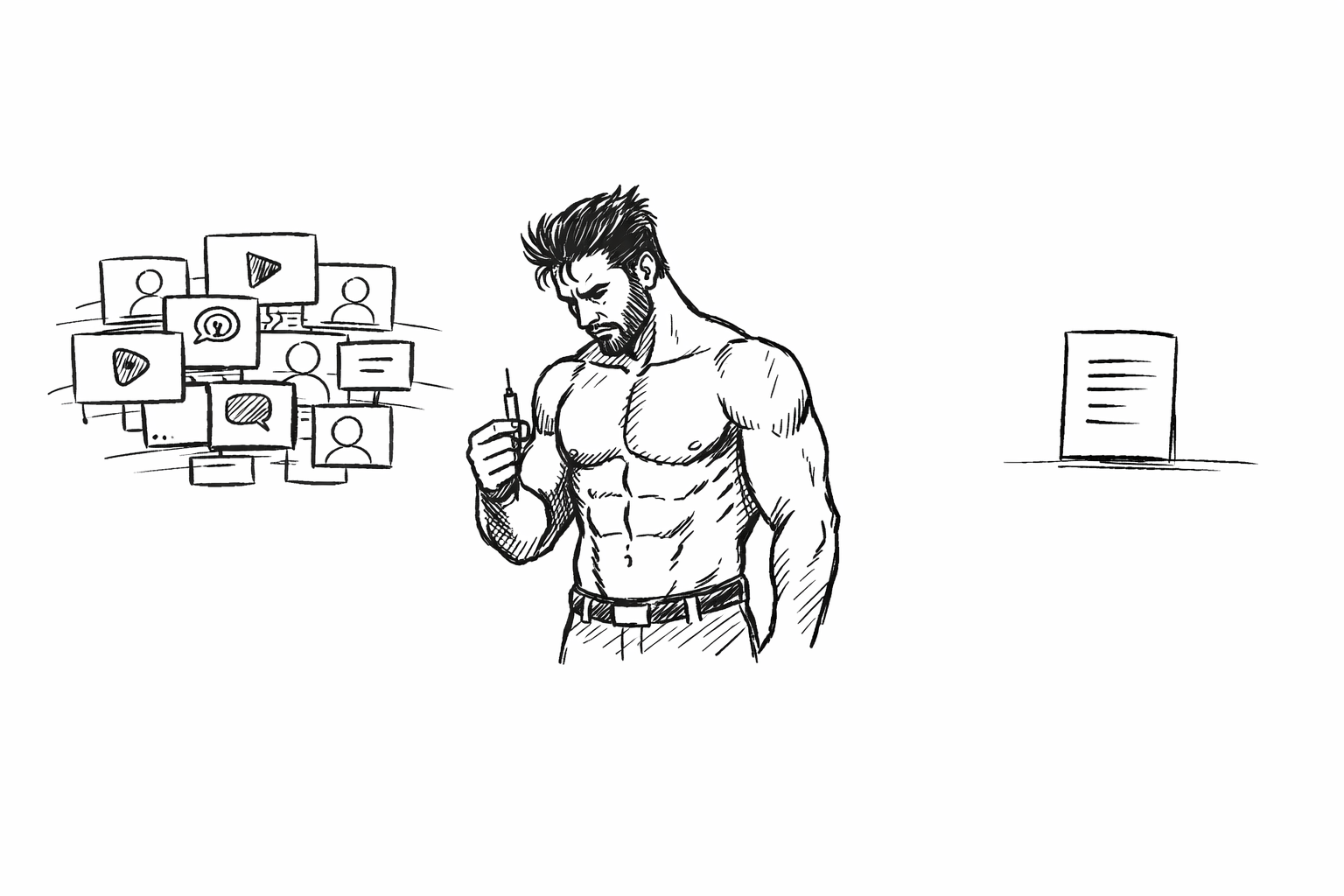
According to the U.S. Anti-Doping Agency, BPC-157 is classified under S0 — a category reserved for unapproved substances with no established safety profile in humans — yet it continues to spread across gyms, wellness clinics, and online marketplaces as a go-to solution for injury recovery and performance optimization. That contradiction is the story. The so-called Wolverine Stack, typically a combination of BPC-157 and TB-500, is not breaking into the mainstream because the science is settled. It is breaking through because the demand is.
The science remains incomplete. A systematic review of BPC-157 for orthopedic use found 35 studies — all conducted on laboratory animals — and only one human trial, published in an alternative medicine journal. TB-500, marketed as a synthetic peptide related to thymosin beta-4, is even further removed from the claims circulating in consumer spaces. Human trials are sparse. Standardized dosing is unclear. Long-term safety data is effectively nonexistent. The FDA has flagged both compounds as presenting significant safety risks in compounding contexts, yet enforcement has struggled to keep pace with how they are marketed and distributed. The result is not a fully illegal market, nor a fully regulated one — accessible enough to grow, unproven enough to remain controversial.
What’s driving adoption is structural, not scientific. The distribution runs through creators, influencers, and biohackers who document their own recovery journeys in formats that feel intimate and consistent — building the kind of trust that, as explored in From Parasocial to Personal, can rival traditional institutions in its persuasive weight. The infrastructure is already in place — as The Steroid Pipeline Starts Earlier Than Anyone Wants to Admit makes clear, enhancement culture doesn’t begin with a single decision; it forms through repeated exposure, normalization, and incremental escalation long before any compound is used. The Wolverine Stack enters that pipeline as the next logical step — positioned not as an extreme, but as a workaround. And as The Adonis Complex documents, the behaviors the culture celebrates and the behaviors that deserve clinical attention have become increasingly difficult to tell apart. As explored in The Weight-Loss Boom Is Becoming a Price War, the consumer health economy is already moving in parallel to the clinical system, not behind it. Demand is setting the pace. The market will not wait for the science. And in that gap, the product already exists.