
The fitness band company just launched a social network the same year it joined Medicare. The privacy rules on those two sides don’t match.
Whoop wants your recovery score to be something people can comment on.
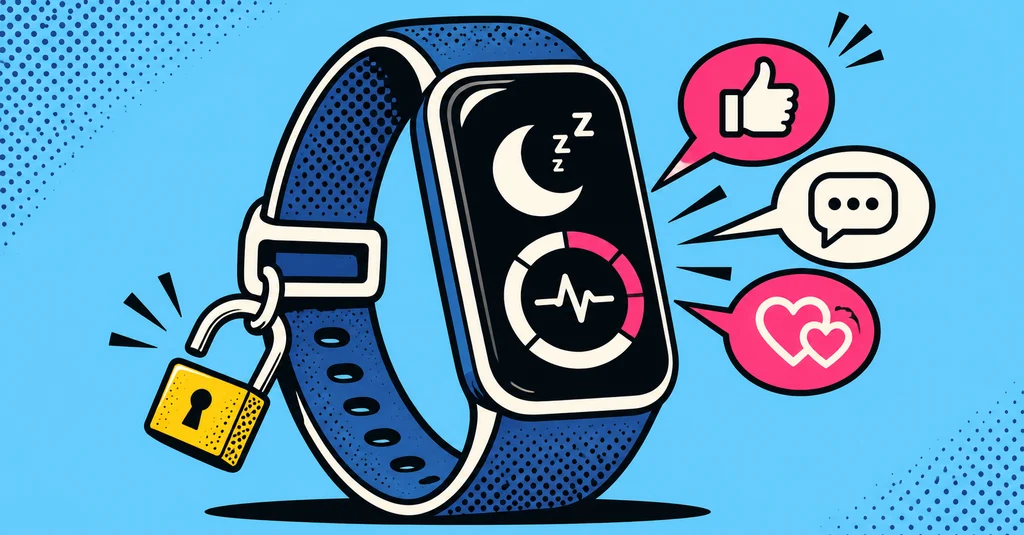
The fitness-band company launched Whoop Humans today on Thursday, a social network inside its app where members follow friends and family and share their sleep, recovery, workouts and achievements. Followers can react and comment. Everything is opt-in, CEO Will Ahmed said, and members choose who sees what.
The detail Ahmed shared from beta testing is revealing. People were more engaged when someone posted a low recovery score than a great one. That’s a good instinct: friends notice when you’re struggling. But it also means the network’s real feature is vulnerability.
Whoop says it has guardrails. Health alerts and medical information aren’t shared. Sensitive activities stay private by default. A “stealth mode” lets you disappear for a few days. Whoop says it doesn’t sell or license member data. “Our product is not you; it’s the membership,” Ahmed said.
Here’s what makes this launch more than a feature update: Whoop isn’t just a fitness brand anymore. It offers FDA-cleared ECG and atrial fibrillation detection, blood pressure insights, blood testing and medical-record uploads. This year, its affiliated medical practice joined Medicare’s ACCESS program, which pays digital health companies partly based on whether they improve outcomes for patients with chronic conditions. Through that program, many traditional Medicare patients 65 and older can get a Whoop at no cost. Ahmed says the company has seen “huge growth” among people over 60, and he expects families to be big users of the new social feature. Picture an adult child checking on a parent’s sleep from three states away.
That’s where the rules get complicated. Health data handled by doctors and insurers is protected by HIPAA. Steps, sleep and heart rate stored in a consumer fitness app generally aren’t. For those, the main federal rule is the FTC’s requirement that companies tell you after your data has been breached. It doesn’t control how the data is used beforehand. So the same company can operate under medical privacy law in one part of its business and consumer tech norms in another, and a user scrolling a feed has no easy way to tell which is which.
There’s also the question of age. Whoop’s minimum age is 13. Asked whether a parent could follow a teenager’s data, Ahmed didn’t answer directly and pointed to the privacy controls.
None of this means sharing health data is a bad idea. For an older parent living alone, a child who notices a bad night could be the difference between a phone call and a fall. But we’ve seen this pattern before. Platforms start out promising privacy, and the promises erode as the business grows. Even regulated health data isn’t always safe. And Whoop is talking openly about acquisitions and an eventual IPO, with nearly 4 million members expected by year’s end.
As SSC wrote about Asia’s aging population, older adults are a growing market, but their care shouldn’t depend on what they can afford. The same goes for privacy. Before your heart rhythm becomes something people can comment on, the rules protecting it should be as clear as the feed.