
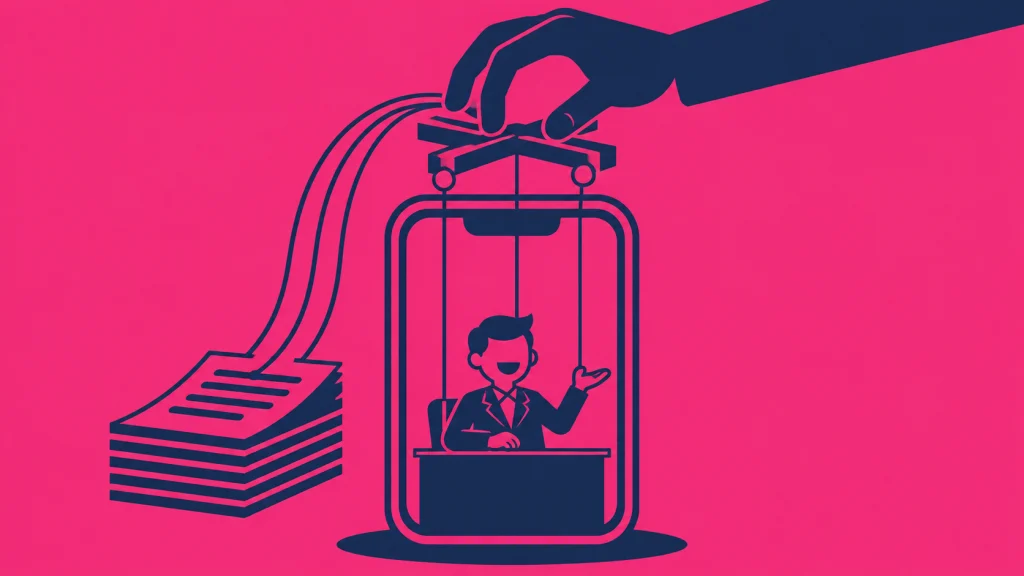
From fabricated migrant interviews to paid actors reading AI scripts, TikTok and YouTube are making misinformation harder to spot. Sometimes the video itself isn’t even fake.
A Nigerian woman sits in an Irish café, eating a plate of food and joking that taxpayers are covering the bill. The video looks real because it is real, but the story attached to it was false.
The woman, identified as Grace, wasn’t an asylum seeker celebrating government benefits. She was a longtime Irish resident, a full-time worker and a taxpayer making a sarcastic TikTok about the anti-immigrant hostility she had faced, The Journal’s Oct. 10 fact-check found, after commentators stripped the clip of context and recast her as someone exploiting public assistance.
How the deception works:
- Real clips, false stories: authentic footage gets a new caption and a new villain.
- Synthetic witnesses: AI-generated “migrants” say things no real person said.
- Hired faces: paid presenters read AI-written scripts on channels built to look like independent commentary.
The migrants who never said those things
In September, British fact-checker Full Fact exposed an AI-generated video of an asylum seeker supposedly demanding more money, freedom and housing. The footage carried a watermark tied to Google’s AI tools, and its subject resembled a man the BBC had interviewed, but he never said those words.
A TikTok account called migrantvlog posted 22 videos over four days in June showing a migrant’s journey to Britain and the free housing, food and phones supposedly waiting for him. PA Media’s fact-check found a watermark from Google’s Veo video generator, along with arms that vanish and a plate that passes through a man’s hand, and one clip drew about 374,000 views.
The same technique works on any side of the immigration debate. AFP investigated videos of migrants crammed into U.S. detention facilities, and three media forensics experts found the footage was likely AI-generated.
The commentator business
The bigger operation runs on YouTube. Semafor media editor Max Tani reported in September on a network of “ghost creators,” paid actors reading repetitive, AI-assisted scripts under invented personas, mostly attacking Democrats such as Zohran Mamdani and Gavin Newsom.
One casting call offered $26 per video for “African American male hosts.” The network drew more than 45 million views, and its videos made false claims about politicians and companies, including a Citadel memo that never existed.
Power in this setup sits with whoever owns the channel. The actor gets $26, the operator collects the audience, and the platform sells ads against all of it. After Semafor’s reporting, YouTube terminated 20 channels for violating its spam policies, which came only after a newsroom did the detective work.
Germany shows the model travels. Euronews’ Tamsin Paternoster reported that the research group CeMAS found 47 YouTube channels using AI-generated “experts” to discuss German politics; across the 38 it analyzed, 1,876 videos drew about 7.55 million views.
When doubt becomes the weapon
Not every suspicious video is a deepfake. Some clips are real but stripped of context, others are staged or deceptively edited, and some are fully synthetic.
That cuts two ways: people believe false things because they look convincing, and they dismiss real evidence because fakes are possible. Once any uncomfortable image can be waved away as AI, real footage of abuse, discrimination or misconduct becomes easier to ignore.
Who carries the burden
Right now, the job of verification falls on viewers scrolling between ads and group chats. Americans have noticed: only 38% trust information on social media, SSC reported this morning, even as more of them get their news there, and one in five now gets news from TikTok.
Before sharing a clip, trace the original upload, check what was cut and look for independent reporting. A watermark or a glitch can expose a fake, but a clean video proves nothing, as SSC found when Google’s AI muddied even the settled 2020 election.
What comes next
Grace’s case is the warning. No one had to invent her face or her voice, because a false caption on a real video did the job.
Expect tonight’s election results to test this in real time, with clips of “fraud,” “stolen ballots” and long lines spreading faster than election officials can respond. Platforms will keep acting after newsrooms do the investigating, until the cost of hosting a lie is greater than the ad revenue it brings in.