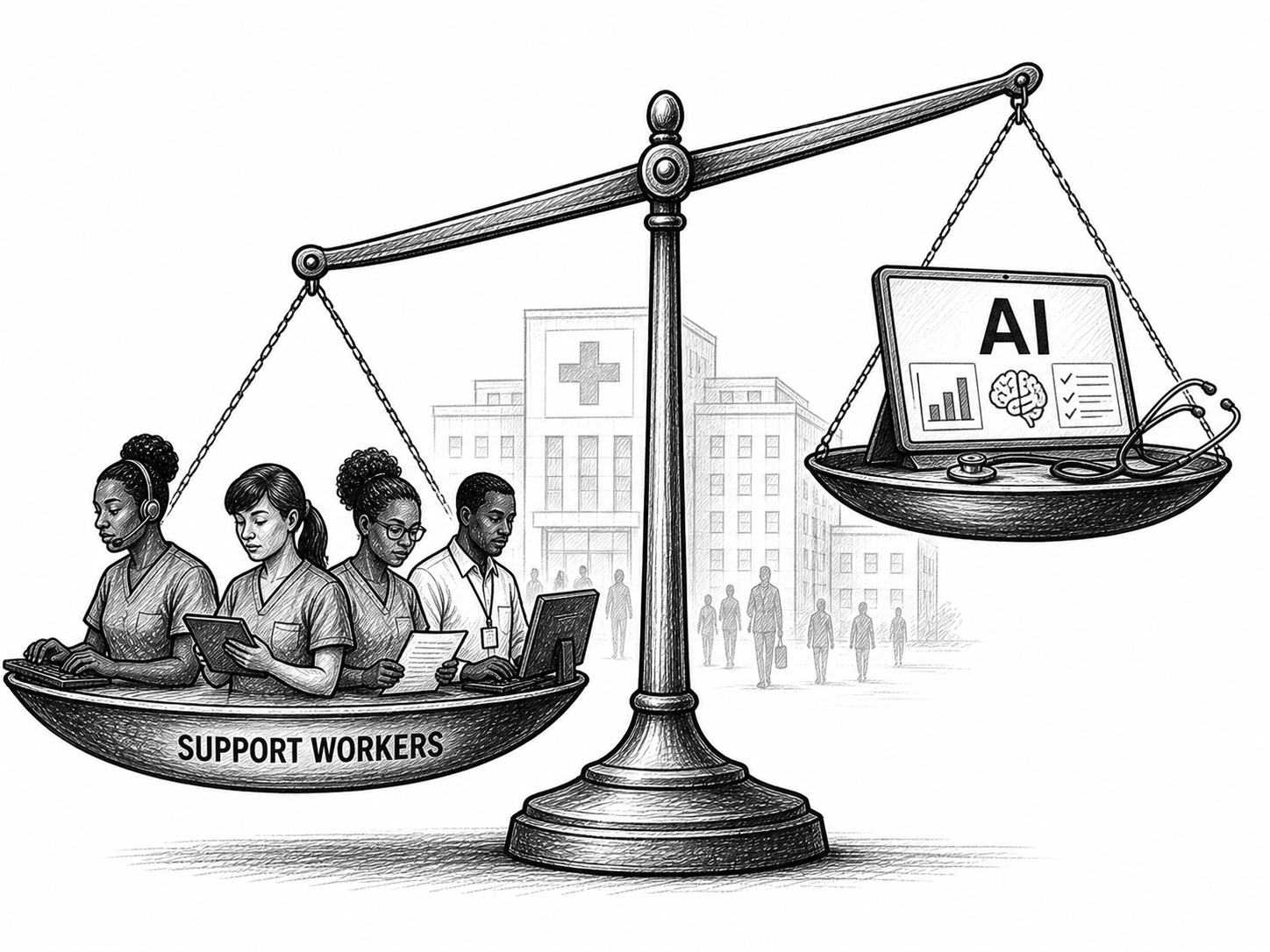
Sixty percent of healthcare organizations already use AI in support functions — clinical note-taking, automated charting, patient scheduling, medical coding. The efficiency gains are real. What’s less visible is the distribution: the roles being automated are not the roles of the physicians who benefit from AI-assisted diagnostics. They’re the roles of the workers who process the billing, transcribe the notes, schedule the appointments, and manage the administrative infrastructure that keeps healthcare systems running.
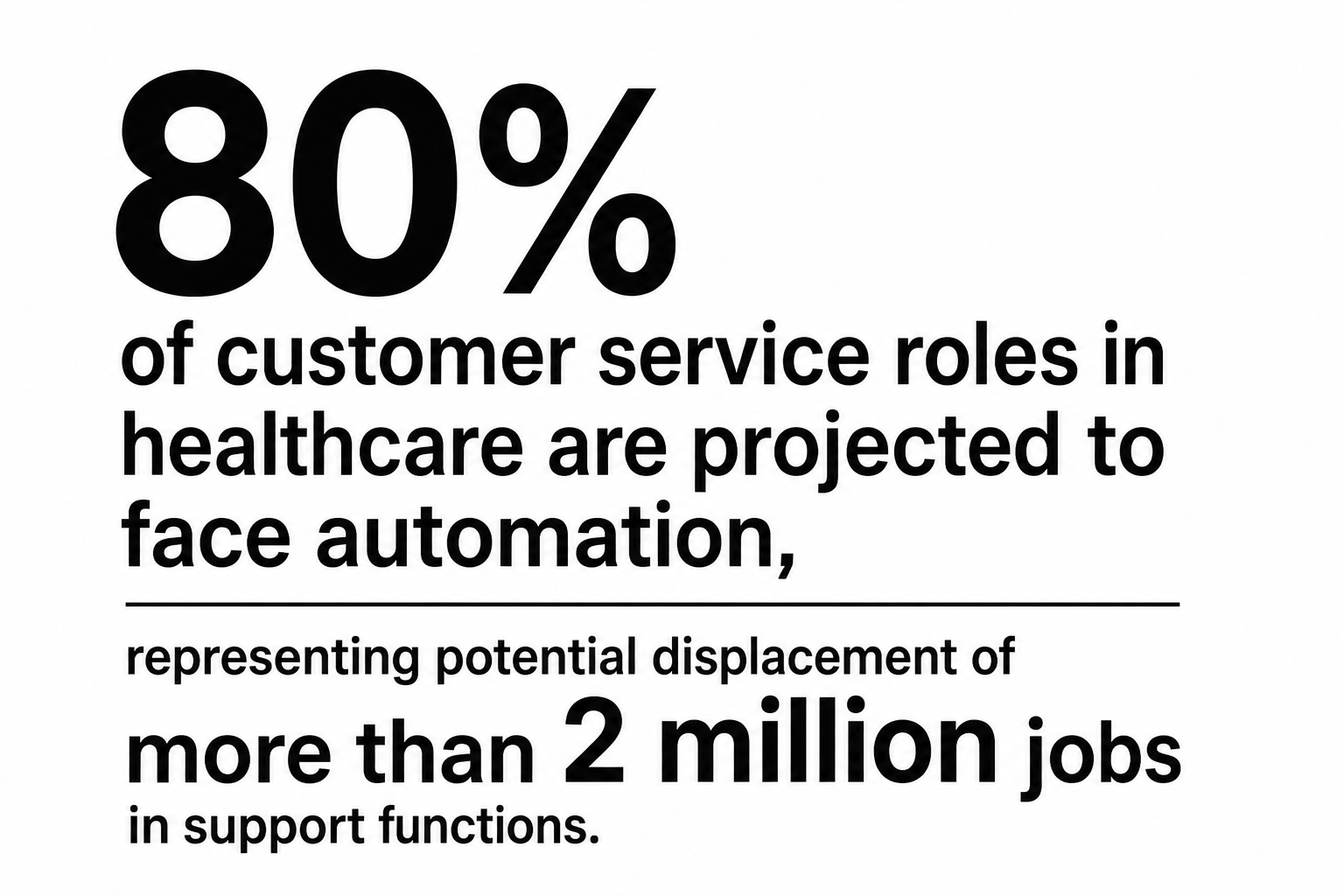
Those workers skew heavily toward women and workers of color. And the displacement is accelerating — 80 percent of customer service roles in healthcare are projected to face automation, representing potential displacement of more than 2 million jobs in support functions. Medical transcription is already 99 percent automated. Forty percent of medical coding is projected to be automated within this cycle. The former Geisinger CEO put it plainly in a recent STAT News piece: health systems employ more people in revenue cycle departments to process bills than they do doctors. AI is going to collapse that ratio — and the people on the wrong side of that collapse will not be the physicians.
Two in five healthcare workers already report their jobs feel unsustainable in 2026, driven by chronic understaffing and administrative overload. The AI implementation being positioned as the solution to that burnout problem is simultaneously the force reducing the headcount of the workers most exposed to it. That’s not a paradox — it’s a predictable outcome of a system that optimizes for institutional efficiency rather than workforce stability.
The access dimension runs in both directions. Healthcare support jobs have historically provided stable, benefits-eligible employment for workers without advanced degrees — particularly in urban communities where hospital systems are major employers. When those jobs are automated, the communities that depended on them lose not just income but one of the primary institutional relationships connecting them to stable employment at all. And the patients those communities send to those hospitals face a healthcare system that is simultaneously shedding the workforce and claiming it’s improving care delivery.
Efficiency and equity are not the same measurement. Healthcare AI coverage that treats them as interchangeable is missing the story.