
Meta’s AI “Undraft” Shows the Limits of Forced Transformation

Meta is letting engineers opt out of AI training work after backlash inside the company. The reversal says less about one internal memo than it does about the broader tension inside Big Tech’s AI race: capital can move quickly, but worker trust does not reassign as easily.
Meta is walking back one of its more aggressive internal AI moves. After reassigning roughly 7,000 employees into AI-related work last month, the Facebook and Instagram parent is now telling some engineers that participation will no longer be mandatory. Business Insider reported that an internal memo said Meta would defer to individual choice about whether employees remain in the AI training effort. Inside the company, some workers are reportedly calling the reversal an “undraft.”
The reversal matters because of what came before it. Meta did not simply ask employees to volunteer for a new innovation sprint. The company moved thousands of workers into AI-focused units during a period already defined by layoffs, restructuring, and anxiety about where human labor fits inside the company’s future. Employees reportedly compared some of the work to data labeling — a sharp contrast for engineers who joined Meta expecting to build products, systems, and infrastructure.
That distinction is important. AI transformation is often described as a technical process: more compute, better models, faster training, larger infrastructure budgets. But inside companies, AI transformation is also a labor strategy. It determines who gets reassigned, whose expertise is still valued, what kinds of work are considered strategic, and which employees are expected to absorb disruption in the name of speed.
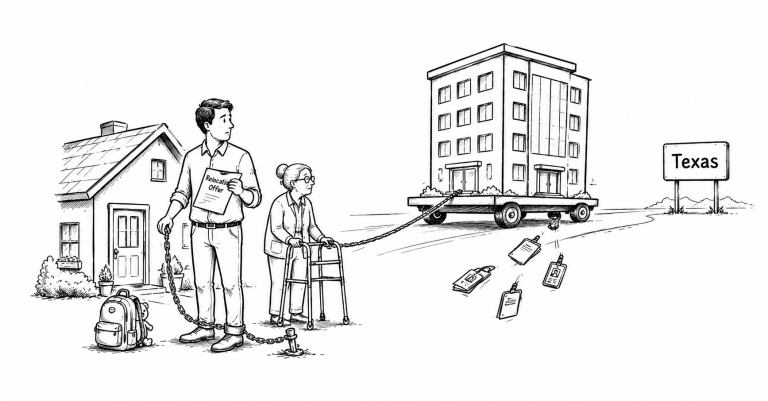
Meta’s situation exposes the friction between those two realities. On paper, redeploying engineers toward AI may look efficient. If AI is the company’s central priority, then shifting talent toward that priority appears logical. But in practice, forced redeployment can become a signal. It tells employees that their current work is less secure, their career path is more conditional, and their expertise can be redirected without much consent.
That is where the backlash becomes more than internal drama. Meta is not a distressed company trying to survive. In the first quarter of 2026, it reported $56.3 billion in revenue, up 33% from the prior year. It also projected 2026 capital expenditures of $125 billion to $145 billion, much of it tied to data center capacity and AI infrastructure. The company is spending at extraordinary scale while also reshaping its workforce around the assumption that AI will change how much labor it needs and what kind of labor matters.
That contradiction sits at the center of the story. Meta is investing heavily in the future while destabilizing parts of the workforce building that future. It is telling investors that AI is central to growth, while telling employees that roles, reporting lines, and assignments can shift quickly in response to that strategy. For workers, the message is not simply “learn AI.” It is “your job may be reorganized around AI whether or not the new role resembles the work you were hired to do.”
The morale problem was already visible. Meta CTO Andrew Bosworth recently acknowledged that morale inside the company was near one of its lowest points in Meta’s history. WIRED also reported that Bosworth told employees the company had done an “atrocious” job explaining the rollout of its new Applied AI division and had undermined trust that employees’ expertise and career growth would be valued. Those are not minor communications issues. They are signs of a deeper management failure: the company moved faster than its internal legitimacy could support.
The “undraft” is an attempt to repair that damage. Allowing employees to leave the AI training unit gives Meta a way to soften the perception that workers were conscripted into lower-status or less meaningful work. But the reversal does not erase the broader lesson. Once a company treats talent as a movable resource in an AI arms race, it becomes harder to convince employees that autonomy, growth, and expertise still matter.
This is the workplace side of the AI economy that often gets less attention than model launches and infrastructure spending. The companies building AI are also becoming test cases for how AI changes management itself. They are experimenting with smaller teams, automated workflows, internal monitoring, rapid reassignments, and performance systems tied to AI adoption. The question is not only whether AI can make companies more productive. The question is what companies are willing to do to workers in order to chase that productivity.
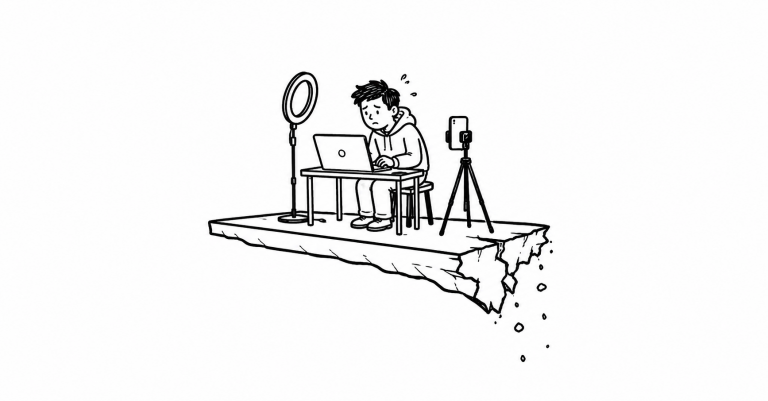
Meta’s reversal suggests there are limits. Employees may accept change. They may accept new tools, new expectations, and new priorities. But forced transformation carries a cost when workers believe the company is using AI as both a strategic imperative and a justification for instability.
The future of work will not be shaped only by what AI can do. It will also be shaped by how much trust companies burn while trying to reorganize themselves around it. Meta’s “undraft” is a warning from inside one of the companies most aggressively building that future: even in the AI race, people still notice when strategy starts to feel like conscription.